

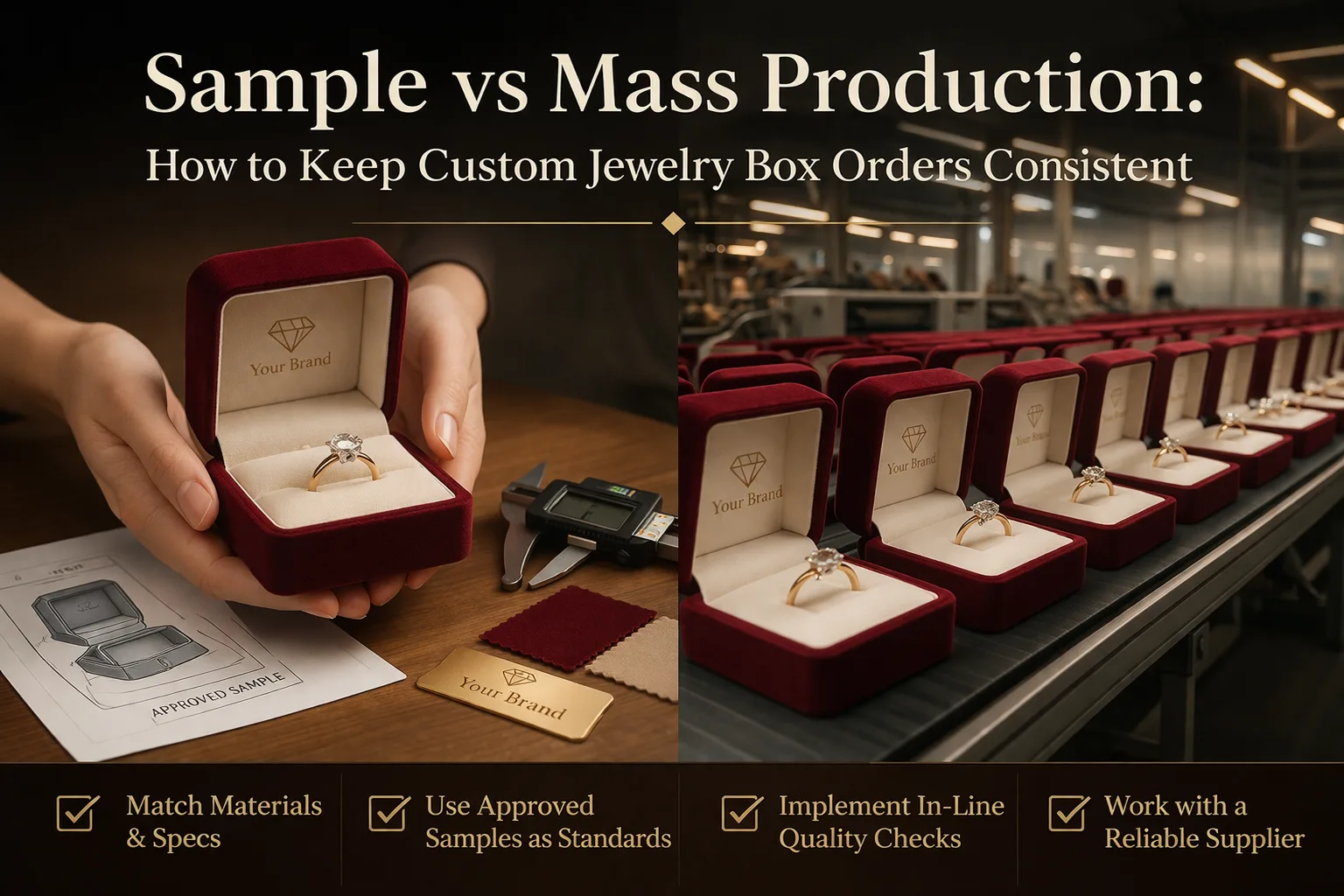
Custom Jewelry Box Sample Process and PPS Approval
A custom jewelry box sample process should turn a packaging idea into a written, reviewable production reference. Use this guide to check the sample, record revisions and approve the PPS before bulk production begins.
From inquiry to approval
The custom jewelry box sample process in six controlled steps
Each step should reduce ambiguity. A visually attractive sample is useful only when its material, construction, artwork, insert and packing decisions can be repeated.
Define the use case
Share the jewelry type, retail or gifting use, box direction, quantity range, launch timing and destination.
Build the specification
Confirm dimensions, structure, surface, lining, insert, closure, logo artwork, color reference and packing direction.
Approve the sample brief
Check that the quotation and sample request refer to the same structure, materials, logo method, insert and quantity assumptions.
Develop the handmade sample
Plan a handmade sample in 7-10 days after details are confirmed, then review the physical result against the brief.
Record revisions
List accepted details and required changes in writing. Use updated artwork or specification versions instead of relying on chat history alone.
Approve PPS and schedule bulk
Link the accepted reference to the final specification, then move into material planning, production controls, inspection and export packing.
Decision boundary
What a handmade sample proves and what it does not prove
This distinction prevents a one-off prototype from being mistaken for evidence that the complete production batch has already been controlled.
The sample can prove
- Structure, dimensions and opening behavior.
- Material direction, color reference and tactile presentation.
- Logo method, size, position and visual balance.
- Insert layout, lining, support and product removal.
- The intended unit-packing direction.
The sample does not prove by itself
- That later material lots will be accepted without comparison.
- That every production unit has already passed inspection.
- That unrecorded substitutions or changes are approved.
- That bulk packing will protect every surface in transit.
- That a future reorder may ignore the approved version record.
Buyer control point: approve the sample as a documented reference, then use production and final inspection checks to confirm how the batch follows that reference.
Pre-production gate
What PPS approval means for a custom jewelry box order
PPS approval should connect the accepted physical sample or reference to the final written specification used for production planning and quality comparison.
Physical reference
The approved sample shows the intended structure, material combination, logo presentation, insert fit and overall finish.
Written reference
The specification records dimensions, material and color references, artwork version, insert direction, closure details and packing assumptions.
Approval record
Written confirmation identifies which version has been accepted and which requested revisions were incorporated before bulk scheduling.
PPS is not casual approval: verbal acceptance or an unlabelled image can leave room for different interpretations. Record the accepted version in writing before authorizing production.
Approval table
PPS checklist before custom jewelry box production
Use the same checklist for internal brand approval and supplier confirmation so product, design and procurement teams review one version.
| Checkpoint | What to confirm | Why it matters in bulk |
|---|---|---|
| Structure and size | External and internal dimensions, lid or drawer movement, closure direction and product clearance. | Controls fit, stacking, presentation and packing efficiency. |
| Surface and color | Material reference, texture, sheen, color reference and approved viewing conditions. | Reduces unexpected changes in look and hand feel. |
| Logo execution | Artwork version, method, size, position, color or foil direction and orientation. | Creates one comparison standard for placement and finish. |
| Insert and lining | Jewelry fit, slot or channel size, support level, lining, removal access and orientation. | Protects the product and keeps retail presentation consistent. |
| Closure and hardware | Magnet, hinge, ribbon, puller, snap or other functional detail where applicable. | Confirms how the box opens, closes and handles repeated use. |
| Workmanship | Wrapping, edges, corners, alignment, glue control, cleanliness and surface condition. | Defines visible comparison points for in-line and final checks. |
| Packing direction | Unit protection, dividers, surface separation, carton arrangement and destination needs. | Protects the approved finish during storage and transport. |
| Version record | Approved sample date, specification version, artwork version and written approval owner. | Prevents teams from using different references. |
Sample-to-bulk controls
Where variation is most likely to appear
These are the points buyers should connect to material checks, in-line inspection, final inspection and packing review.
Material and color
Texture, sheen, thickness or color can vary when the production lot is not compared with the accepted reference.
Logo finish
Position, pressure, depth, color and reflectivity need comparison on the selected production material.
Insert performance
Density, cutting, slot size, lining and product clearance can change both protection and presentation.
Assembly details
Edges, corners, alignment, glue control and closure behavior become more visible across a larger batch.
Transit protection
Rubbing, pressure, scratches and corner damage can undermine a consistent production run if packing is weak.
Reorder version
Future orders need the same approved references or a clearly documented new version when materials or artwork change.
After sample review
Changes that need renewed written confirmation
Changes made after the sample or PPS can affect the production route. Confirm the revised direction before scheduling rather than assuming it is covered by the earlier approval.
Structure or dimensions
A revised size, lid, drawer, closure or set layout can change material use, inserts and packing.
Material or color
A new surface, lining, custom color or material reference needs compatibility and availability review.
Logo or artwork
A new file, size, position, finish or logo version must be linked to the correct production reference.
Insert or product fit
A changed jewelry size, slot, foam, lining or removal method can require another fit decision.
Quantity or SKU split
New colors, sizes, inserts or logo versions can change how the order is planned and quoted.
Packing or destination
Different unit protection, carton direction or destination requirements should be confirmed before packing materials are prepared.
Prepare the brief
Information that makes sampling more useful
A complete brief helps the supplier recommend a realistic structure, material, logo and insert direction before the sample route is confirmed.
- Jewelry type, dimensions and intended presentation.
- Box direction, outside and inside dimensions or reference images.
- Surface material, lining and color references.
- Logo artwork, preferred method, size and position.
- Insert structure, support and product-removal needs.
- Quantity by size, color, insert and logo version.
- Target launch date and destination country or port.
- Preferred EXW / FOB / CIF term and packing expectations.
Continue planning
Related B2B packaging resources
Buyer questions
Sample process and PPS approval FAQ
How long does a custom jewelry box sample take?
A custom jewelry box sample process normally includes specification confirmation before sample making begins. Plan a handmade sample in 7-10 days after details are confirmed, then allow time for buyer review and any approved revision decision.
What does PPS approval mean for custom jewelry boxes?
PPS approval means the accepted pre-production sample or reference is linked to the final written specification, artwork version, insert direction and packing requirements used to plan bulk production.
What should a buyer check before approving the PPS?
Check the structure, dimensions, surface material, color reference, logo method and position, insert fit, closure behavior, workmanship reference, unit packing and approved version record.
What happens if specifications change after PPS approval?
Confirm the revised structure, material, color, artwork, insert, quantity split or packing direction in writing before production scheduling. The supplier should review whether a new sample or approval step is needed.
How long does mass production take after PPS approval?
Plan mass production in 20-30 days after PPS approval for normal projects, with the final schedule confirmed from quantity, material preparation, process complexity, packing and the approved production plan.
Build a sample that can become a production standard
Send the product type, dimensions, material direction, logo artwork, insert need, quantity and target schedule. ShineStash can use those inputs to review the sample route and prepare the PPS decision points.
Request Sample and PPS Planning