How to Choose a Reliable Custom Jewelry Packaging Supplier
A reliable custom jewelry packaging supplier should do more than quote a box price. For B2B buyers, the real test is whether the supplier can manage materials, logo finishing, inserts, samples, bulk quality, lead time, and export packing with repeatable control.
This guide gives procurement teams and brand owners a practical checklist for choosing a supplier before placing a custom jewelry box or packaging order.
Table of Contents
Why Supplier Choice Matters
Jewelry packaging is often the first physical brand touchpoint after a customer receives the product. If the box feels weak, the logo is off-center, the insert does not hold the jewelry, or cartons arrive damaged, the brand experience suffers even when the jewelry itself is strong.
A good custom jewelry packaging supplier helps you turn a packaging idea into a controlled specification: box structure, material, logo finish, insert layout, sample standard, production tolerance, and packing method. The right partner should be able to support both first orders and repeat wholesale orders.
If you need a broader packaging overview before supplier selection, review the custom jewelry box packaging guide.
Supplier, Manufacturer, or Trading Company?
Buyers often search for a jewelry box manufacturer, jewelry packaging supplier, or custom jewelry box supplier. These terms can overlap, but the operating model matters.
| Supplier type | What it may offer | What to verify | Best fit |
|---|---|---|---|
| Factory manufacturer | Direct production control, sampling, material handling, bulk production | Process capability, QC steps, lead time capacity, past packaging types | Custom boxes, wholesale orders, repeat packaging programs |
| Packaging supplier | Product selection, project coordination, customization support | Whether production is in-house or coordinated, how samples and QC are managed | Brands that need guidance across materials, structures, and logo methods |
| Trading company | Multiple product categories and sourcing flexibility | Production transparency, quality responsibility, communication speed | Simple stock packaging or early sourcing research |
The best choice is not always the lowest quote. For custom packaging, you need a supplier that can translate your brand requirements into repeatable production details.
Product Capability to Check
A supplier should be able to support the box types and packaging formats your brand actually needs. A ring-focused supplier may not be the best fit for drawer boxes, gift sets, or full packaging kits. A paper box supplier may not be strong with velvet or leatherette structures.
Jewelry box range
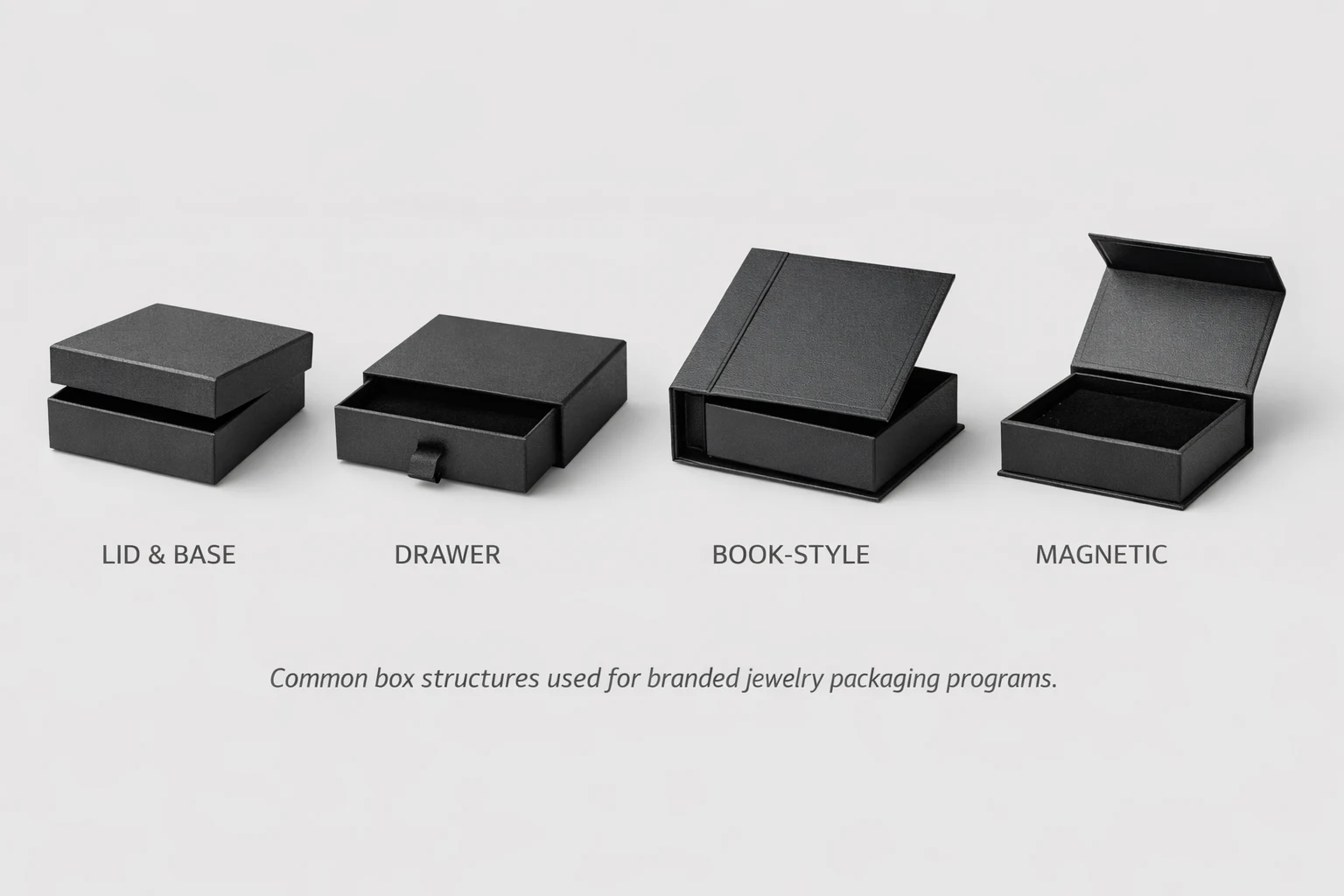
Check whether the supplier can make ring boxes, necklace boxes, bracelet boxes, earring boxes, set boxes, rigid boxes, drawer boxes, hinged boxes, and luxury presentation boxes. For category-specific sourcing, review custom jewelry boxes, custom watch trays, and custom jewelry pouches.
Insert engineering
Insert design is often where packaging succeeds or fails. Ask whether the supplier can develop ring slots, necklace hooks, bracelet channels, earring pads, foam inserts, velvet inserts, EVA structures, or multi-item layouts. See ShineStash jewelry box inserts if fit and presentation are key requirements.
Material options
Rigid paperboard, leatherette, velvet, microfiber, kraft paper, wood, and fabric all affect cost, hand feel, logo results, and shipping protection. A good supplier should explain why a material fits the jewelry line instead of simply showing a catalog.
Customization and Logo Support
Logo customization is one of the most important supplier tests. A supplier should help match the logo method to the box material, surface texture, brand position, and order quantity.
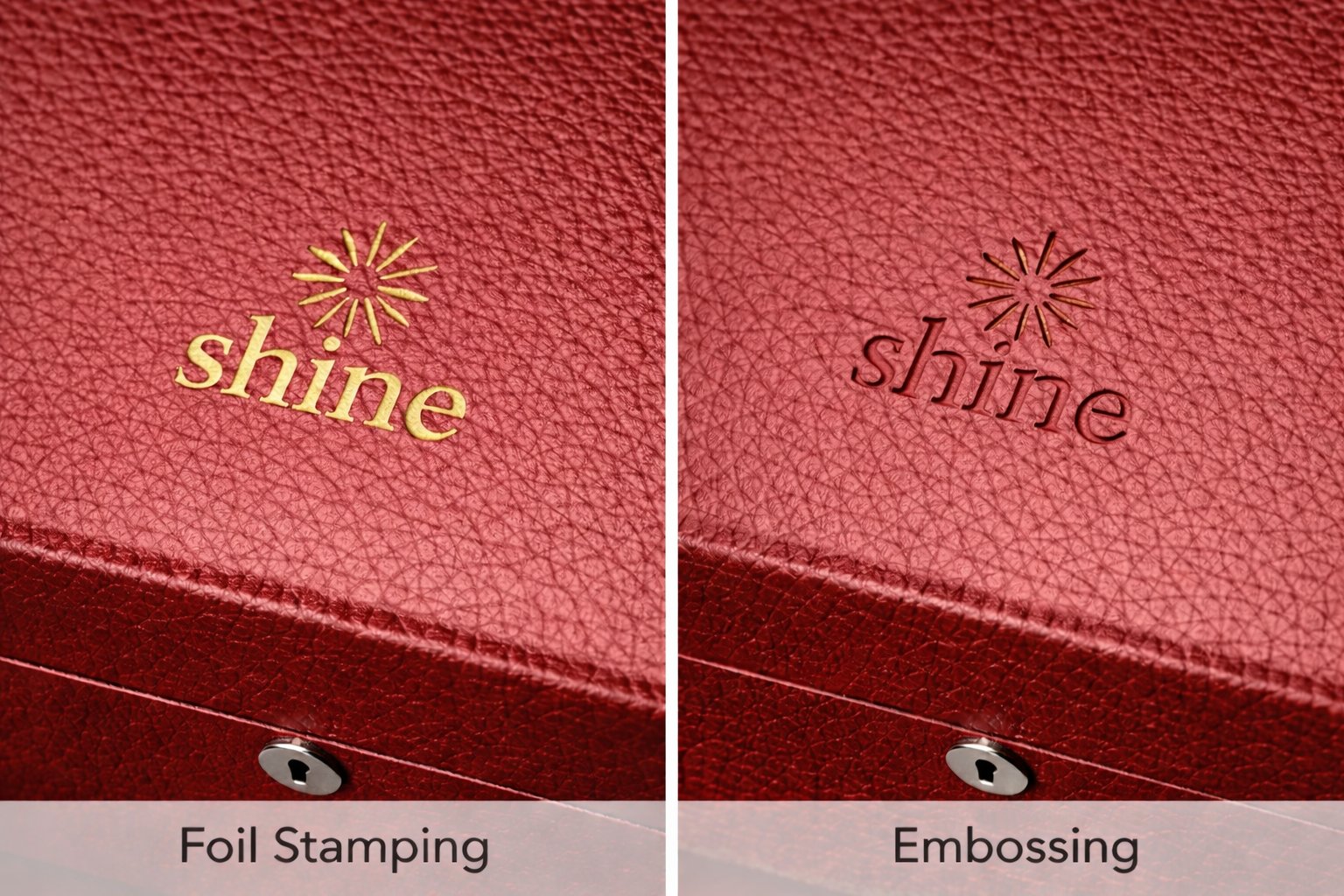
Common logo options include foil stamping, embossing, debossing, screen printing, UV printing, and metal logo plates. For deeper logo planning, use the complete guide to custom jewelry box logos or the focused article on custom jewelry boxes with logo wholesale.
| Customization item | What the supplier should clarify | Why it matters |
|---|---|---|
| Logo artwork | Vector file, logo size, placement, color reference, finish method | Prevents blurry artwork, wrong proportions, or off-center placement |
| Material match | Which logo finish works on paper, velvet, leatherette, kraft, or wood | Logo visibility and durability change by surface |
| Brand color | Pantone reference, material swatch, tolerance expectations | Color consistency matters across boxes and repeat orders |
| Insert structure | Jewelry dimensions, display angle, movement control, material choice | The insert protects the product and controls presentation |
MOQ, Sampling, and Quote Clarity
A serious supplier should explain what affects MOQ and pricing. Custom structures, special materials, color matching, logo tooling, inserts, packing method, and order quantity can all change the final quote.
Plan for a handmade sample in 7-10 days after details are confirmed and mass production in 20-30 days after PPS approval, depending on material, structure, quantity, and packaging complexity.
If you are comparing wholesale pricing and bulk production planning, connect this checklist with the jewelry box wholesale guide and the jewelry boxes in bulk guide.
Quality Control for Bulk Packaging
Quality control should be visible before production starts. The supplier should define what the approved sample means, what the PPS confirms, and which details are checked during production and before shipment.
| QC area | What to check | Common risk |
|---|---|---|
| Structure | Lid fit, drawer movement, hinge alignment, box corners, glue marks | Boxes feel loose, tight, crooked, or unfinished |
| Logo | Position, sharpness, foil coverage, deboss depth, print opacity | Logo varies between cartons or does not match the sample |
| Material | Color, texture, scratches, surface marks, edge wrapping | Mixed shades or visible defects reduce retail quality |
| Insert | Fit, slot tightness, jewelry stability, fabric cleanliness | Jewelry moves in transit or looks poorly presented |
| Packing | Individual wrapping, inner cartons, export carton strength, corner protection | Boxes arrive compressed, scratched, or dusty |
Lead Time, Export Packing, and Communication
For international B2B buyers, communication is part of supplier reliability. A good supplier should confirm what is needed before sampling, what changes affect timing, and when the buyer must approve materials, artwork, samples, or PPS.
Ask how the supplier handles EXW, FOB, and CIF arrangements, and confirm export packing before production starts. Jewelry boxes can look perfect at the factory but become unsellable if the packing method is weak.
- Confirm project timeline from RFQ to sample, PPS, mass production, and shipment.
- Ask for packing details, not just box photos.
- Confirm carton marking, inner carton method, and protection for velvet or high-gloss surfaces.
- Keep approved sample notes and production specifications for future reorders.
RFQ Checklist for B2B Buyers
Before contacting a custom jewelry packaging supplier, prepare the information below. A complete RFQ helps you receive a more realistic quote and reduces back-and-forth during sampling.
| RFQ item | What to provide | Why it helps |
|---|---|---|
| Jewelry type | Ring, necklace, bracelet, earrings, set, watch, or mixed SKU; jewelry dimensions and target selling channel | Determines box size and insert structure |
| Box direction | Reference photos, target material, color, structure, luxury level | Helps the supplier recommend feasible materials and processes |
| Logo artwork | Vector file, logo size, placement, finish preference and target color | Prevents artwork and tooling delays |
| Quantity plan | First order quantity, SKU split, reorder expectation | Supports MOQ and price break planning |
| Shipping plan | Destination, EXW / FOB / CIF preference, delivery timeline and export packing requirements | Allows the supplier to plan packing and export support |
| Sample and approval plan | Sample need, material confirmation, logo placement, insert fit, color and PPS approval | Establishes the reference for mass production and bulk QC |
Prepare a Custom Jewelry Packaging RFQ
Send ShineStash your box idea or reference, logo artwork, jewelry dimensions, material direction, insert needs, and estimated order quantity. We can help turn the request into a clear sampling and production plan.
Related Resources
Continue with these ShineStash resources to prepare your packaging project.
FAQ: Custom Jewelry Packaging Supplier
How do I compare custom jewelry packaging suppliers fairly?
Ask about box types, materials, logo methods, insert engineering, MOQ logic, handmade samples, PPS approval, production lead time, bulk QC and export packing. Compare sample quality, material match, logo accuracy, insert fit, communication speed, packing method and repeat-order support alongside unit price.
Is a jewelry box manufacturer better than a trading company?
Direct production capability can make custom sampling, QC and repeat orders easier to control. A trading company may still be useful for simple sourcing. Ask which structures, materials, inserts, logo finishes and packing methods the team controls, how sample approval is documented, and who is responsible for production and quality.
Can one supplier handle boxes, pouches, inserts and packaging sets?
A coordinated supplier can help align rigid boxes, pouches, inserts, sleeves and carton packing so the collection looks consistent and is easier to reorder. Verify the supplier can manage your required formats, materials and insert structures before placing the order.
How should samples and PPS approval be managed?
Confirm structure, material, logo placement, insert fit, color and packing on a handmade sample. Plan for a handmade sample in 7-10 days after details are confirmed; timing can vary with structure, material sourcing, logo method and custom inserts. PPS approval becomes the reference for mass production and QC comparison, with mass production in 20-30 days after PPS approval.
What should I send before asking for a custom packaging quote?
Send product type and selling channel, reference photos, box and jewelry dimensions, material and target color, insert needs, quantity and SKU split, vector logo artwork with size and placement, target market, sample need, timeline, destination, and packing or shipping requirements.
Which trade terms can ShineStash support?
ShineStash can support EXW, FOB or CIF depending on the project and shipping arrangement. Discuss the suitable option based on your logistics plan, destination and shipment requirements, and confirm export packing before production.