Sample vs Mass Production: How to Keep Custom Jewelry Box Orders Consistent
For B2B jewelry brands, a beautiful sample is not enough. The real test is whether the same material, color, logo finish, insert structure, and overall presentation can be repeated accurately in bulk production.
The gap between a sample and a bulk order is one of the biggest risks in custom packaging. Many buyers approve a prototype because it looks premium, only to find that the mass-produced order feels different in material, appears darker or lighter in color, shows weaker logo definition, uses softer inserts, or arrives with inconsistent workmanship. In a retail or wholesale environment, those differences are easy to notice and difficult to explain away.
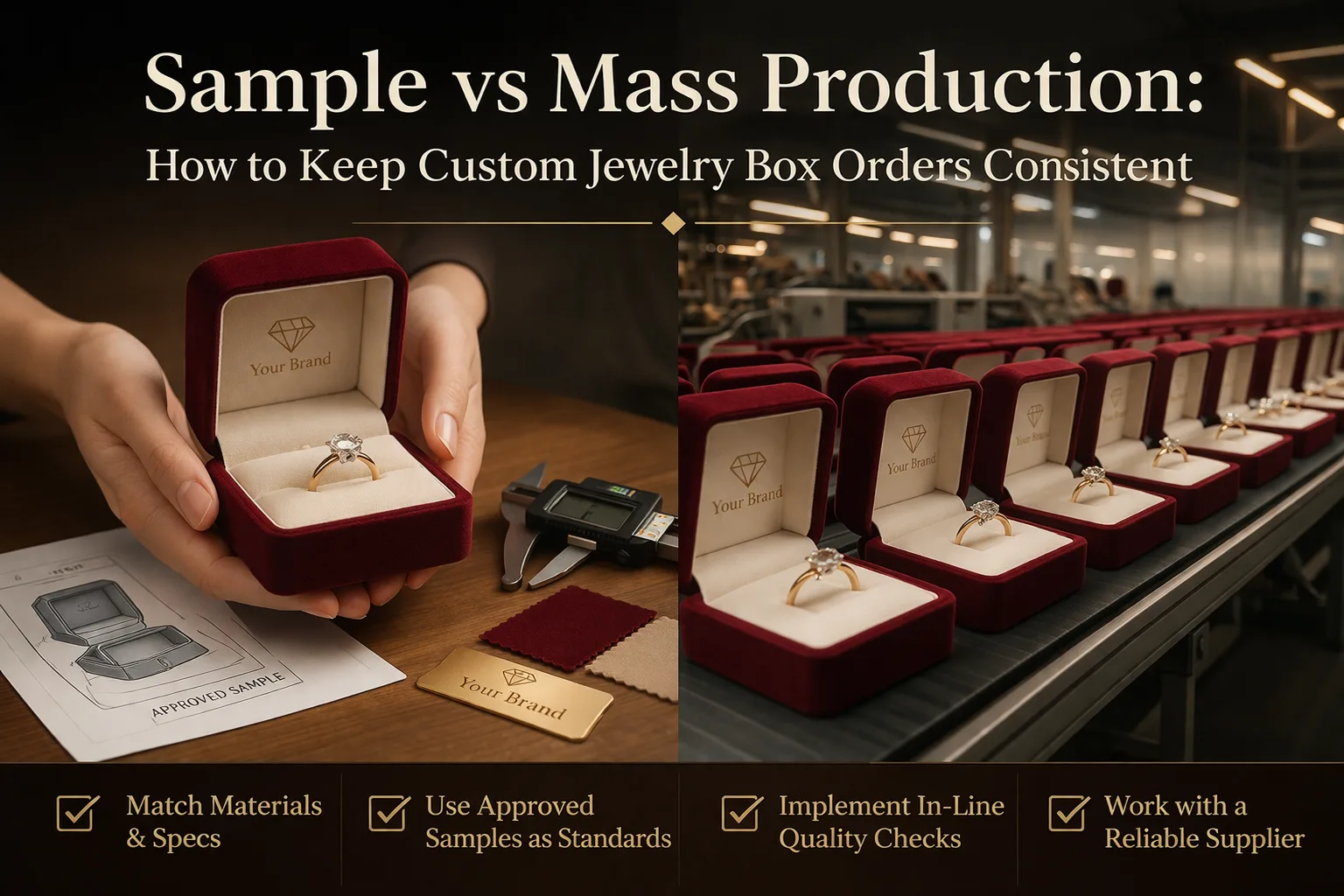
This is why sample vs mass production jewelry box consistency matters so much in B2B packaging. A sample should not be treated as a one-off display piece. It should be treated as the production reference for the full order. If that reference is not locked properly, brands risk quality complaints, visual inconsistency across product lines, higher rework costs, and reduced confidence in the supplier relationship.
This guide explains why sample-to-bulk mismatch happens, what details usually change, and how B2B buyers can reduce that risk before approving production. If you are still comparing packaging partners, read our custom jewelry box supplier guide. If you also need to plan quantities and timing, see our guide on MOQ, pricing and lead time. For inspection standards, use the jewelry box quality control guide.
TL;DR: Why Samples and Bulk Orders Go Out of Sync
- A hand-finished sample may use tighter attention to detail than normal production.
- Material batches, color lots, logo pressure, insert cutting, and carton packing can all change between sampling and mass production.
- B2B buyers should lock specifications in writing before production, not rely on visual memory or informal chat approval.
- The highest-risk differences usually appear in materials, colors, logo finishes, insert firmness, and protective packing.
- Consistency improves when the sample is treated as the approved production standard and checked against a clear pre-production checklist.
Why Sample-to-Bulk Consistency Matters
In B2B packaging, consistency is not a cosmetic detail. It affects brand credibility, shelf presentation, repeat order confidence, and customer perception. If the approved sample looks refined but the mass production order arrives with visible differences, the packaging no longer supports the same brand promise. Even small variations become more noticeable when boxes are displayed in sets, used across multiple SKU lines, or shipped to distributors and retailers.
For jewelry brands, packaging often communicates product position before the customer even touches the jewelry. That means differences in surface texture, edge wrapping, color tone, logo sharpness, insert fit, or box alignment can reduce perceived value. This is especially serious for custom packaging that is meant to feel premium, giftable, or aligned with a luxury brand system.
What Usually Changes from Sample to Mass Production
Not every mismatch is dramatic, but most problems follow predictable patterns. Buyers should know where the differences typically appear so they can inspect the right details before approving bulk production.
1. Material Feel and Surface Finish
The sample may use a cleaner wrap material, tighter lamination, or more carefully selected surface stock. In mass production, small changes in texture, sheen, or thickness can make the finished box feel less premium.
2. Color Tone
A color that looks soft and elegant in the sample can appear slightly darker, warmer, cooler, or less uniform in bulk. This happens when production uses a different lot, different lighting conditions, or weaker color control.
3. Logo Finish Quality
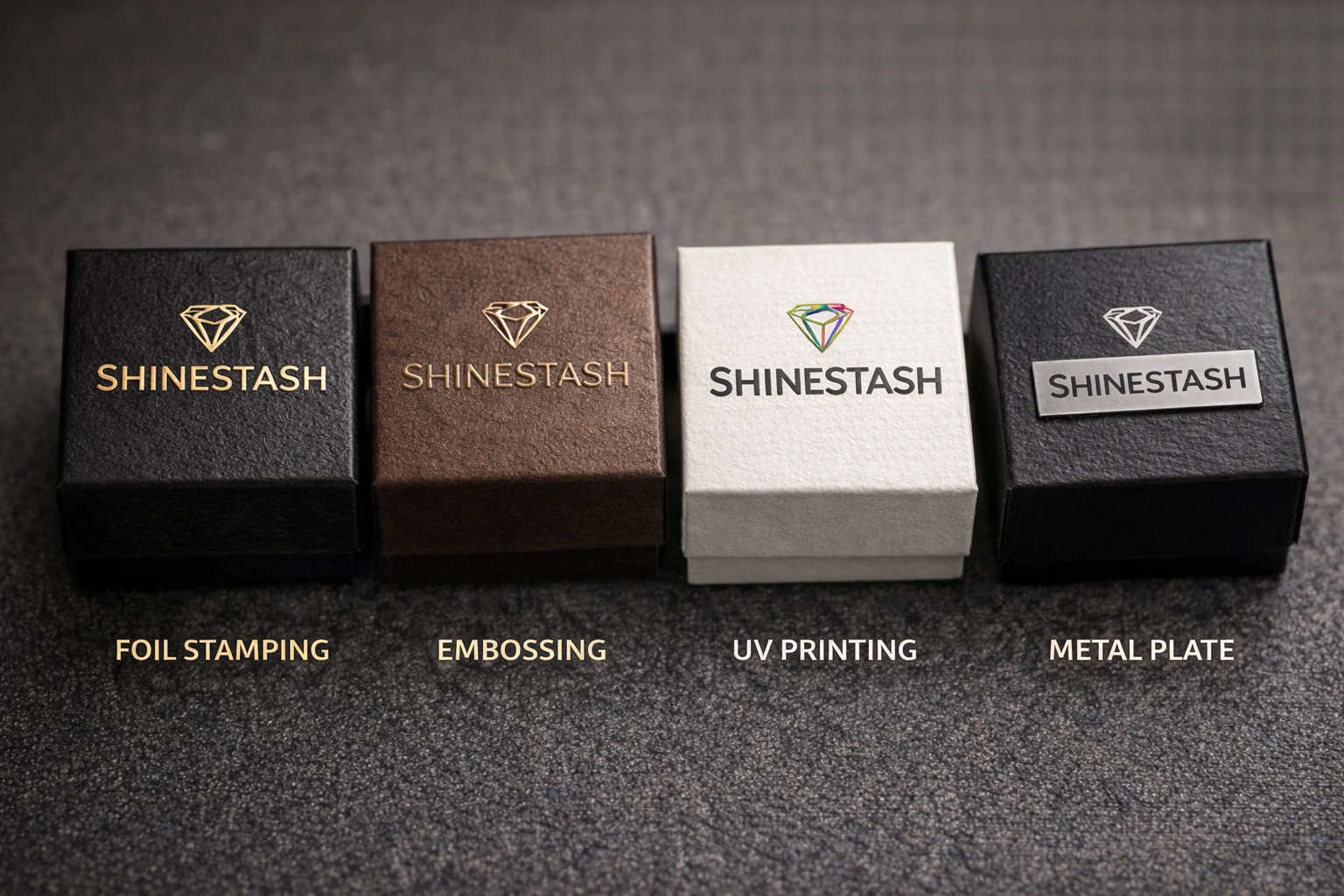
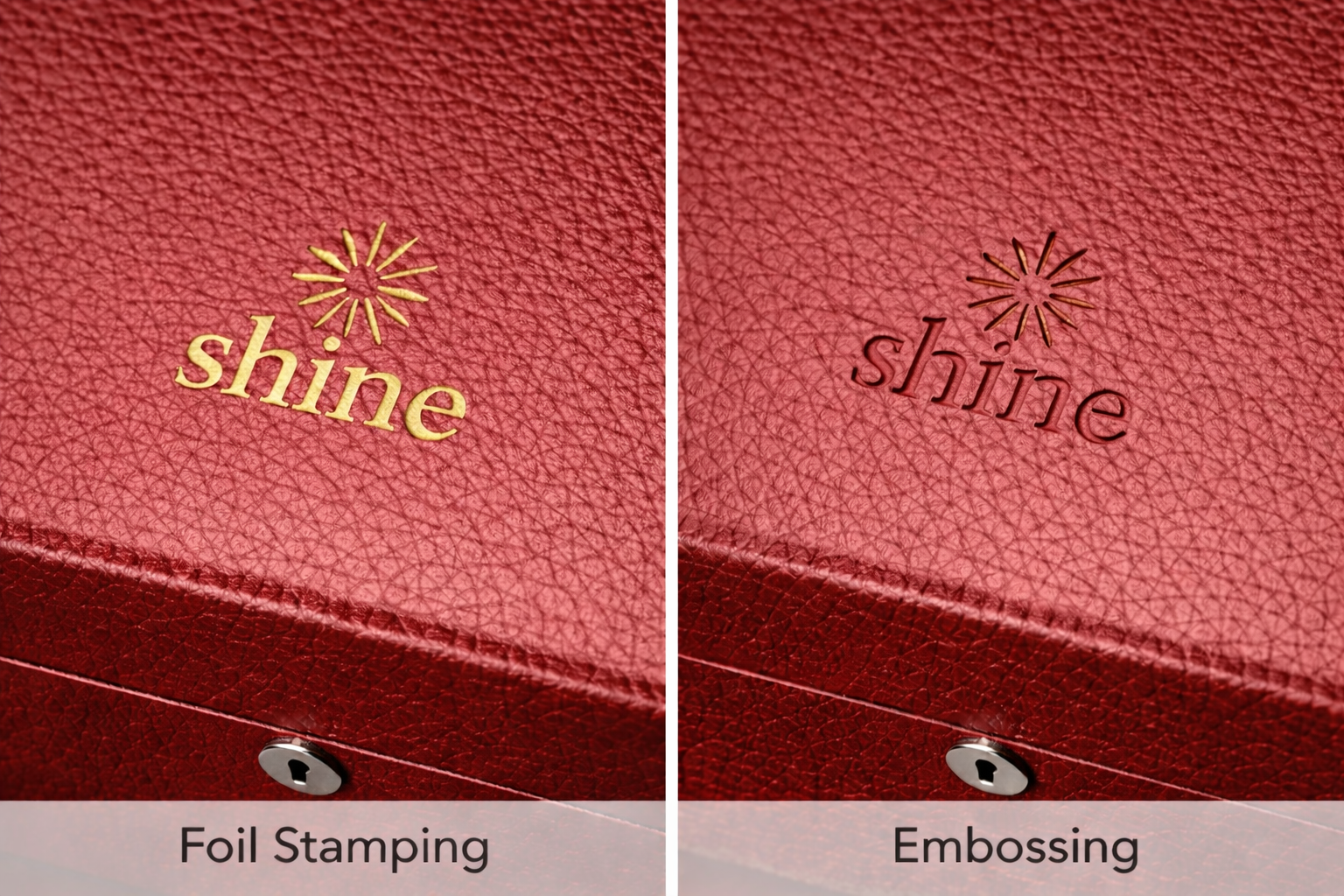
Foil stamping, embossing, debossing, UV, and metal logo placement can change in depth, sharpness, alignment, or reflectivity. If logo quality matters to the perceived value of the box, review our logo finishes guide as part of the approval process.
4. Insert Structure and Fit
In sample development, inserts are often adjusted carefully to fit the product. In bulk production, differences in foam density, slot size, flocking, or glue application can affect both support and presentation. This is especially important for rings, necklaces, and jewelry sets. Related: jewelry box insert structure guide.
5. Workmanship Details
Edges, corners, alignment, inner wraps, lid closing behavior, magnets, and surface cleanliness can all look better in a hand-finished sample than in a fast-moving bulk order if controls are weak.
6. Protective Packing
The sample may arrive protected and spotless, while bulk units can suffer rubbing, scratches, pressure marks, or corner dents if transit packing is not designed correctly. See protective packaging for jewelry boxes for more on shipment protection.
The Most Common Inconsistency Points in B2B Orders
Material Substitution or Variation
A supplier may use a close material match instead of the exact approved wrap or interior fabric if the original stock is unavailable, delayed, or not locked in correctly. Even a small variation can change the perceived quality of the box.
Color Drift Across Batches
Color inconsistency is one of the most frequent reasons buyers feel that a bulk order does not match the sample. This can affect outer paper, PU surface, velvet inserts, ribbon details, or printed sleeves. If the order is intended to sit beside earlier production lots, the difference becomes even more obvious.
Reduced Logo Sharpness
In bulk production, foil pressure, stamping temperature, tool wear, operator speed, or alignment control can affect how crisp the logo appears. Metallic logos may also vary in brightness or reflectivity if the wrong foil is used.
Insert Performance Changes
A sample insert may hold a necklace securely, but the bulk insert may allow movement because slot size, foam resilience, or flocking thickness changed. Function and appearance should both be checked, especially when the box is designed for gifting or cross-border shipping.
Packing-Level Damage
Sample boxes are rarely packed the same way as large orders. When cartons are stacked, compressed, or handled multiple times, minor structural differences become major visual issues. A bulk order that looks fine at factory level can still arrive with scuffed surfaces or crushed corners if protective packing is weak.
Why These Differences Happen
The reason a sample and a bulk order differ is not always poor intention. In many cases, the problem comes from weak process control. Buyers should understand the operational reasons behind the mismatch so they can ask better questions before production starts.
Samples Often Receive Extra Attention
A sample is usually made in small quantity and inspected closely. It may involve more manual adjustment, more careful material selection, and more time per unit. Mass production works under different speed and volume pressures, so details can drift if standards are not clearly documented.
Specifications Were Not Fully Locked
Many problems begin when a brand approves “the look” of the sample without locking exact details such as wrap material code, logo process specification, insert firmness, carton structure, or tolerance expectations. Informal approval creates room for interpretation later.
Material Batches Changed
Surface stock, lining, foils, and insert materials can vary by lot or availability. If a production order begins without confirming the same material source or an approved equivalent, visual consistency becomes harder to maintain.
Production Tolerances Were Not Defined
Box dimensions, logo position, insert opening width, lid height, and finishing edges all require tolerances. Without tolerance standards, a supplier may treat “close enough” as acceptable even when the packaging no longer matches the approved sample.
Final Packing Was Treated as Secondary
Some suppliers focus on the unit appearance and ignore the packing system that protects it. In B2B orders, the packing method is part of quality control. If that system is weak, a consistent production run can still arrive looking inconsistent.
How to Lock Specifications Before Production
The strongest way to reduce custom jewelry box production inconsistency is to turn the approved sample into a documented production standard. Buyers should not rely on memory, screenshots, or simple verbal approval.
Approve the Sample with Written Notes
When the sample is accepted, confirm the exact details in writing: outer material, color reference, logo method, logo placement, insert structure, insert material, dimensions, accessory details, and protective packing method. This creates a production baseline.
Use the Sample as the Physical Reference
The approved sample should remain the internal comparison standard for the order. If possible, ask the supplier to keep one sealed reference unit for production and quality control comparison.
Lock the High-Risk Details Separately
The highest-risk elements deserve special confirmation. These usually include logo finish, color tone, insert fit, and shipping protection. If the packaging is brand-sensitive, even minor movement in those details will be visible.
Confirm Bulk Packing Before Production Starts
Do not leave carton structure and product protection until the last stage. Ask how each box will be packed, how cartons are layered, and whether surfaces or corners are protected from friction and compression.
Define Inspection Checkpoints
B2B buyers should ask when the supplier checks materials, logo quality, insert fit, and finished goods appearance. If inspection only happens at the end, correction becomes more expensive and less reliable.
Buyer Checklist Before Bulk Approval
Use the checklist below before confirming a mass production order. It helps prevent the most common sample-to-bulk problems.
| Checkpoint | What to Confirm | Why It Matters |
|---|---|---|
| Outer Material | Exact wrap material, texture, finish, and thickness | Changes the visual and tactile quality of the box |
| Color Reference | Approved color standard or physical reference | Reduces lot-to-lot color drift |
| Logo Process | Foil, emboss, deboss, UV, or metal plate specification | Affects brand presentation and perceived value |
| Logo Position | Centering, spacing, and alignment tolerance | Prevents visible layout inconsistency |
| Insert Structure | Slot size, support level, lining, and product fit | Ensures secure holding and clean presentation |
| Box Dimensions | Internal and external size plus tolerance expectations | Prevents fit issues and visual mismatch |
| Workmanship Standard | Corner wrapping, glue control, cleanliness, alignment | Determines premium feel in mass production |
| Protective Packing | Unit protection, carton arrangement, anti-rub measures | Reduces transit damage and arrival inconsistency |
| Inspection Process | Material check, in-line QC, and final inspection logic | Improves repeatability and reduces defects |
| Approval Record | Written confirmation linked to the approved sample | Reduces disputes and interpretation errors |
How Reliable Suppliers Reduce the Risk
A strong supplier does not simply say that bulk production will match the sample. They build that result through process control. This is one of the clearest differences between a supplier that can support long-term B2B cooperation and one that can only produce attractive prototypes.
We Treat the Sample as a Control Standard
Reliable suppliers do not treat sample approval as the end of the process. They use the approved unit as a control reference for production, in-line checks, and final inspection.
we Check High-Risk Details Early
Instead of waiting until the order is finished, good suppliers verify logo quality, insert fitting, material match, and box structure during earlier production stages. This lowers correction cost and improves consistency.
we Align Packing with Product Sensitivity
Suppliers with good B2B packaging discipline understand that premium boxes need premium protection. They build packing systems based on surface sensitivity, structure strength, shipping route, and carton handling conditions.
we Communicate Specification Changes Before Production
If a material is unavailable or a process change becomes necessary, a reliable supplier communicates that before proceeding. They do not substitute quietly and hope the difference will go unnoticed.
How This Fits Into the Wider B2B Buying Process
Sample-to-bulk consistency is only one part of supplier evaluation, but it connects directly to other procurement decisions. A supplier that manages consistency well is more likely to handle quality control well. A supplier that cannot hold consistency may also struggle with lead time predictability, rework reduction, and safe shipment packing.
That is why this topic should be reviewed together with supplier selection, quality inspection, and order planning. If you are still assessing factory capability, return to the reliable custom jewelry box supplier guide. If your next concern is timing or minimum order planning, go to MOQ, pricing and lead time. If you need control standards for execution, use the quality control guide.
Related Guides
Use these pages together to build a complete B2B packaging decision workflow:
- How to Choose a Reliable Custom Jewelry Box Supplier for B2B Brands
- MOQ, Pricing and Lead Time for Custom Jewelry Box Orders Explained
- How to Evaluate Quality Control in Bulk Jewelry Box Manufacturing
- How Logo Finishes Affect the Perceived Value of Custom Jewelry Boxes
- How to Choose the Right Insert Structure for Rings, Necklaces and Bracelets
- How Protective Packaging for Jewelry Boxes Reduces Shipping Damage
Final Thoughts
A packaging sample should create confidence, not false security. In B2B jewelry packaging, the real measure of supplier reliability is whether the same standard can be repeated across the full order. Buyers who treat the sample as a production standard, lock specifications clearly, and confirm packing and inspection expectations early will reduce risk significantly.
The goal is not perfection in one prototype. The goal is repeatable execution in real production. That is what makes sample approval meaningful and what turns a supplier into a dependable long-term packaging partner.
FAQ
Why do sample and mass production jewelry boxes often look different?
Samples are usually made in small quantity with extra attention, while bulk production runs under normal manufacturing conditions. Differences often appear in material feel, color tone, logo finish, insert firmness, workmanship, and protective packing.
What details should B2B buyers lock before approving bulk production?
Buyers should confirm the outer material, color reference, logo process, logo placement, insert structure, box dimensions, workmanship standard, protective packing method, and inspection checkpoints in writing.
What is the biggest risk in sample-to-bulk inconsistency?
The biggest risk is not only visual mismatch. It is the loss of brand consistency, increased complaint risk, lower perceived value, and reduced confidence in the supplier relationship.
How can buyers reduce custom jewelry box consistency problems?
Use the approved sample as the production reference, lock key specifications in writing, confirm high-risk details separately, review packing methods before production, and make sure the supplier has a real quality control process.
Does protective packing affect whether bulk orders match the sample?
Yes. Even if production quality is stable, weak protective packing can cause scratches, dents, rubbing, or crushed corners during transit. That can make bulk goods appear inconsistent when they arrive.
Need Better Control Before Approving a Bulk Packaging Order?
Use this page as a working checklist before mass production starts. Then review supplier selection, MOQ planning, and quality control standards together so the approved sample becomes a repeatable production result, not a one-time exception.