How to Evaluate Quality Control in Bulk Jewelry Box Manufacturing
In B2B jewelry packaging, quality control is not only about rejecting defective boxes. It is about building repeatable standards for materials, color, logo finish, insert fit, workmanship, protective packing, and final shipment readiness.
Many packaging problems do not start at the moment of final inspection. They begin much earlier, when materials are not controlled properly, logo standards are not defined clearly, insert tolerances are too loose, or packing methods are treated as secondary. That is why jewelry box quality control should be viewed as a full process, not a last-minute checkpoint.
For B2B buyers, weak quality control creates more than visible defects. It can lead to inconsistent brand presentation, unstable repeat orders, damaged goods in transit, delayed launches, and higher complaint costs. A packaging sample may look excellent, but if the supplier cannot repeat that standard in bulk production, the order still carries risk. This is why quality control should be assessed together with supplier capability and production consistency.
This guide explains how to evaluate bulk jewelry box quality control, what checkpoints matter most, and how B2B buyers can judge whether a supplier’s control system is practical or superficial. If you are still screening suppliers overall, start with our custom jewelry box supplier guide. If your concern is consistency between prototypes and large orders, review sample vs mass production. If your order also needs safe export protection, see protective packaging for jewelry boxes.
TL;DR: What Good Jewelry Packaging QC Looks Like
- Quality control starts with material confirmation, not only finished goods checking.
- The highest-risk checkpoints are usually material consistency, color accuracy, logo quality, insert fit, edge workmanship, and transit protection.
- A strong supplier uses the approved sample as a reference standard for production and inspection.
- Final inspection is important, but in-line checks are what prevent defects from spreading across the order.
- B2B buyers should ask how problems are prevented, not only how they are detected.
Why Quality Control Matters in Bulk Jewelry Box Manufacturing
A custom jewelry box is usually judged as one finished object, but in production it is the result of many individual controls: board structure, outer wrap, inner lining, logo process, insert assembly, surface cleanliness, edge handling, and protective packing. If any one of those areas drifts, the finished result can look noticeably weaker even when the overall box shape remains correct.
In B2B packaging, quality control protects more than appearance. It protects order consistency across collections, supports wholesale presentation, reduces replacement risk, and strengthens the buyer’s confidence in future repeat orders. For brands using packaging as part of perceived value, quality control is directly connected to commercial performance.
What Should Be Checked in Jewelry Box Quality Control
The best way to assess custom jewelry box inspection is to break the process into major control categories. This makes it easier to judge whether a supplier is working with real standards or relying on broad claims such as “high quality” without measurable checkpoints.
1. Material Consistency
Outer wrap material, lining, board thickness, insert material, flocking, ribbon, and accessory parts should match the approved sample or approved reference. Small material changes can affect both feel and appearance.
2. Color Accuracy
Color drift is one of the most common problems in jewelry packaging. The outer surface, insert lining, and decorative details should be checked under practical lighting conditions against the approved standard.
3. Logo Quality
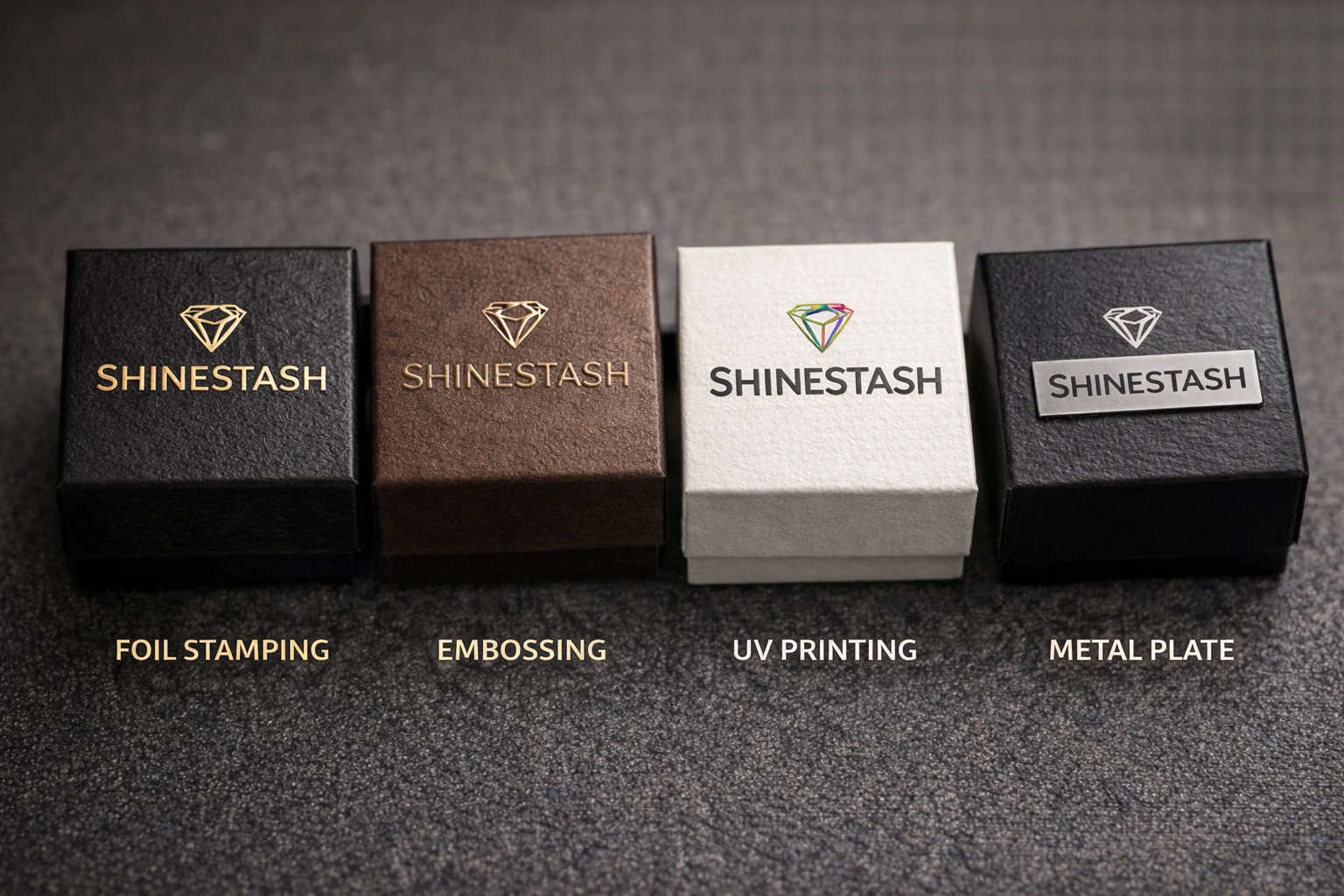
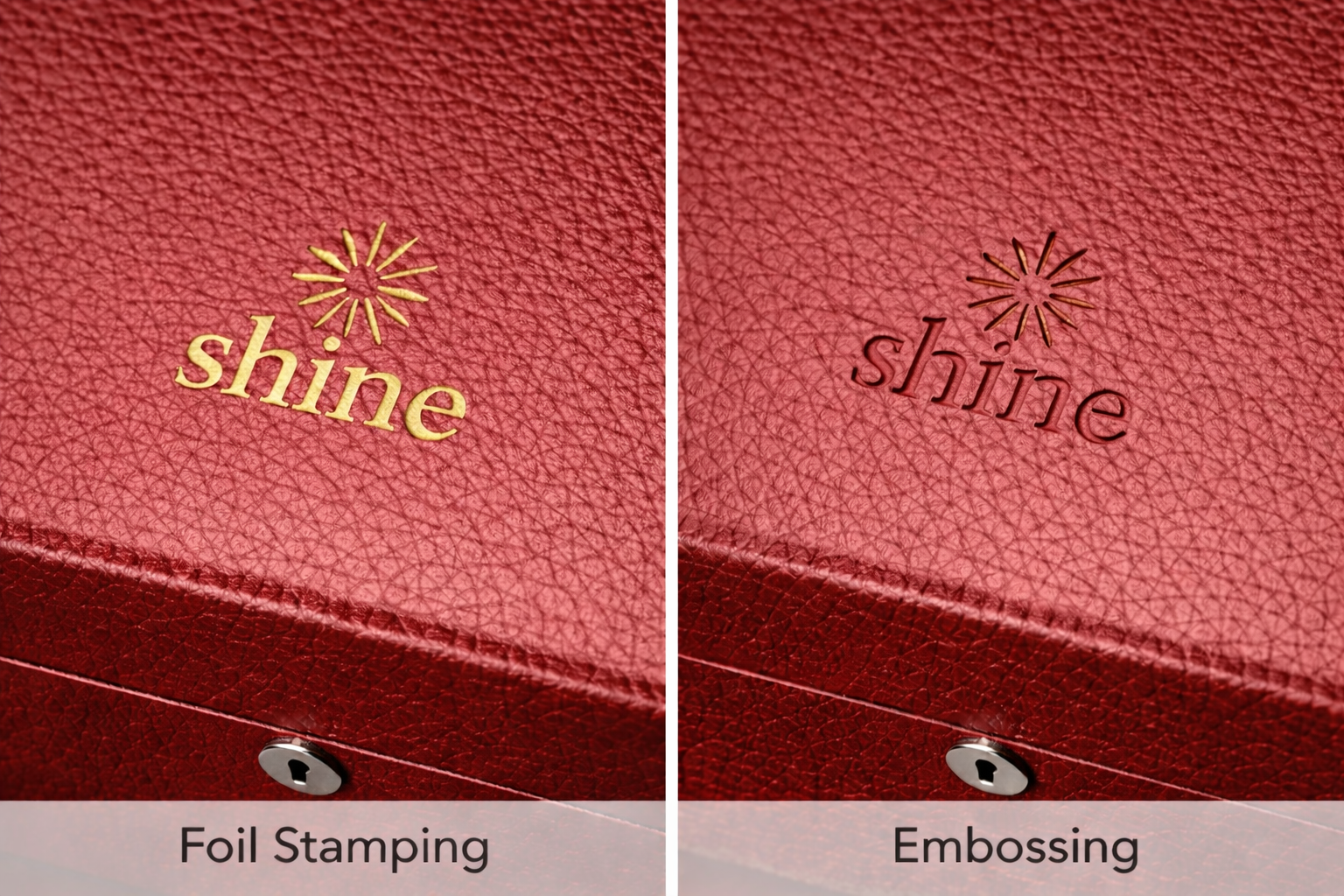
Foil stamping, embossing, debossing, UV, and metal logo applications should be checked for sharpness, depth, alignment, cleanliness, and consistency across the run. If branding is central to the project, review our logo finishes guide as part of QC planning.
4. Insert Fit and Function
Inserts should hold the jewelry properly, present it cleanly, and maintain structure during handling and shipment. This matters especially for rings, necklaces, bracelets, and set boxes. Related: jewelry box insert structure guide.
5. Workmanship and Assembly
Corners, edges, lid alignment, inner wraps, magnets, hinges, glue control, and overall cleanliness all affect perceived quality. These details are where bulk orders often begin to look less premium than the approved sample.
6. Protective Packing
A box that leaves the factory in good condition can still arrive damaged if packing control is weak. Unit protection, carton arrangement, anti-rub measures, and compression resistance are part of packaging QC, not separate from it.
The Six Most Critical QC Areas for B2B Buyers
Material Match
The supplier should confirm that the production material matches the approved sample in texture, sheen, thickness, and finish. Even when the visual difference seems minor, brands often notice it immediately once several boxes are displayed together.
Logo Execution
Logos should be reviewed for placement accuracy, clean edges, even pressure, and consistent visual effect. A brand logo that is too shallow, shifted, blurred, or inconsistent across cartons can make the entire order feel downgraded.
Insert Performance
A premium-looking insert is not enough if the jewelry does not sit correctly. QC should confirm slot size, tension, stability, surface finish, and whether the insert supports the intended jewelry category without unwanted movement.
Structural Consistency
Lid closing feel, corner shape, box height, magnet performance where relevant, drawer movement, and overall dimensional balance should remain consistent throughout the order. This is especially important for premium rigid box formats.
Surface Cleanliness
Marks, dust, glue residue, scratches, pressure lines, and wrap contamination can reduce perceived value quickly. These issues are often missed when inspection focuses only on structure and ignores surface finish standards.
Shipment Readiness
A B2B packaging order is not finished when the box looks good on the bench. It is finished when it is packed in a way that protects the same appearance through warehousing, handling, and international transport.
Where QC Should Happen During Production
Good quality control in jewelry box manufacturing does not happen at one single stage. It should appear in at least three layers: incoming material control, in-line production control, and final inspection before packing or shipment.
Incoming Material Check
Materials should be checked before production starts. This includes wrap material, lining fabric, boards, inserts, foils, ribbons, magnets, and accessories. If incorrect materials enter the line, later inspection becomes corrective rather than preventive.
In-Line Process Check
During production, suppliers should check logo effect, wrapping quality, insert fit, assembly alignment, and workmanship details before defects multiply across the full batch. In-line QC is one of the clearest signs of a mature factory process.
Finished Goods Inspection
Finished units should be inspected for appearance, logo consistency, structural accuracy, cleanliness, insert quality, and closing behavior. This stage helps catch visible problems before packaging is sealed.
Packing Inspection
Unit protection, carton layout, layering, outer carton integrity, and shipment labels should also be checked. Transit protection should be part of final QC, especially for B2B export orders. Related: protective packaging for jewelry boxes.
Common Quality Problems in Bulk Orders
Most bulk jewelry box complaints fall into a relatively small set of recurring issues. Buyers who know these patterns can ask more precise QC questions before shipment.
Inconsistent Color or Material Tone
Different cartons within the same order may show small but noticeable color variation. This often happens when materials are not controlled tightly enough or when approved references are not used properly during production.
Unstable Logo Quality
Some units may have crisp, centered logos while others appear lighter, shallower, or slightly shifted. This is a classic sign that the logo process was not monitored consistently during the run.
Loose or Misfitting Inserts
Jewelry movement inside the box, uneven slots, or inserts that feel too soft can weaken both presentation and product protection. These problems often appear when insert materials or cutting tolerance are not checked closely.
Weak Workmanship at Corners and Edges
Wrinkles, uneven corners, visible glue, edge lifting, or lid misalignment make a packaging order look less refined. These are usually production-discipline issues rather than design issues.
Transit Damage That Should Have Been Prevented
Scuffs, dents, pressure marks, and rubbed surfaces can happen even when the product was manufactured correctly. This usually points to weak packing control rather than weak unit production.
How Buyers Can Evaluate a Supplier’s QC System
Buyers do not always need to inspect a factory in person to judge whether the QC system is credible. They can often tell from how the supplier explains standards, controls references, and handles approval.
Ask What the Approved Sample Controls
The supplier should be able to explain how the approved sample is used as a reference for production and inspection. If the sample is treated only as a sales-stage object, consistency risk rises.
Ask Which Details Are Checked In-Line
Strong suppliers can explain which checkpoints happen during production, not only at the end. If the answer is vague, the system may be too reactive.
Ask How Defects Are Classified
Even without going into formal audit language, suppliers should be able to explain what they consider unacceptable, what they rework, and what they allow within tolerance. This reveals how serious their QC discipline is.
Ask How Packing Is Controlled
Packaging protection should not be left outside the QC conversation. A supplier with mature thinking will explain unit protection, carton layout, anti-rub measures, and how boxes are protected during transport.
Compare QC Logic with Sample-to-Bulk Consistency
If a supplier talks confidently about quality but cannot explain how they keep the production run aligned with the sample, the QC system may not be as strong as it sounds. Related: sample vs mass production.
Buyer Checklist Before Shipment
Use the checklist below before confirming shipment or approving final inspection results for a bulk jewelry box order.
| Checkpoint | What to Verify | Why It Matters |
|---|---|---|
| Material Match | Outer wrap, lining, insert material, accessories match approved standard | Keeps the production run aligned with the sample |
| Color Consistency | Units and cartons show stable tone under practical inspection conditions | Reduces visible batch variation |
| Logo Quality | Sharpness, alignment, depth, cleanliness, and repeatability | Protects brand presentation |
| Insert Fit | Correct support, slot size, firmness, and jewelry stability | Supports both function and perceived value |
| Workmanship | Corners, edges, wrapping, glue control, lid alignment, cleanliness | Determines premium look and feel |
| Structural Performance | Open-close behavior, magnet performance, drawer smoothness, dimensional balance | Ensures repeatable user experience |
| Surface Condition | No obvious scratches, pressure marks, dust, stains, or rub damage | Prevents visual downgrade at arrival |
| Packing Method | Unit protection, carton arrangement, dividers, anti-rub measures | Reduces transit-related defects |
| Reference Alignment | Final goods are checked against approved sample or written spec | Prevents subjective acceptance standards |
| Corrective Logic | Supplier can explain how defects are handled before shipment | Shows real QC discipline instead of surface-level claims |
How QC Connects to Cost, Timing, and Supplier Choice
Quality control should not be separated from commercial decisions. A low quotation may become less attractive if it depends on weak inspection, loose tolerances, or under-protected shipment packing. Likewise, an apparently fast lead time may not be useful if it leaves little room for in-line control or correction. This is why QC should be reviewed together with MOQ, pricing, timing, and supplier reliability.
If you are weighing the commercial side of the project, continue with MOQ, pricing and lead time. If you are still deciding which supplier is more dependable overall, return to the reliable custom jewelry box supplier guide.
Related Guides
Use these pages together to build a stronger B2B packaging decision process:
- How to Choose a Reliable Custom Jewelry Box Supplier for B2B Brands
- Sample vs Mass Production: How to Keep Custom Jewelry Box Orders Consistent
- MOQ, Pricing and Lead Time for Custom Jewelry Box Orders Explained
- How Logo Finishes Affect the Perceived Value of Custom Jewelry Boxes
- How to Choose the Right Insert Structure for Rings, Necklaces and Bracelets
- How Protective Packaging for Jewelry Boxes Reduces Shipping Damage
Final Thoughts
A supplier’s real quality level is not proven by a polished sample alone. It is proven by how consistently that standard can be maintained across the full order, through production, inspection, and shipment. That is what B2B buyers should look for when evaluating jewelry packaging QC.
The strongest QC systems do not rely on catching mistakes at the end. They reduce the chance of those mistakes appearing in the first place. For packaging projects where brand perception matters, that difference is critical.
FAQ
What should be included in jewelry box quality control?
Jewelry box quality control should cover material matching, color consistency, logo quality, insert fit, workmanship, surface cleanliness, structural performance, and protective packing for shipment.
Why is final inspection alone not enough?
Final inspection can catch visible defects, but it does not prevent the same problem from spreading across the production run. In-line checks are needed to control quality earlier and more effectively.
What are the most common bulk quality problems in custom jewelry boxes?
The most common issues are color drift, unstable logo quality, loose inserts, poor edge workmanship, glue marks, lid misalignment, surface scuffs, and shipment damage caused by weak packing.
How can buyers tell whether a supplier has a real QC system?
Buyers should ask how the approved sample is used, what is checked during production, how defects are handled, and how packing is controlled. Clear, process-based answers usually indicate stronger QC discipline.
Does protective packing count as part of jewelry packaging QC?
Yes. If boxes leave the factory in good condition but arrive scratched, dented, or rubbed, the order still fails quality expectations. Shipment protection is part of the QC result.
Need a Better QC Framework Before Shipment?
Use this page as a review standard before approving bulk goods. Then cross-check supplier reliability, sample-to-bulk consistency, and protective packing so the final order is controlled as a full B2B packaging system, not only as a finished box.