Custom Necklace Boxes: Inserts, Logos and B2B Planning
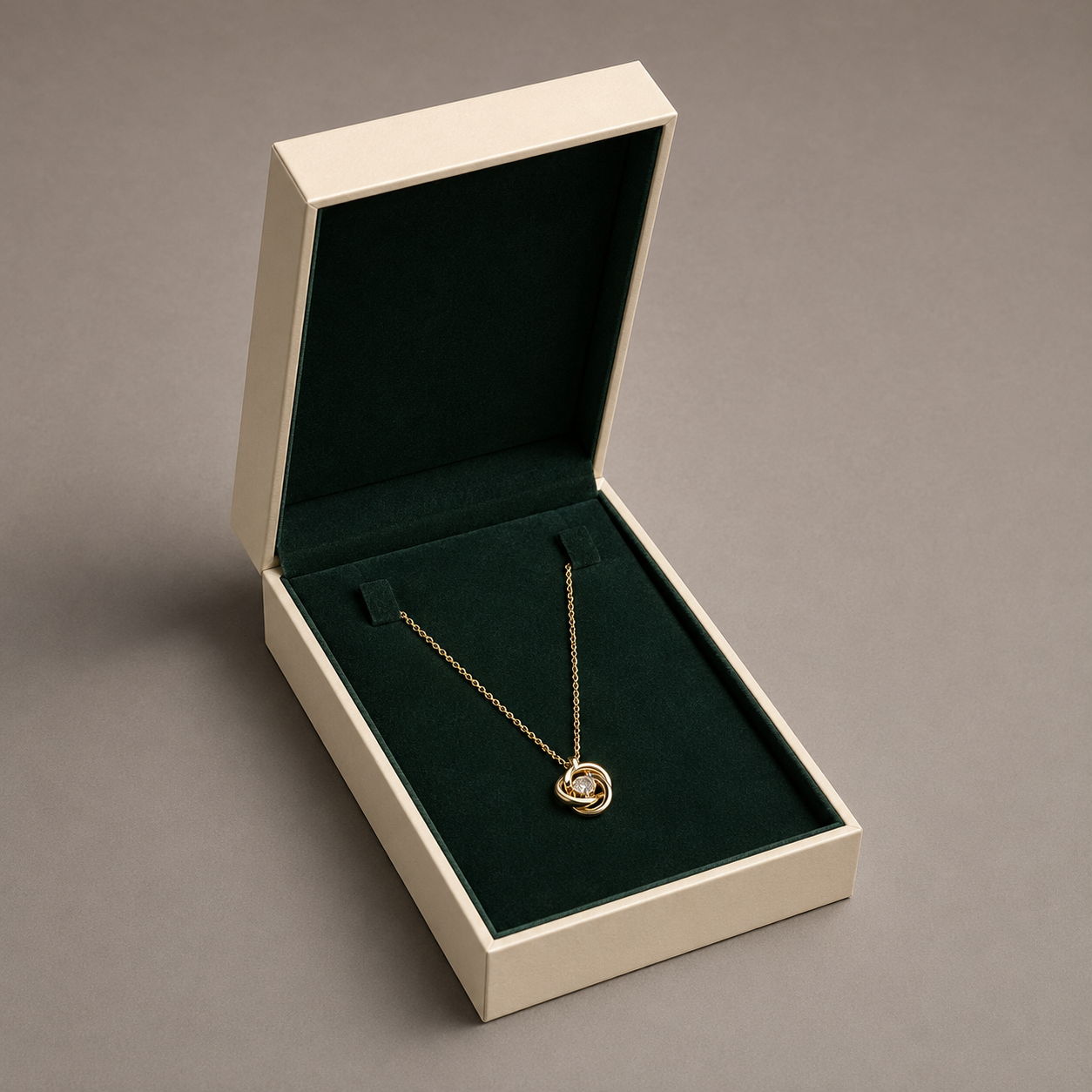
A necklace box needs to show the pendant clearly while keeping the chain controlled from packing to retail handover. The useful brief is not just an outer dimension: it explains chain length, pendant profile, closure position, insert route, logo treatment and the wider packaging program.
- Pendant position and chain routing
- Anti-tangle tabs, slots and extension-chain allowance
- Lid clearance and presentation angle
- Logo placement, sample approval and bulk QC
Build the packaging around the jewelry and the handover
Necklace packaging fails when the chain shifts, tangles or covers the pendant after a customer opens the box. Start with the actual jewelry dimensions and desired presentation, then choose a structure and insert that control movement without making the pack-out slow. For the broader range, see custom jewelry boxes for wholesale programs.
Choose the box direction before specifying the outside
Choose the box around the jewelry profile and selling channel. A fine pendant, layered chain and statement necklace can need very different retention even when their outer boxes look similar.
| Box direction | Best fit | Insert requirement | Branding direction | Brief to provide |
|---|---|---|---|---|
| Compact hinged case | Single pendants and daily fine jewelry | Top tabs guide the chain; a central location keeps the pendant visible | Centered lid mark or interior-lid message | Chain length, pendant width and drop |
| Rigid lid-and-base box | Retail gift programs and scalable collections | Covered board with tabs, slots or a removable necklace pad | Foil, debossing or controlled print area | Inside dimension, material, quantity by size |
| Drawer box with sleeve | Care-card, pouch or layered presentation | Separated compartment for chain, pendant and collateral | Sleeve logo and inner reveal | Pack-out sequence and accessories |
| Set presentation box | Necklace with earrings or coordinated gift set | Independent necklace and earring retention areas | One logo system across box, pouch and bag | All jewelry dimensions and item order |
Use the insert to control the chain, not just fill empty space
The insert must manage two different elements: the pendant should remain the visual center, while the chain needs a controlled path that does not pull the pendant off-axis. Photos on a ruler, clasp position and extension-chain length help define the right tabs and depth before sampling.
- Measure the full chain, pendant width and maximum pendant depth with the bail included.
- Identify whether the clasp and extension chain need their own recess, tab or protected route.
- Test opening, closing and light handling to check the pendant remains centered and the chain does not cross over it.
- Review whether the selected lining creates enough contrast for retail presentation and product photography.
Necklace dimensions to collect before the insert is drawn
A photo is useful, but it is not a production specification. Record the dimensions that control where the chain sits, how the pendant faces and whether the lid can close without touching the jewelry. These inputs also make later reorders easier because the approved insert can be compared against the same measurement sheet.
| Specification item | What to provide | Why it affects the packaging |
|---|---|---|
| Chain construction and full length | Cable, curb, bead or layered construction plus the closed length | Determines the path, tab spacing and whether the chain can be held without a visible twist. |
| Pendant envelope | Width, height, depth and bail position | Defines the center location, lower clearance and lid depth. |
| Clasp and extension chain | Clasp type, extension length and the maximum closed length | Prevents a clasp or extension from crossing the pendant or lifting the insert. |
| Collection range | Smallest and largest pendant planned for the same box | Shows whether one insert can honestly support the range or needs a second layout. |
| Opening orientation | Whether the necklace is handed over flat, upright or shown in a display case | Sets the visible chain angle and the location of retention points. |
| Pack-out components | Pouch, card, care leaflet, tissue or outer sleeve | Confirms the finished package can close and remain orderly. |
Make the logo work with the necklace presentation
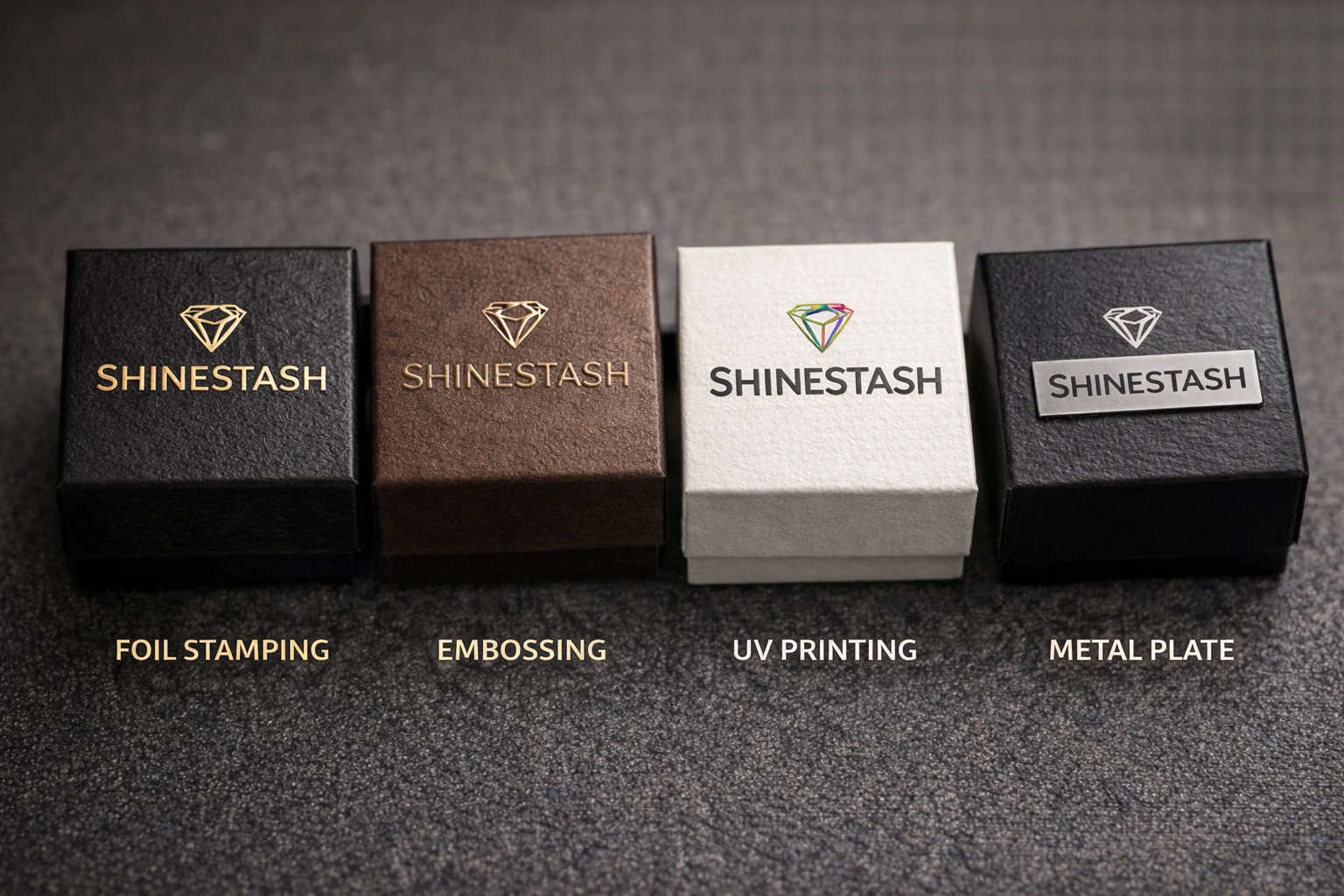
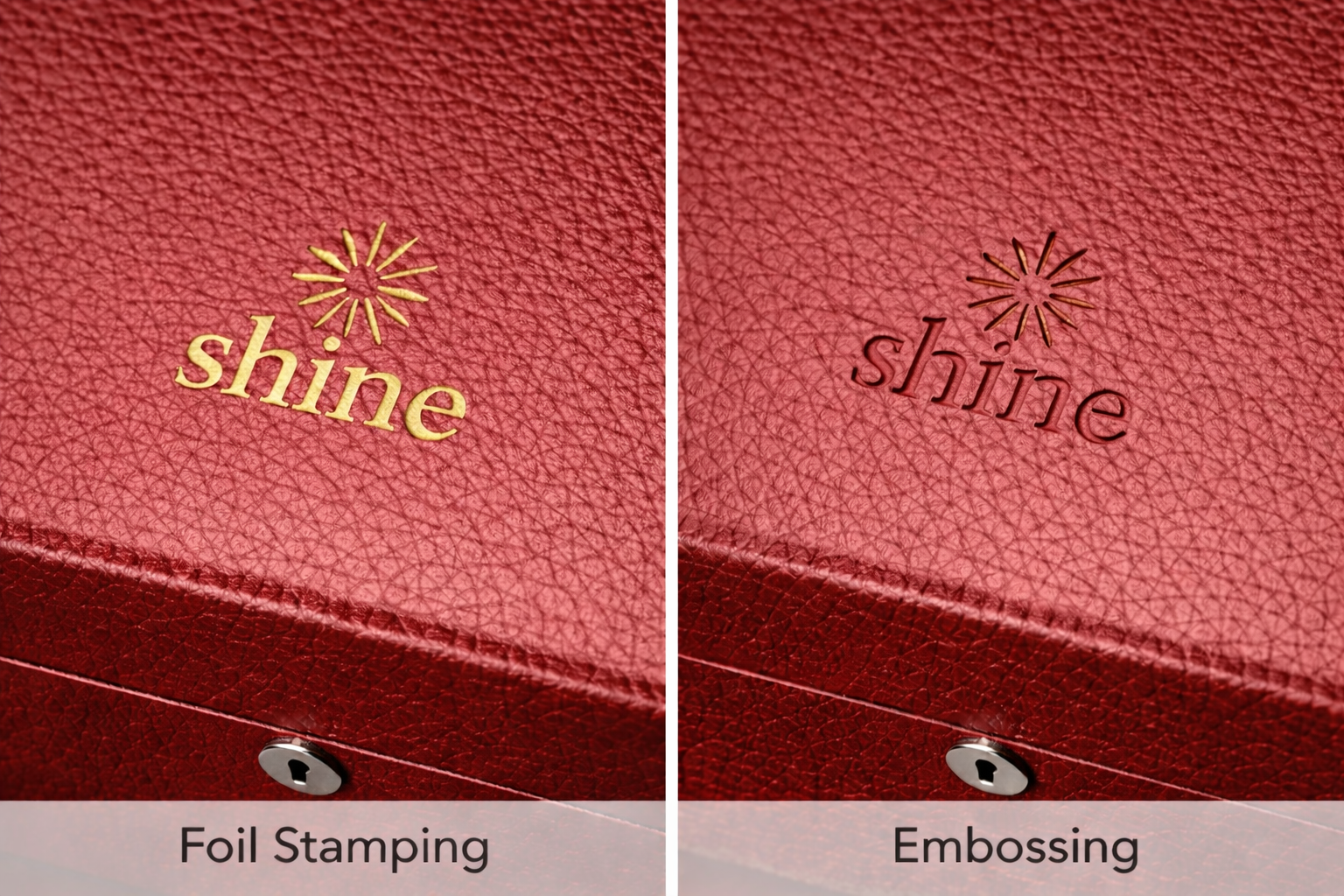
A jewelry brand can place its mark on the lid, inside lid, sleeve or a small plate. The choice should follow the cover material, logo detail and how quiet or visible the collection needs to feel. Confirm the method on the handmade sample rather than judging it from a flat artwork file. Compare foil stamping and embossing for jewelry boxes before locking the finish.
Wrapped rigid board
A practical route for controlled color, clear foil placement and consistent presentation across several necklace sizes.
Velvet or microfiber
Adds softness and depth, but the nap direction, color consistency and logo contrast need close sample review.
Leatherette cover
Useful for a more structured tactile direction when the collection needs repeated retail handling.
Avoid these necklace-packaging mistakes before bulk approval
The sample should be used to challenge the proposed route, not simply to confirm the cover color. These are the recurring points worth resolving before the PPS becomes the batch standard.
Approving from outside dimensions alone
The outside size does not show pendant clearance, chain route or clasp position. Fit decisions need the jewelry profile.
Using one tab pattern for every chain
A fine pendant chain, a heavy chain and a layered necklace have different movement and tension behavior.
Ignoring the extension chain
An extension can collect under the pendant or push against the lid unless it has a controlled location.
Selecting logo before the cover material
Foil, debossing and print quality depend on the wrap, texture and contrast, so approve the combination together.
Treating the sample as a one-time reference
Keep the approved insert, color and pack-out detail as the PPS comparison point for bulk QC and reorders.
Extend the necklace box into a coordinated gift handover
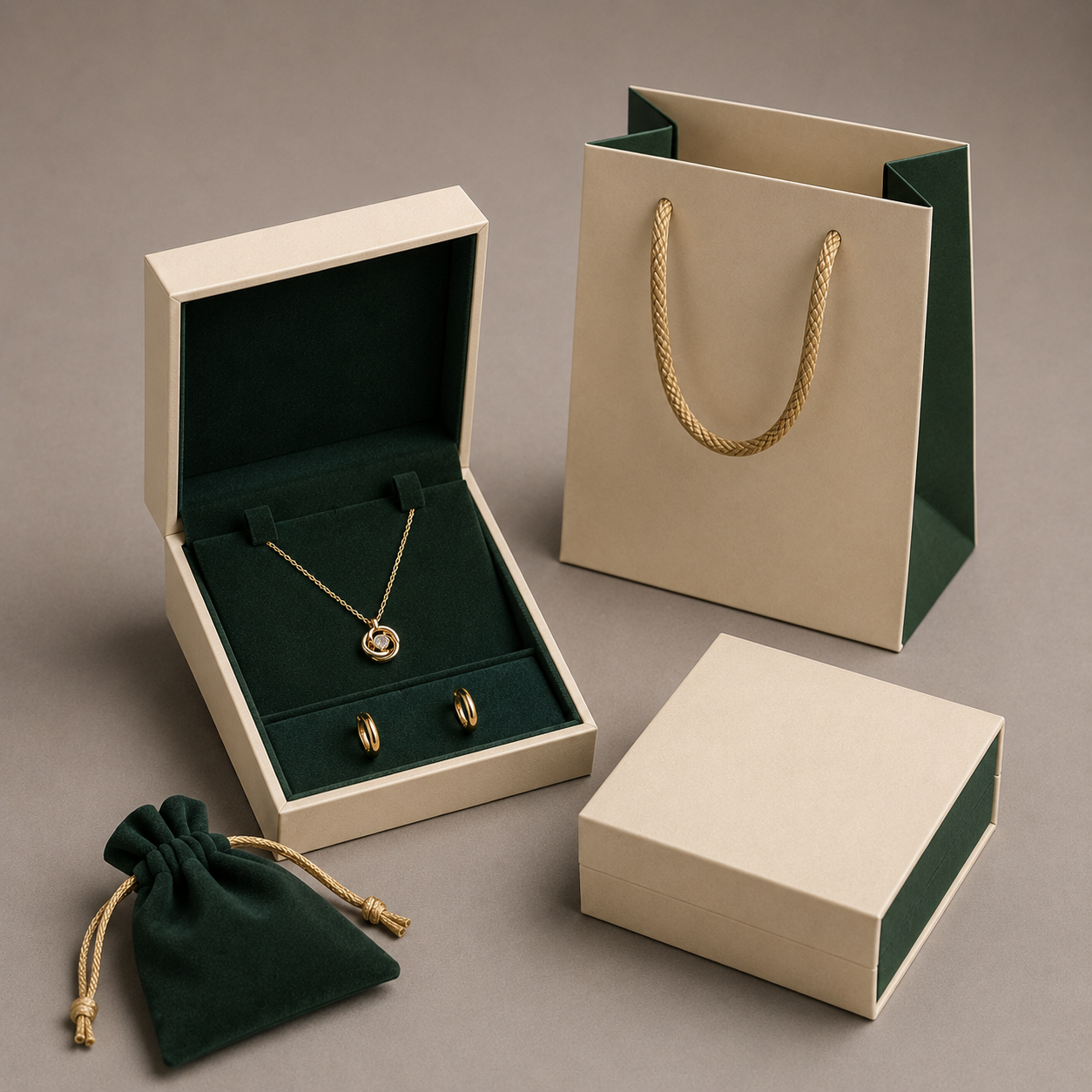
A necklace box can lead a complete package: matching earring boxes, tissue, pouch, card and paper bag. Keep the logo scale, interior tone and material family aligned, while allowing each jewelry type to have its own insert. The jewelry gift box collection is useful when the necklace box needs an outer gift-ready layer.
Quote the necklace program with the inputs that affect fit and repeat orders
MOQ and unit price depend on structure, dimensions, cover material, insert work, logo process, quantity by size and packing method. Give the jewelry dimensions and pack-out order first so a supplier can propose a working insert route instead of pricing an arbitrary box footprint.
For commercial planning, see custom jewelry box MOQ, pricing and lead time. Available trade terms: EXW / FOB / CIF.
Jewelry fit
Check tab position, pendant centerline, clasp allowance, lid clearance and chain movement after handling.
Visible workmanship
Compare logo position, lining tension, wrapped edges, glue marks and surface consistency with the approved PPS.
Export packing
Confirm individual protection, carton plan, shipping marks and the agreed trade term before the batch moves.
Ready to plan custom necklace boxes?
Send jewelry photos with a ruler, dimensions, target box direction, insert preference, material and color reference, logo artwork, quantity by size, delivery country and required launch timing. This gives the team enough information to plan a fitted sample route.
Continue planning the packaging program
Questions about custom necklace boxes
What is needed to quote custom necklace boxes?
Share chain length, pendant width and depth, clasp or extension-chain details, target box type, insert direction, material and color reference, logo artwork, quantity by size, delivery country and timing.
How can a necklace box prevent tangling?
The insert needs a defined chain path using tabs, slots or recesses. The pendant, clasp and any extension chain should be tested together during sample approval rather than relying on a generic flat insert.
Can one necklace box work for several chain lengths?
Sometimes a common outer structure can work, but the insert must be tested across the planned range. Long chains, larger pendants and extension chains can require different tab positions or a deeper format.
Where should a logo go on a custom necklace box?
The lid is the clearest brand touchpoint; the interior lid creates a quieter reveal; a sleeve can add branding without crowding the jewelry. The best option depends on material, logo detail and the desired presentation.
What is the MOQ for custom necklace boxes?
MOQ depends on the structure, material, logo method, insert complexity, size mix and whether an existing format can be adapted. Provide quantities by size and color for a relevant quotation.
How long do samples and production take?
The working timeline is handmade sample in 7-10 days after details are confirmed, followed by mass production in 20-30 days after PPS approval. Special materials or a mixed packaging system should be reviewed at quotation stage.