How Logo Finishes Affect the Perceived Value of Custom Jewelry Boxes
In custom jewelry packaging, the logo is often the first branding detail a buyer or end customer notices. The right finish can elevate the box immediately, while the wrong finish can make premium packaging feel generic, overdone, or visually inconsistent.
Many B2B buyers focus on box shape, materials, and inserts first, then treat the logo finish as a final decoration choice. In practice, logo finishing has a direct effect on perceived value. A refined foil stamp can make a clean box feel premium. A well-controlled deboss can create understated luxury. A metal logo plate can strengthen brand presence on the right structure. But the same options can also look cheap or mismatched if they do not fit the box material, brand tone, or production quality level.
This is why jewelry box logo finishes should be evaluated as part of the overall packaging strategy, not as a purely visual afterthought. B2B buyers need to consider how the finish interacts with material texture, color contrast, box style, production consistency, and target market expectations. The best-looking option in isolation is not always the most brand-appropriate option in real commercial use.
This guide compares the main custom jewelry box logo finish options used in B2B packaging, explains where each one works best, and shows how logo treatment influences packaging perception. For broader logo strategy, also see the complete guide to custom jewelry box logos for B2B brands. If you are still planning supplier selection or production consistency, use our supplier guide and sample vs mass production guide.
TL;DR: What B2B Buyers Should Know About Logo Finishes
- The best logo finish depends on brand positioning, box material, color contrast, and production consistency—not on trend alone.
- Foil stamping is strong for visibility and premium contrast, but can look too aggressive if oversized or poorly matched to the material.
- Embossing and debossing create more understated, tactile branding and often work well for quiet luxury packaging.
- UV finishes can add sharp visual contrast, but they need control to avoid looking too commercial or overly glossy.
- Metal logo plates can feel high-end, but only when the box structure, finish quality, and alignment justify that level of hardware emphasis.
Why Logo Finishes Matter in Jewelry Packaging
In jewelry packaging, branding is not only a matter of recognition. It shapes how premium, giftable, refined, or commercial the product feels before the box is even opened. The logo finish plays a central role in that impression because it controls how the brand mark catches light, how much contrast it creates, and whether it feels subtle or attention-seeking.
A box with the same structure and material can look significantly different depending on whether the logo is foil stamped, embossed, debossed, UV printed, or attached as a metal plate. For B2B buyers, that means the logo finish affects not only aesthetics but also brand fit, target market alignment, photography results, retail presentation, and even how consistent the packaging looks across repeated production runs.
Main Logo Finish Options for Custom Jewelry Boxes
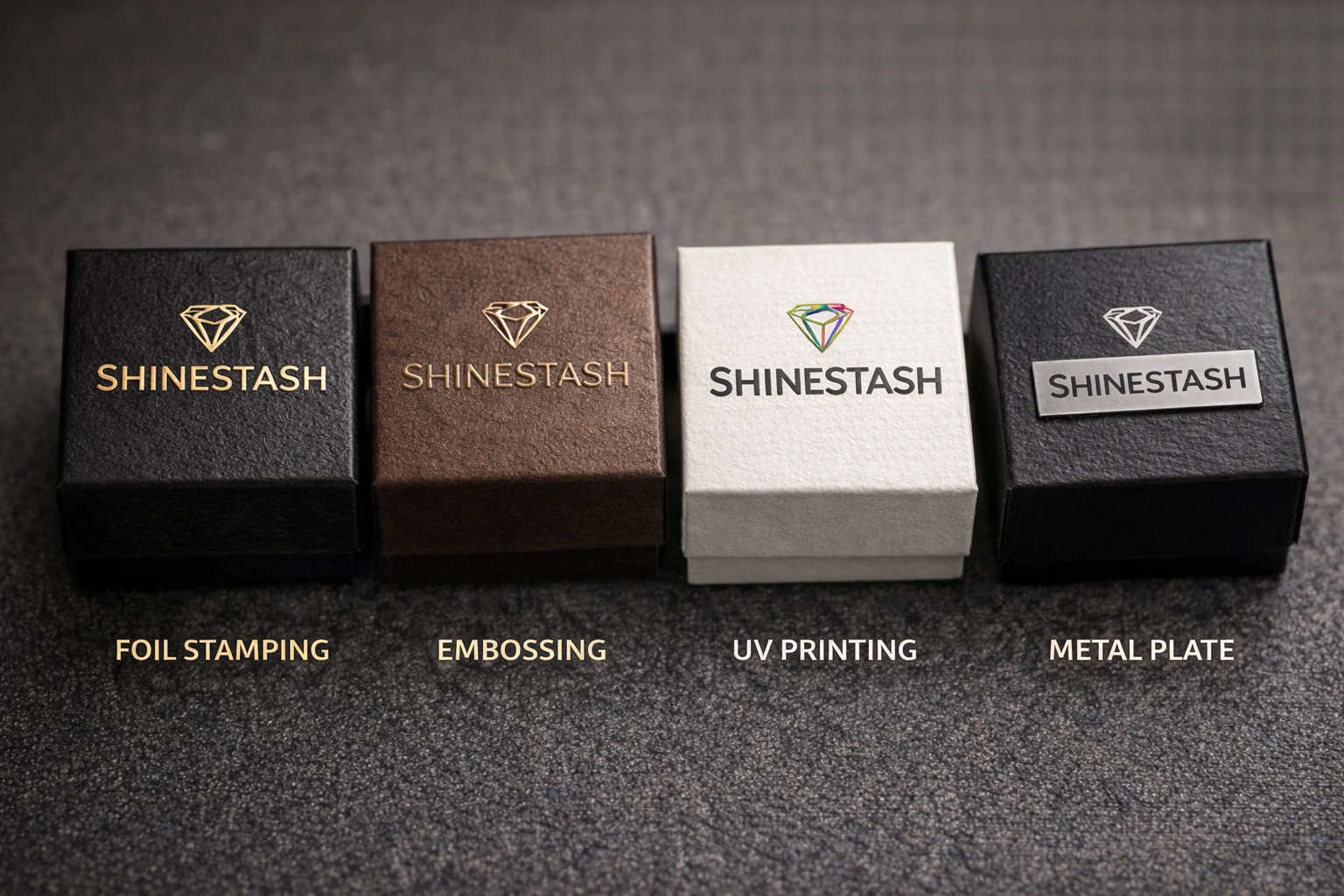
Most B2B jewelry packaging projects use one of five main directions: foil stamping, embossing, debossing, UV finish, or metal logo plates. Each option creates a different balance of visibility, tactile effect, production complexity, and perceived brand tone.
1. Foil Stamping
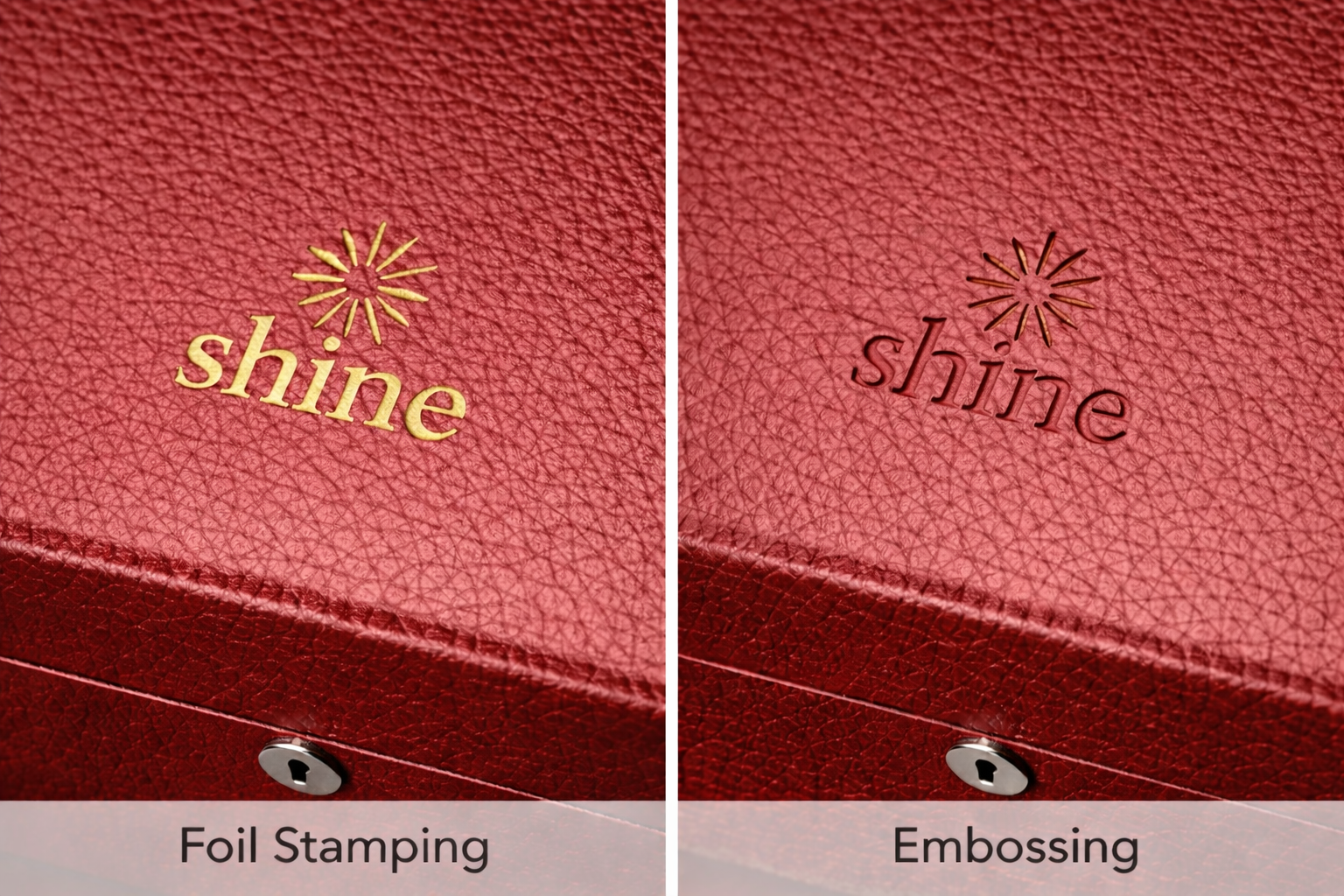
Foil stamping is one of the most common foil stamping jewelry box logo options because it gives strong contrast and clear branding. Gold, silver, rose gold, black, and matte metallic variations are popular. It works well when the goal is immediate visibility and a more classic premium look.
2. Embossing
An embossed logo jewelry box uses a raised effect to create tactile branding. It adds depth without relying on metallic shine and is often used when the brand wants refinement rather than strong visual flash.
3. Debossing
A debossed logo jewelry packaging approach presses the logo into the material surface. It often feels understated, modern, and quietly premium, especially on textured or soft-touch surfaces.
4. UV Finish
Spot UV or gloss UV creates contrast through shine rather than depth or metallic reflection. It can work well on printed or coated surfaces, but must be controlled carefully to avoid looking too promotional or mass-market.
5. Metal Logo Plate
A metal logo plate jewelry box creates a more hardware-led brand signal. It can feel very premium on the right box format, especially when the rest of the packaging supports that level of detail. On the wrong box, it can feel heavy-handed or decorative without restraint.
6. Combined Techniques
Some projects combine methods such as foil + embossing or deboss + subtle foil. This can work well for high-end packaging, but only when the brand identity and surface material justify the extra complexity.
What Each Finish Communicates
Foil Stamping Communicates Visibility and Formal Premium Positioning
Foil stamping creates strong recognition and usually performs well in both photography and retail display. It is particularly effective when the packaging needs visible contrast from a distance or when the brand wants a more classic luxury signal. However, oversized or overly bright foil can also push the box toward a less refined look if the surrounding design is minimal.
Embossing Communicates Craft and Tactile Refinement
Embossing is often associated with more elegant restraint. It works especially well for buyers who want the branding to feel premium through form rather than shine. On the right paper or wrap texture, it adds depth without making the box visually loud.
Debossing Communicates Quiet Luxury and Control
Debossing tends to feel more discreet than embossing or foil stamping. It is often effective for brand systems that rely on softness, sophistication, and a less commercial surface language. This finish usually benefits from good material quality, because the surrounding surface has to carry the premium impression.
UV Finish Communicates Sharpness and Surface Contrast
UV finishing can create clear logo visibility on matte or coated surfaces, but it is more sensitive to style mismatch. In jewelry packaging, UV works best when the brand identity already supports a cleaner, more contemporary, or more graphic look.
Metal Plates Communicate Presence and Hardware Detail
Metal logo plates add weight to the visual identity, but they also increase the need for accuracy. Placement, edge finish, color match, and attachment quality matter more because the hardware becomes a focal point. This approach is best used when the rest of the box already feels substantial enough to support it.
How Different Finishes Change Perceived Value
The same logo can feel more expensive, more modern, more giftable, or more commercial depending on how it is finished. For B2B buyers, this matters because perceived value influences not only product presentation but also pricing confidence, packaging coherence, and customer expectations.
High Contrast vs Low Contrast Branding
Foil stamping and UV often create stronger visual contrast, which can be useful when the logo needs to stand out. Embossing and debossing usually create a softer effect, which may better suit brands that want packaging to feel restrained and high-end rather than promotional.
Tactile Value vs Visual Shine
Embossing and debossing create value through touch and depth. Foil and UV create value through surface visibility. Metal plates combine visual emphasis with a sense of hardware detail. Choosing among these depends on whether the brand wants to feel luxurious, elegant, contemporary, or statement-driven.
Premium Perception Depends on Proportion
A finish may be technically high-end but still reduce perceived value if it is used too aggressively. A large metallic logo on a small refined box can feel unbalanced. A metal plate on a soft lightweight box may feel too heavy visually. Premium packaging often depends more on restraint than on decorative quantity.
How to Match the Finish to the Box Material
Logo finishing should never be selected without considering the box surface. Material texture, softness, coating, color, and reflection level all influence whether the finish will look refined or forced.
Textured Paper and Premium Paper Wrap
Embossing and debossing usually perform well here because the paper texture supports depth and subtlety. Foil stamping can also work, especially in restrained sizes and balanced metallic tones.
Soft-Touch and Matte Surfaces
Debossing, matte foil, and carefully controlled UV contrast often work well. The finish should respect the softness of the surface rather than fight against it.
PU, Leatherette, or Smooth Wrapped Surfaces
Foil stamping and debossing are often effective, while metal logo plates may work on more structured premium box types. The finish needs to align with the material’s own visual strength.
Highly Decorative or Glossy Surfaces
Strong finishes can easily become excessive here. Buyers should usually reduce either the logo size or the finish intensity to avoid a crowded appearance.
Why Material Quality Still Matters More Than the Finish Alone
A premium finish cannot fully compensate for a weak material choice. Debossing on a poor surface may feel flat. Foil on a rough or unstable wrap may lose crispness. A metal logo plate on a box with weak workmanship can feel disconnected from the rest of the packaging. The finish works best when the material already supports a premium base.
Common Logo Finish Mistakes
Most logo-finish problems do not come from choosing a completely wrong technique. They come from using a reasonable technique in the wrong proportion, on the wrong material, or without enough production control.
Making the Logo Too Large
In jewelry packaging, oversized branding often reduces sophistication. A well-scaled logo typically feels more premium than a dominant one, especially on smaller or more elegant box styles.
Using High Shine on a Minimal Quiet-Luxury Brand
If the brand tone depends on softness and refinement, mirror-bright metallic foil or aggressive UV may work against the intended identity. The finish should support the brand voice, not overpower it.
Ignoring Production Consistency
A beautiful sample finish is not enough. If the foil pressure, emboss depth, deboss definition, or logo-plate alignment cannot be held consistently in bulk production, the finish becomes a risk factor. Related: sample vs mass production guide.
Choosing a Metal Plate Without Structural Justification
Metal plates work best when the box structure, hardware tone, and material level already feel substantial. On a lighter or simpler box, the plate can feel excessive rather than premium.
Comparing Finishes Without Considering Retail and Photography Use
Some finishes look striking in person but lose clarity in photography. Others photograph beautifully but feel flatter in hand. B2B buyers should judge the finish in the real contexts where the packaging will be sold, gifted, or marketed.
Buyer Checklist Before Approval
Use the checklist below when reviewing logo finish options for a custom jewelry box project.
| Checkpoint | What to Confirm | Why It Matters |
|---|---|---|
| Brand Fit | Does the finish match the brand tone: classic, quiet luxury, modern, or statement-led? | Prevents visual mismatch between box and brand identity |
| Material Compatibility | Does the finish suit the texture, coating, and reflectivity of the box surface? | Improves visual harmony and finish quality |
| Logo Size | Is the scale restrained enough to feel premium? | Helps maintain elegance and proportion |
| Contrast Level | Is the finish too loud, too weak, or appropriately balanced? | Shapes first impression and perceived value |
| Production Repeatability | Can the finish be held consistently in bulk production? | Reduces sample-to-bulk mismatch risk |
| Placement Accuracy | Is the logo centered, aligned, and cleanly executed? | Poor alignment weakens premium perception immediately |
| Surface Cleanliness | Are there edge marks, overpressure, glue issues, or plate attachment defects? | Protects overall finish quality |
| Photography and Display | Does the finish perform well in product photography and shelf presentation? | Important for e-commerce and retail branding |
| Cost Logic | Does the finish support the packaging level without overbuilding the box? | Keeps the project commercially sensible |
| Reference Standard | Is the approved sample or finish standard documented clearly? | Supports QC and bulk consistency control |
How Logo Finishes Connect to Supplier Choice and QC
The right finish depends not only on design taste, but also on whether the supplier can execute it reliably. A refined deboss or foil effect on a sample is useful only if the same crispness, alignment, and consistency can be maintained through the full order. That is why logo-finish decisions should be checked against supplier capability and inspection logic, not just creative preference.
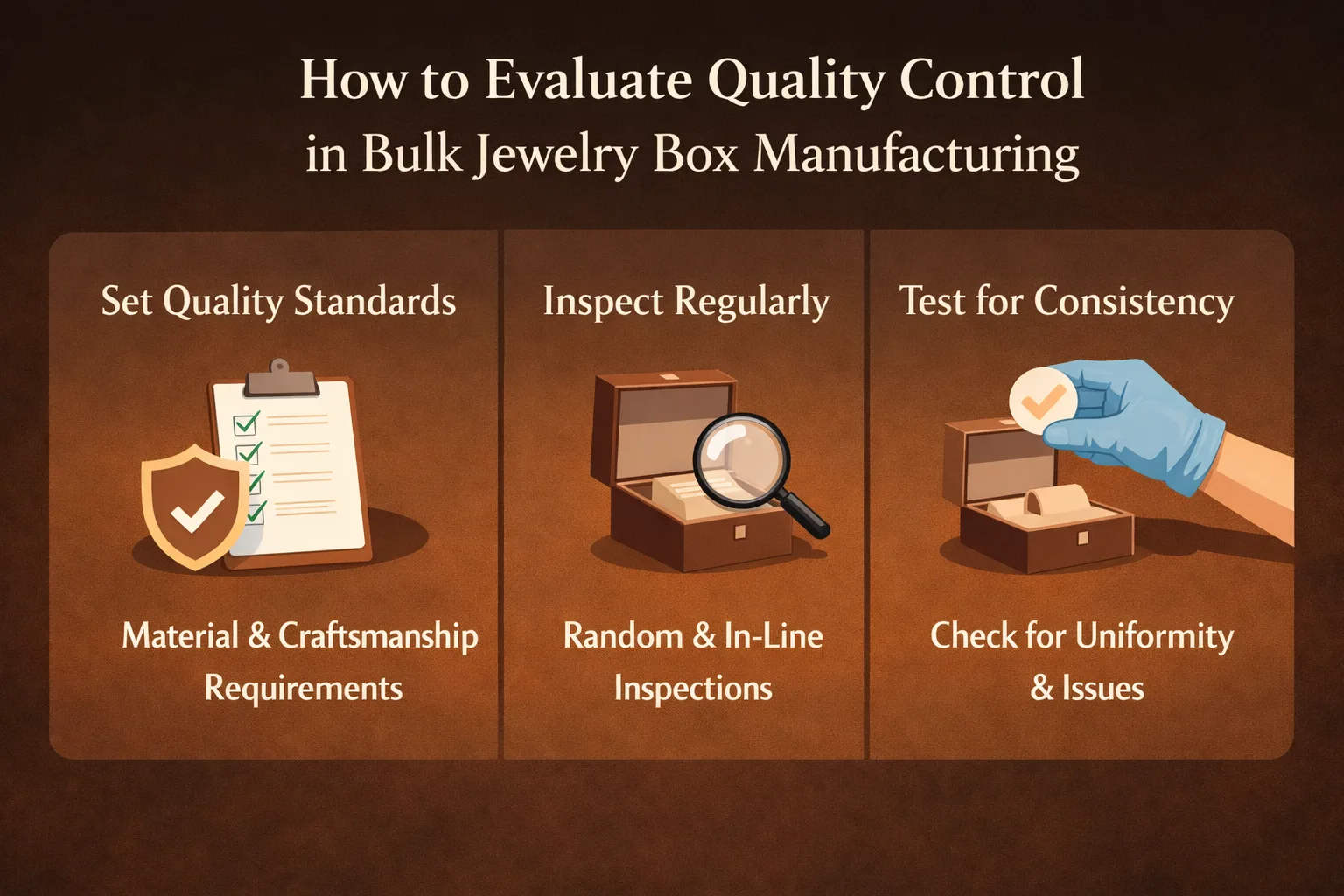
If you are still deciding which factory is more dependable overall, return to the reliable custom jewelry box supplier guide. If you want to review process control before approving a bulk run, use the quality control guide.
Related Guides
Use these pages together for a stronger B2B packaging decision process:
- How to Choose a Reliable Custom Jewelry Box Supplier for B2B Brands
- Sample vs Mass Production: How to Keep Custom Jewelry Box Orders Consistent
- MOQ, Pricing and Lead Time for Custom Jewelry Box Orders Explained
- How to Evaluate Quality Control in Bulk Jewelry Box Manufacturing
- How to Choose the Right Insert Structure for Rings, Necklaces and Bracelets
- The Complete Guide to Custom Jewelry Box Logos for B2B Brands
Final Thoughts
In B2B jewelry packaging, logo finishing should feel considered, not automatic. The finish needs to match the material, the brand tone, the box structure, and the production reality. That is what turns branding from decoration into value perception.
A strong logo finish does not need to be the brightest or most complex option. It needs to look right on the box, feel consistent in production, and support the brand positioning without visual strain. That is usually what buyers remember as premium.
FAQ
Which logo finish looks most premium on jewelry boxes?
There is no single best finish for every project. Foil stamping can look premium when visibility and contrast matter, while embossing and debossing often feel more understated and refined. The most premium result usually depends on how well the finish matches the material and brand style.
What is the difference between embossing and debossing?
Embossing raises the logo above the surface, while debossing presses it into the surface. Embossing usually feels more tactile and visible, while debossing often feels subtler and more restrained.
When should a brand use foil stamping on a jewelry box?
Foil stamping works well when the brand wants stronger logo visibility, a classic premium signal, or a metallic contrast that performs well in retail display and photography. It should still be used with good proportion and finish control.
Are metal logo plates always more luxurious?
Not always. Metal plates can feel very premium on the right box, but they can also look excessive if the box structure, material quality, or workmanship does not support that level of visual weight.
How can buyers reduce logo-finish problems in bulk production?
Buyers should approve the finish against the actual material, lock the logo size and position clearly, use the approved sample as a reference, and confirm that the supplier can maintain alignment and finish consistency during mass production.
Choosing a Logo Finish for a New Packaging Project?
Use this guide to compare finish direction before sample approval. Then review supplier capability, consistency control, and broader logo strategy so the chosen effect works not only on a mockup, but in real B2B production.