Custom Bracelet and Bangle Boxes: A B2B Packaging Guide
Bracelets, cuffs and bangles cannot be handled as a smaller necklace. Their diameter, rigidity and closure type change the insert depth, roll diameter and lid clearance. This guide turns those variables into a clear sourcing brief for custom bracelet and bangle boxes.
- Chain bracelet, cuff and rigid bangle retention
- Roll diameter, curved supports and lid clearance
- Logo placement for long-format packaging
- Sample, bulk QC and repeat-order consistency
Build the packaging around the jewelry and the handover
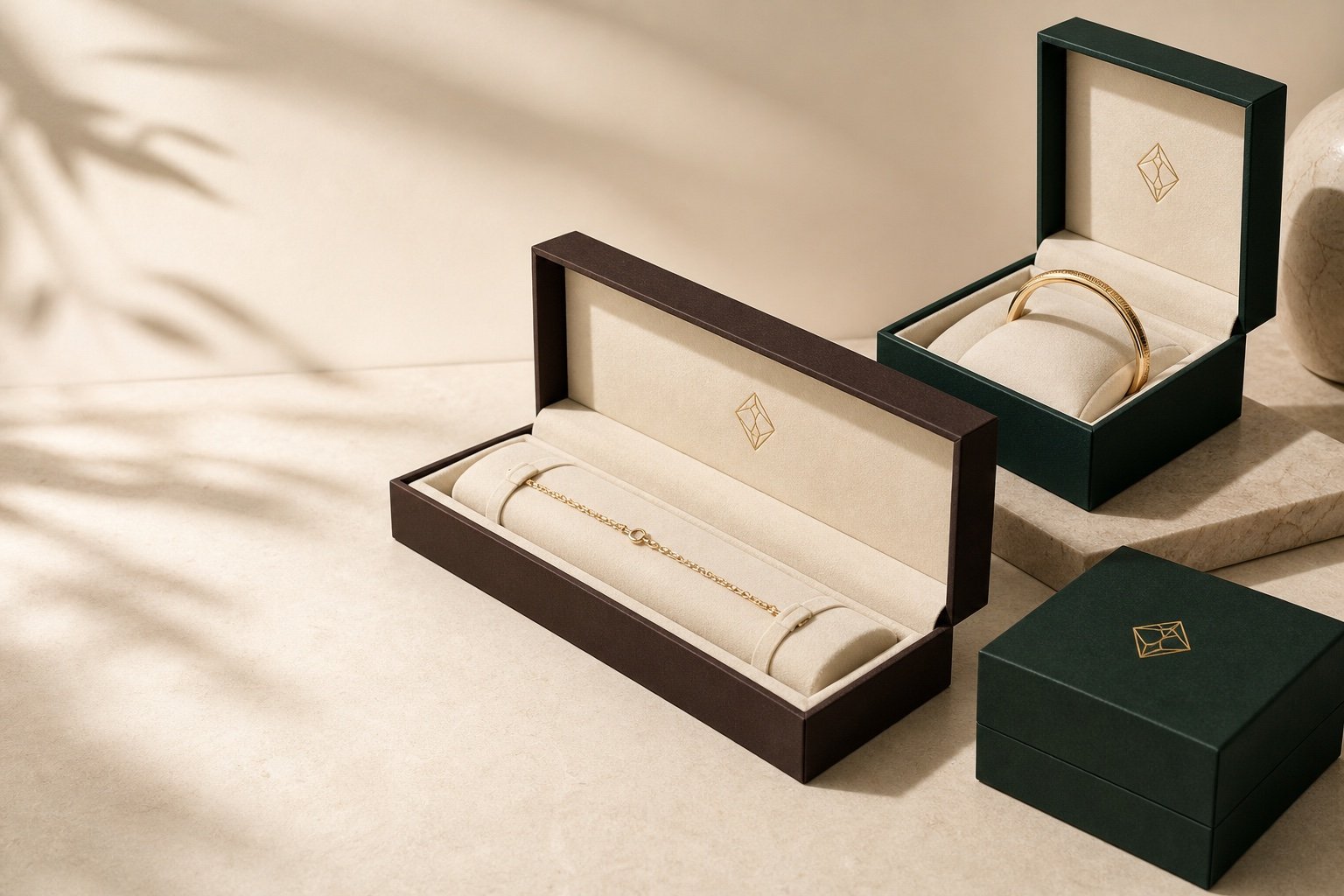
A bracelet box needs to control a curved form without making the jewelry difficult to remove. The insert should support the bracelet at its natural diameter and avoid pressure on clasps, hinges or stones. For current product directions, see custom bracelet boxes for jewelry brands.
Choose the box direction before specifying the outside
Select the structure from the bracelet's behavior under handling. A flexible chain, rigid bangle and hinged cuff can share the same color system, yet each has a different support and clearance requirement.
| Box direction | Best fit | Insert requirement | Branding direction | Brief to provide |
|---|---|---|---|---|
| Long hinged bracelet box | Chain bracelets and classic retail presentation | Padded roll or tabs control length and clasp position | Centered lid mark or subtle interior-lid finish | Bracelet length, chain thickness and clasp type |
| Deep bangle case | Rigid bangles and stackable forms | Curved support with enough depth around the full diameter | Lid foil, deboss or small plate | Outside diameter, width and height profile |
| Cuff presentation box | Open cuffs, stone-set cuffs and heavier pieces | Shaped cradle prevents rotation and pressure points | Refined exterior branding with sample-tested contrast | Opening width, weight and widest point |
| Set or gift box | Bracelet with necklace, earrings or card | Separate bracelet roll and individual jewelry zones | Shared box, pouch and bag logo system | All item dimensions and gift pack-out |
Build the retention around the bracelet's natural curve
The correct roll or cradle supports the piece without stressing it. For chain bracelets, account for clasp placement and adjustable length. For bangles and cuffs, check inside diameter, outside width and the highest detail so the lid can close without pressure.
- Measure the bracelet's natural diameter, full width, height profile and closure details before choosing insert depth.
- Check the piece does not rotate, slide or create a pressure point when the box is gently handled.
- Test bangle clearance around the full circumference, not only at the most visible front edge.
- Confirm the bracelet can be removed without disturbing the insert or catching on a logo plate, ribbon or lid lining.
Bracelet and bangle dimensions that change the support design
A bracelet should be measured as a three-dimensional object. The natural curve, opening behavior and highest decorative point affect both the cradle and the closed-lid clearance. Record them before deciding whether a roll, curved support or shaped cavity is appropriate.
| Specification item | What to provide | Why it affects the packaging |
|---|---|---|
| Bracelet construction | Flexible chain, rigid bangle, hinged bangle, open cuff or multi-wrap style | Determines the support type and where the jewelry can be restrained without stress. |
| Natural diameter or full length | Inside diameter for bangles or closed length for chains | Sets roll diameter, cradle curve and the location of the closing mechanism. |
| Cross-section and highest point | Width, depth, stone height or decorative protrusion | Confirms lid clearance and avoids a pressure point at the most valuable detail. |
| Opening and clasp | Hinge, spring, hook, clasp or adjustable chain | Shows where a recess is required and how staff can pack and remove the piece. |
| Range by collection | Smallest and largest bracelet planned for the same format | Tests whether one roll can work or whether separate inserts are needed. |
| Selling position | Flat handover, upright boutique display or gift-set presentation | Sets the visible orientation and how securely the item needs to remain in place. |
Keep bracelet-box branding clear without crowding a long format
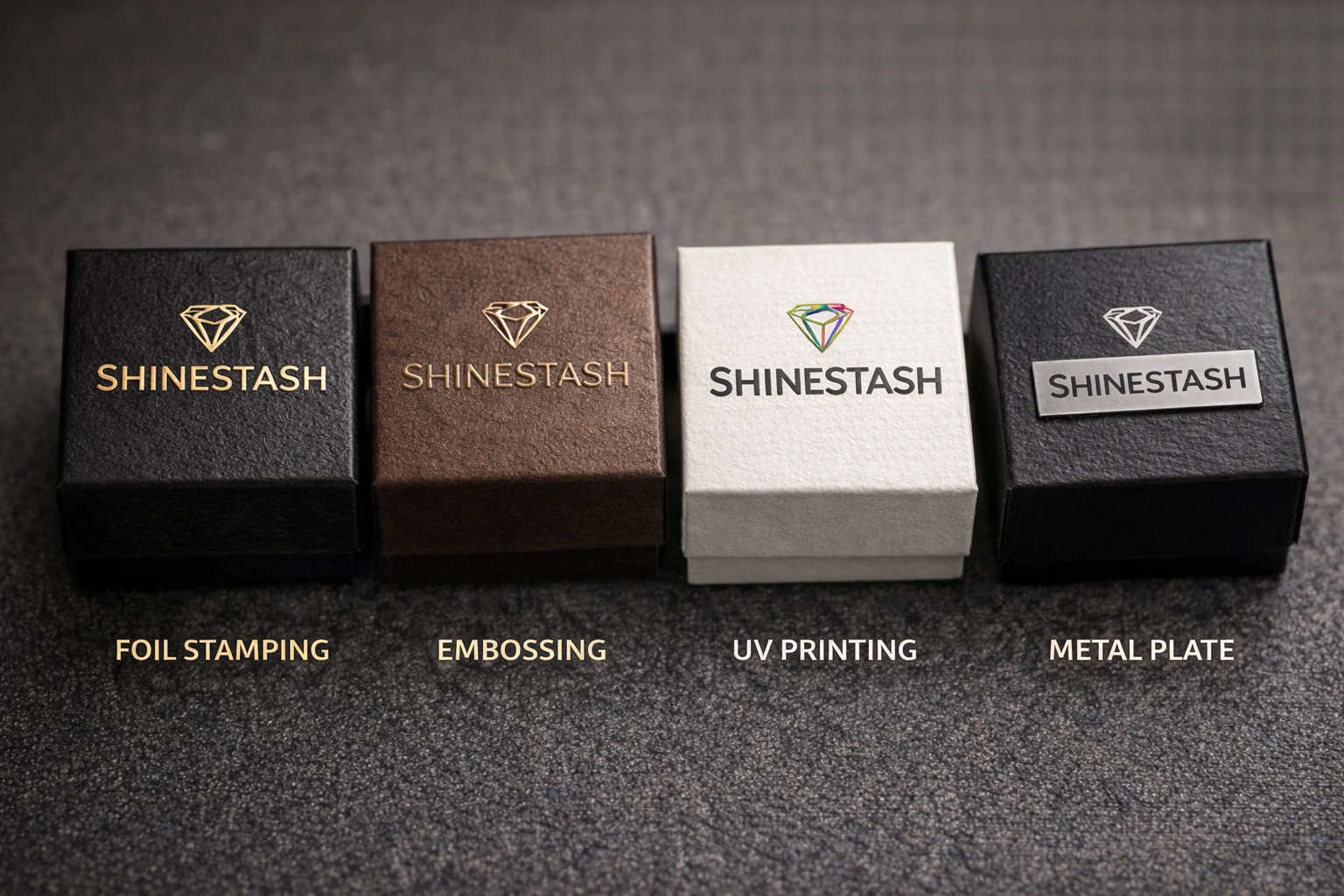
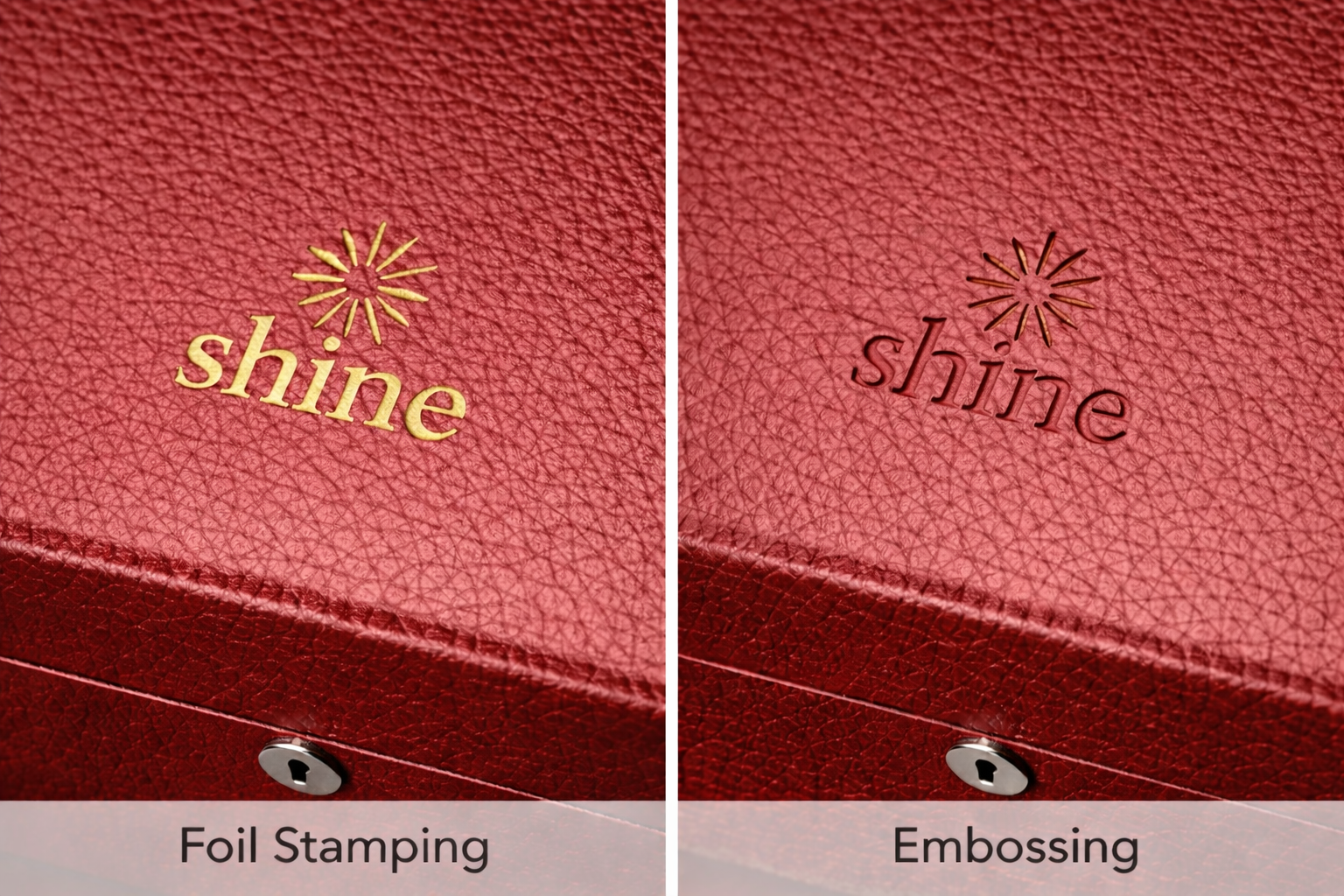
Long bracelet boxes give a brand a different logo surface from a ring or earring case. A centered lid mark, a restrained interior-lid detail or a sleeve can create a clean result. The logo process should be decided together with material, color and the expected retail handling. Compare foil stamping and embossing before approving the artwork route.
Wrapped rigid board
Works well for consistent long-format covers, controlled color and a precise logo position.
Velvet or microfiber insert
Adds a soft jewelry-facing surface, with roll shape and lining tension checked on sample.
Leatherette direction
Supports a structured, durable presentation when the packaging will be handled frequently in retail.
Avoid bracelet-box issues that appear only after the lid closes
A bracelet can look secure in an open case and still fail once the box is closed or moved. These checks are useful at sample stage and again against the PPS during bulk inspection.
Using a roll that is too narrow
Forcing a bangle onto a small roll can create stress, make removal difficult and distort the intended retail presentation.
Checking clearance only at the front
The highest point, clasp or hinge may sit elsewhere around the curve and can contact the lid after packing.
Treating cuffs and chains as the same product
A flexible chain needs restraint for length and clasp position, while a cuff needs a shaped support to stop rotation.
Ignoring the removal action
Staff and customers should be able to lift the jewelry without catching it on a roll, ribbon, logo plate or lid lining.
Approving one sample without range testing
A shared structure should be checked with the largest and smallest planned profiles before bulk production is approved.
Coordinate bracelet boxes with the wider jewelry packaging family
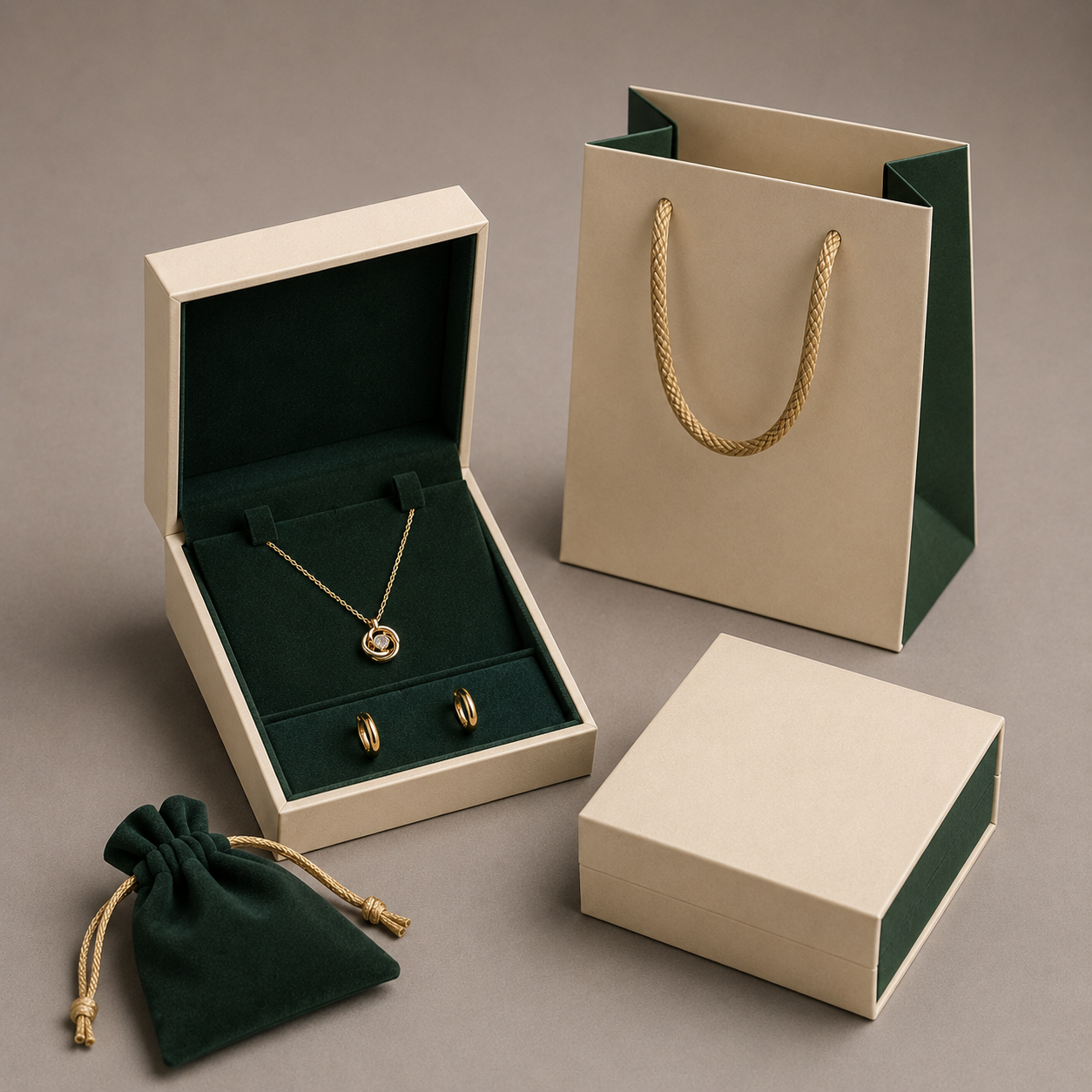
A bracelet box can share cover material, lining color, logo scale and outer handover components with ring, earring and necklace boxes. The inserts should remain product-specific. For a system that adds outer packaging, see custom jewelry gift boxes and custom jewelry pouches.
Source bracelet and bangle boxes with an insert-led brief
MOQ and unit price follow the structure, length or depth, insert geometry, material, logo process, quantity by size, packing method and delivery route. Send bracelet dimensions and product photos before finalizing a standard. The cost of a well-defined fit is usually lower than correcting an unsuitable insert after a bulk batch is packed.
For commercial planning, see custom jewelry box MOQ, pricing and lead time. Available trade terms: EXW / FOB / CIF.
Fit and clearance
Check roll diameter, bracelet removal, cuff or bangle clearance and lid closing with the intended jewelry profile.
Workmanship
Compare logo position, wrapped corners, lining tension, roll alignment, glue marks and surface consistency with the PPS.
Bulk packing
Confirm individual protection, carton quantity, shipping marks and the agreed trade term before final dispatch.
Ready to plan custom bracelet and bangle boxes?
Send jewelry photos with a ruler, dimensions, target box direction, insert preference, material and color reference, logo artwork, quantity by size, delivery country and required launch timing. This gives the team enough information to plan a fitted sample route.
Continue planning the packaging program
Questions about custom bracelet and bangle boxes
What details are needed to quote bracelet and bangle boxes?
Provide the bracelet type, inside and outside diameter or full chain length, width, height profile, clasp or opening details, preferred structure, material, logo artwork, quantity by style, destination and timing.
Can one box work for both chain bracelets and rigid bangles?
A shared outer visual system can work, but the inserts normally should differ. Chains benefit from controlled rolls or tabs, while rigid bangles need curved support and enough surrounding clearance.
How should a bracelet roll be sized?
The roll should support the bracelet at a natural curve without creating stress on the chain, clasp or stones. The actual jewelry or a reliable dimensional equivalent should be tested at sample stage.
Which logo finishes are available for bracelet packaging?
Foil stamping, debossing, screen printing and plates are common routes. The suitable choice depends on the cover material, logo detail, contrast, order requirements and desired retail appearance.
What is the MOQ for custom bracelet and bangle boxes?
MOQ depends on structure, material, logo process, roll or cradle complexity, quantity by size or color and whether an existing format can be adapted. Share those inputs for a relevant quotation.
How long do samples and production take?
The working timeline is handmade sample in 7-10 days after details are confirmed and mass production in 20-30 days after PPS approval. Special materials and complex insert geometry should be reviewed before approval.