

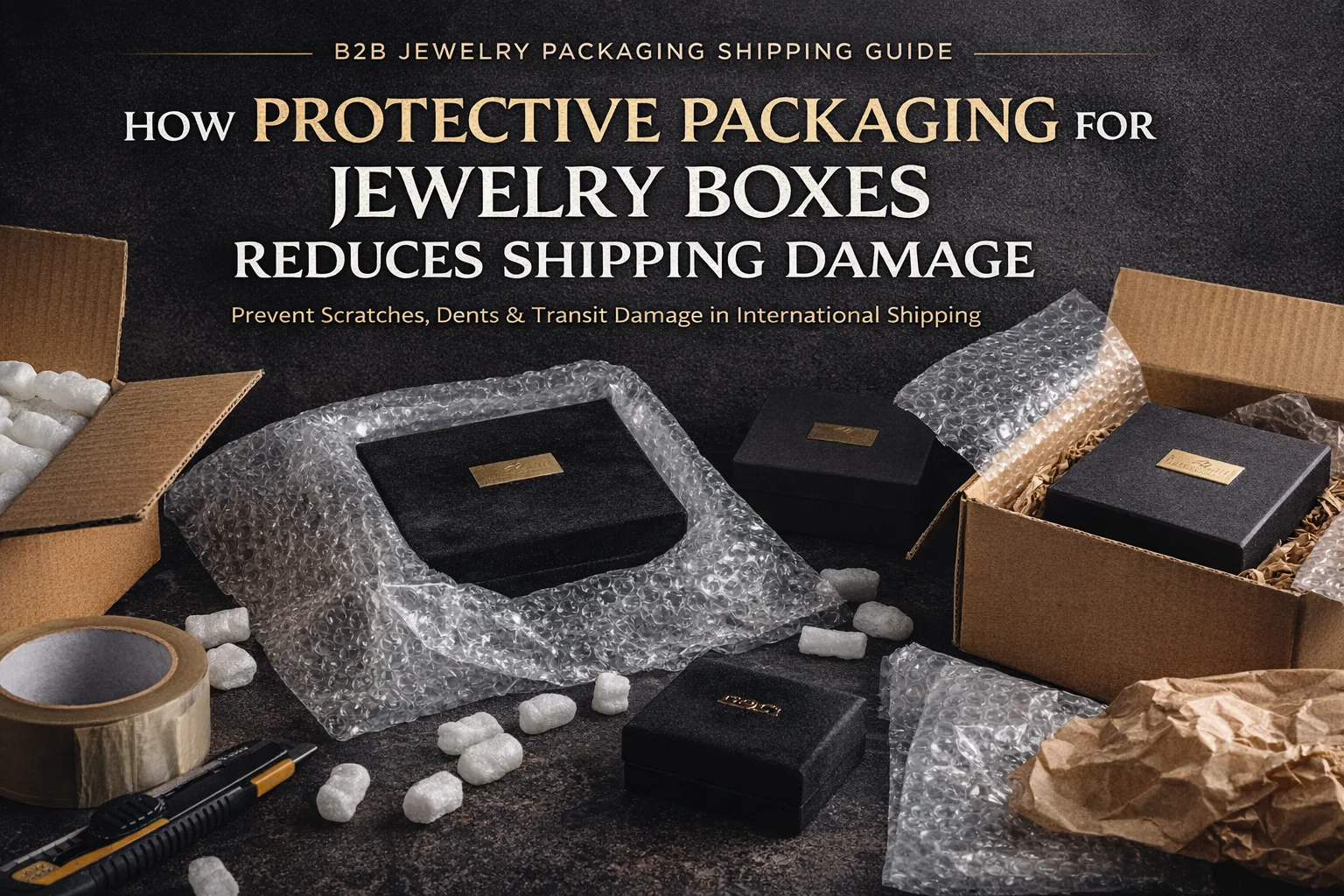
How Protective Packaging for Jewelry Boxes Reduces Shipping Damage
In B2B jewelry packaging, the outer box may look perfect at the factory and still arrive scratched, dented, rubbed, or crushed if protective packing is not designed correctly for real shipping conditions.
Many packaging buyers focus on the beauty of the jewelry box itself: structure, material, logo, insert, and presentation. But once the order leaves the factory, a different question takes over: can the box survive transport without losing its appearance? This is where protective packaging for jewelry boxes becomes critical.
In B2B orders, boxes may pass through multiple handling stages: internal movement, pallet stacking, warehouse loading, export packing, freight transfer, and final destination unloading. Every stage introduces friction, compression, movement, and impact risk. If the protection strategy is weak, even premium custom jewelry boxes can arrive with damaged corners, rubbed surfaces, cracked accessories, or pressure marks that reduce saleability immediately.
This guide explains how jewelry box shipping protection works, which damage types buyers should expect, and how suppliers can reduce risk through better unit protection, carton structure, spacing control, and shipment logic. If you are still evaluating supplier reliability, start with our custom jewelry box supplier guide. If your concern is whether production goods will match the approved sample, see sample vs mass production. For inspection logic before shipment, use the quality control guide.
TL;DR: What Buyers Should Protect Against
- The most common shipping problems are scratches, surface rubbing, crushed corners, pressure dents, insert movement, and carton compression.
- Protective packaging should be designed at three levels: the box unit, the inner arrangement, and the outer carton or shipment structure.
- Premium jewelry boxes often need more than a simple bag or carton. Surface sensitivity and box construction must be considered together.
- Good shipment protection is part of packaging quality control, not a separate afterthought.
- The goal is not only to avoid breakage. It is to preserve premium appearance all the way to arrival.
Why Protective Packaging Matters for Jewelry Boxes
A custom jewelry box is usually judged on appearance. That means damage does not have to be structural to be commercially serious. A box with a scuffed edge, rubbed logo area, dented lid corner, or pressure mark on the wrap may still be technically usable, but it no longer performs as premium packaging. For B2B buyers, that can mean complaint risk, repacking labor, lost sell-through confidence, or reduced value perception at retail level.
This is why protective packaging for custom jewelry boxes should be designed to preserve finish quality, not only to keep the box physically intact. If the box is positioned as giftable, luxury, or high-end, the shipping system must protect the same standard that the design was built to communicate.
Common Shipping Damage in B2B Jewelry Box Orders
Most transit problems follow a familiar pattern. Buyers who understand those patterns can ask better questions before shipment and avoid assuming that “packed in cartons” is enough protection by itself.
1. Surface Scratches and Rub Marks
These happen when units touch each other directly or move against rougher packing surfaces. Matte wraps, soft-touch finishes, metallic logos, and dark colors are especially vulnerable.
2. Crushed Corners
Corner damage often comes from compression during stacking or impact during handling. Rigid boxes can still deform visually if corner protection is weak at carton level.
3. Pressure Dents
Boxes with softer surfaces or decorative lids may show visible dents when outer cartons are overloaded, palletized poorly, or packed too tightly without buffer logic.
4. Insert Shift and Internal Movement
Even if the outer box survives well, the interior can still suffer. Inserts may shift, jewelry may move, and the internal presentation can degrade if the packing system does not stabilize the product properly.
5. Carton Collapse or Deformation
Weak export cartons, uneven weight distribution, or excessive stacking loads can affect everything inside. This is especially risky for long-distance shipping and mixed warehouse handling.
6. Logo Surface Damage
Foil-stamped areas, embossed logos, debossed surfaces, and metal logo plates can all be affected by friction, pressure, or contact points if unit spacing and surface protection are not managed correctly.
The Three Levels of Protection
Good international shipping jewelry packaging should be designed in layers. A single outer carton is not enough if the unit itself remains unprotected. B2B buyers should think in terms of three levels: unit protection, inner arrangement, and outer transport structure.
Level 1: Unit Protection
This is the first barrier around the individual jewelry box. It may include soft wrapping, bags, surface separators, dust protection, tissue, or non-abrasive sleeves depending on the finish sensitivity of the box. The exact method should reflect the box material and the risk of rubbing during movement.
Level 2: Inner Arrangement
Even protected units can still move and collide if the inner arrangement is poorly designed. Spacing, dividers, compartment layout, stacking logic, and orientation all affect whether pressure and friction build up during transit.
Level 3: Outer Transport Protection
The export carton, pallet logic where applicable, stacking strength, and load balance form the outer protection system. If the outer structure collapses or shifts, the inner protection loses effectiveness quickly.
What Good Protective Packaging Should Achieve
Reduce Friction Between Units
One of the biggest causes of arrival damage is repeated light rubbing during transport rather than one major impact. Protective materials and better spacing reduce that risk significantly.
Control Compression
Boxes should not bear more load than their structure and finish can tolerate. Carton design, fill balance, and stacking discipline should all reduce compression points rather than create them.
Preserve Presentation Quality
Premium jewelry boxes are judged on appearance. Protection should therefore preserve the logo area, clean edges, outer wrap, and opening condition—not just prevent total breakage.
Support Real Shipment Conditions
A protection system that works for local short-distance delivery may not be enough for export, warehousing, and last-mile handling. B2B buyers should match the protection standard to the actual logistics path.
What Affects Shipping Risk Most
Not all jewelry boxes face the same transit risk. Buyers should assess shipping protection based on the real characteristics of the packaging project, not only on generic export assumptions.
Surface Sensitivity
Soft-touch finishes, matte wraps, darker colors, foil logos, and high-contrast decorative surfaces usually need more anti-rub protection than simpler surfaces.
Box Structure Strength
Some rigid boxes tolerate stacking well, while others with more delicate edges, lifted lids, or decorative components are more vulnerable to deformation.
Insert Stability
If the insert does not hold the jewelry securely, internal movement can make the product look disorganized even if the outer box survives. Related: jewelry box insert structure guide.
Carton Density
Overpacked cartons can create compression and abrasion. Underfilled cartons can allow too much movement. Correct density matters as much as carton strength.
Distance and Handling Complexity
The more stages in the route, the more chances there are for impact, stacking, shifting, and rough movement. Export shipments usually need stronger protection logic than local deliveries.
Production Consistency
If box dimensions or insert fit vary too much in bulk, units may not pack consistently. That can weaken shipping protection even when the packing design itself is reasonable. Related: sample vs mass production.
Why Shipping Protection Is Part of Quality Control
Protective packaging should not be treated as a separate logistics issue after production is complete. If a supplier finishes the boxes well but ships them in a way that causes rubbing, dents, or carton deformation, the final quality result still fails. This is why reduce shipping damage jewelry boxes should be part of the same conversation as QC and bulk consistency.
Buyers should therefore evaluate packing standards together with production inspection, not after shipment problems appear. A supplier with mature thinking will explain how the box is protected during transport, not only how it is manufactured. Related: jewelry box quality control guide.
How Buyers Should Evaluate Protection Before Shipment
Buyers do not need to wait for damage claims to judge whether protective packing is strong enough. Most risks can be identified before dispatch if the right questions are asked.
Ask How the Surface Is Protected
A premium outer wrap or logo area should never be left exposed to uncontrolled unit-to-unit contact. Buyers should ask what protects the box surface specifically, not only what the outer carton looks like.
Ask How Units Are Arranged in the Carton
Good carton arrangement controls movement and pressure. Poor arrangement leaves units free to rub or creates concentrated pressure points that damage the box edges and lids.
Ask Whether the Packing Matches the Route
Local movement, air shipment, sea shipment, warehouse storage, and distributor handling do not create the same risks. Protection should reflect the actual route instead of using one generic standard for everything.
Ask Whether the Actual Box Was Tested in the Packing Method
Packaging logic should be reviewed with the real production box, not an abstract assumption. Material softness, logo finish, insert height, and box dimensions all affect how the packing performs in practice.
Link Protection to Supplier Capability
A supplier who explains shipping protection clearly often also thinks more clearly about repeatability and risk control overall. If the supplier’s answers are vague, the damage risk may still be sitting with the buyer.
Buyer Checklist Before Dispatch
Use the checklist below before approving shipment for a bulk order of custom jewelry boxes.
| Checkpoint | What to Confirm | Why It Matters |
|---|---|---|
| Unit Surface Protection | Are individual boxes protected against rubbing, scratching, and logo-area damage? | Preserves premium appearance |
| Inner Arrangement | Are units spaced and oriented to prevent collision or pressure concentration? | Reduces movement and edge damage |
| Carton Strength | Is the outer carton appropriate for weight, stacking, and export handling? | Protects the full shipment structure |
| Compression Control | Does the packing method reduce crushing and lid pressure? | Prevents dents and deformed corners |
| Insert Stability | Will the jewelry remain positioned correctly inside the box during transport? | Protects internal presentation quality |
| Logo Protection | Are foil, embossed, debossed, or metal logo areas protected from contact damage? | Branding damage lowers perceived value quickly |
| Route Match | Does the packing reflect the real shipping distance and handling complexity? | Improves practical protection level |
| Bulk Consistency | Are unit dimensions and box quality consistent enough for stable packing? | Uneven products weaken transport logic |
| QC Link | Was protective packing reviewed as part of final inspection? | Reduces post-production blind spots |
| Arrival Standard | Is the goal clearly defined as visually saleable arrival, not just non-broken arrival? | Keeps the packaging standard commercially meaningful |
How Protection Connects to MOQ, Pricing, and Brand Positioning
Buyers sometimes compare packaging offers only at the box level and overlook how much the protective system affects the total result. A lower quotation may leave out important surface protection, stronger cartons, or anti-rub spacing logic. That can make the initial savings look less attractive once damage, rework, or complaint handling costs are considered.
Protective packing should therefore be judged as part of the full packaging system. Premium branding, premium materials, and refined logo finishes deserve arrival conditions that preserve them. If the project needs a broader commercial review, return to MOQ, pricing and lead time. If you want to assess supplier dependability more widely, use the reliable custom jewelry box supplier guide.
Related Guides
Use these pages together to build a more reliable B2B packaging workflow:
- How to Choose a Reliable Custom Jewelry Box Supplier for B2B Brands
- Sample vs Mass Production: How to Keep Custom Jewelry Box Orders Consistent
- MOQ, Pricing and Lead Time for Custom Jewelry Box Orders Explained
- How to Evaluate Quality Control in Bulk Jewelry Box Manufacturing
- How Logo Finishes Affect the Perceived Value of Custom Jewelry Boxes
- How to Choose the Right Insert Structure for Rings, Necklaces and Bracelets
Final Thoughts
Protective packaging is easy to underestimate because the box can look perfect before shipment. But for B2B buyers, the real packaging result is measured at arrival, not at factory completion. If the box reaches the destination with visible damage, the value of the original design has already been reduced.
The best shipping protection is usually quiet and invisible. It does not change the look of the jewelry box. It simply ensures that the box reaches the customer, distributor, or retailer in the same premium condition it was designed to present from the start.
FAQ
Why do jewelry boxes get damaged during shipping?
Jewelry boxes are often damaged by rubbing, stacking pressure, impact during handling, poor carton arrangement, weak outer cartons, and movement between units during transit. Premium surfaces are especially vulnerable to visible arrival damage.
What kind of damage is most common in bulk jewelry box shipments?
The most common issues are scratches, rubbed logo areas, crushed corners, pressure dents, surface scuffs, insert shift, and carton deformation caused by weak transport protection.
Is an outer carton alone enough to protect custom jewelry boxes?
Usually not. Good protection should work at unit level, inner arrangement level, and outer carton level. Without surface protection and movement control, the outer carton alone may not prevent cosmetic damage.
How can buyers reduce shipping damage for premium jewelry boxes?
Buyers should confirm surface protection, stable carton arrangement, compression control, logo-area protection, insert stability, and export-appropriate carton strength before shipment. Protective packing should also be reviewed as part of final QC.
Does protective packaging affect perceived value even if the box is not broken?
Yes. A box does not need to be broken to lose value. Rub marks, dents, scuffs, and crushed corners can make premium packaging feel lower grade even when the structure still functions.
Need Stronger Shipment Protection for a Packaging Project?
Use this guide before approving export packing. Then review supplier capability, QC standards, and sample-to-bulk consistency so the final order arrives in a condition that still matches your brand positioning.