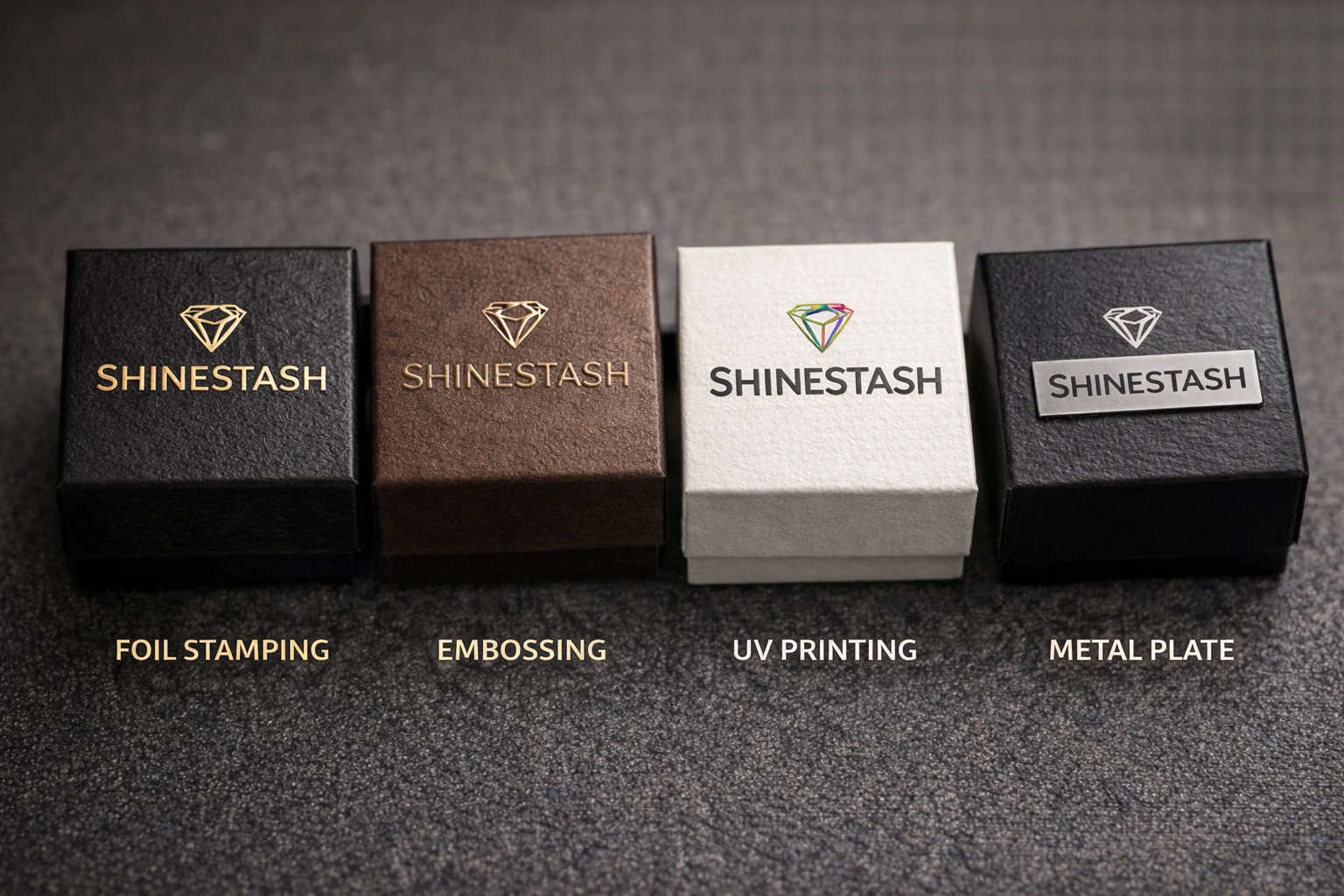
Foil Stamping vs Embossing for Jewelry Boxes
Which logo finish should luxury brands choose? Compare look, durability, materials, and bulk consistency.
Once you decide to add a logo to your jewelry packaging, the next question is often the hardest: foil stamping or embossing? Both finishes signal quality, but they communicate luxury in very different ways.
This guide compares foil stamping and embossing from a B2B decision perspective—covering brand positioning, materials, durability, and production considerations for bulk reorders.
TL;DR — Fast Recommendations
- Classic luxury + strong shelf presence: choose foil stamping (gold/champagne is the safest premium baseline).
- Quiet luxury / minimalist brands: choose emboss/deboss for depth without shine.
- Signature SKUs / gift programs: consider deboss + foil to combine depth and visibility.
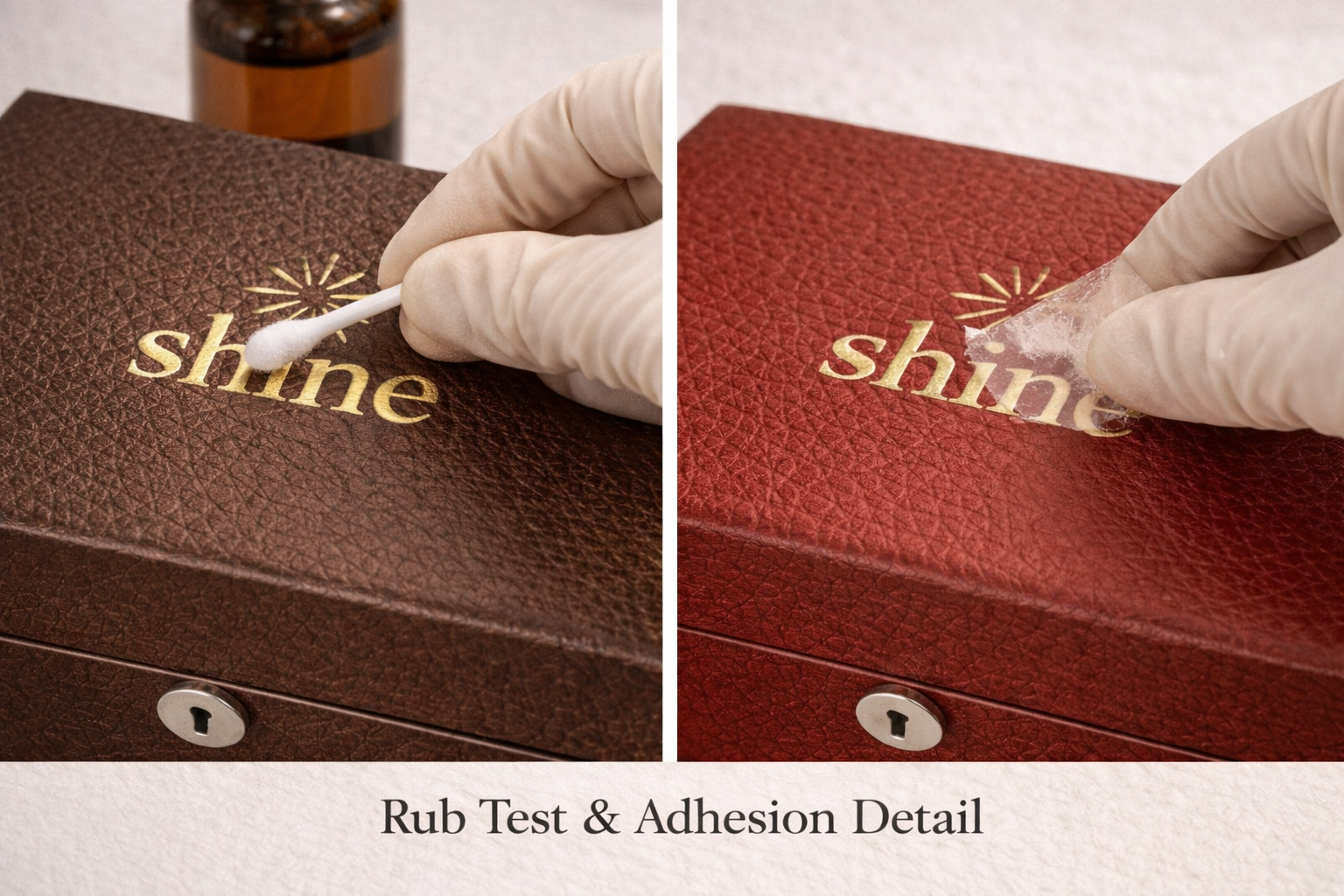
- Retail handling durability: emboss is inherently durable; foil is durable when adhesion is confirmed on the target material.
What Is Foil Stamping?
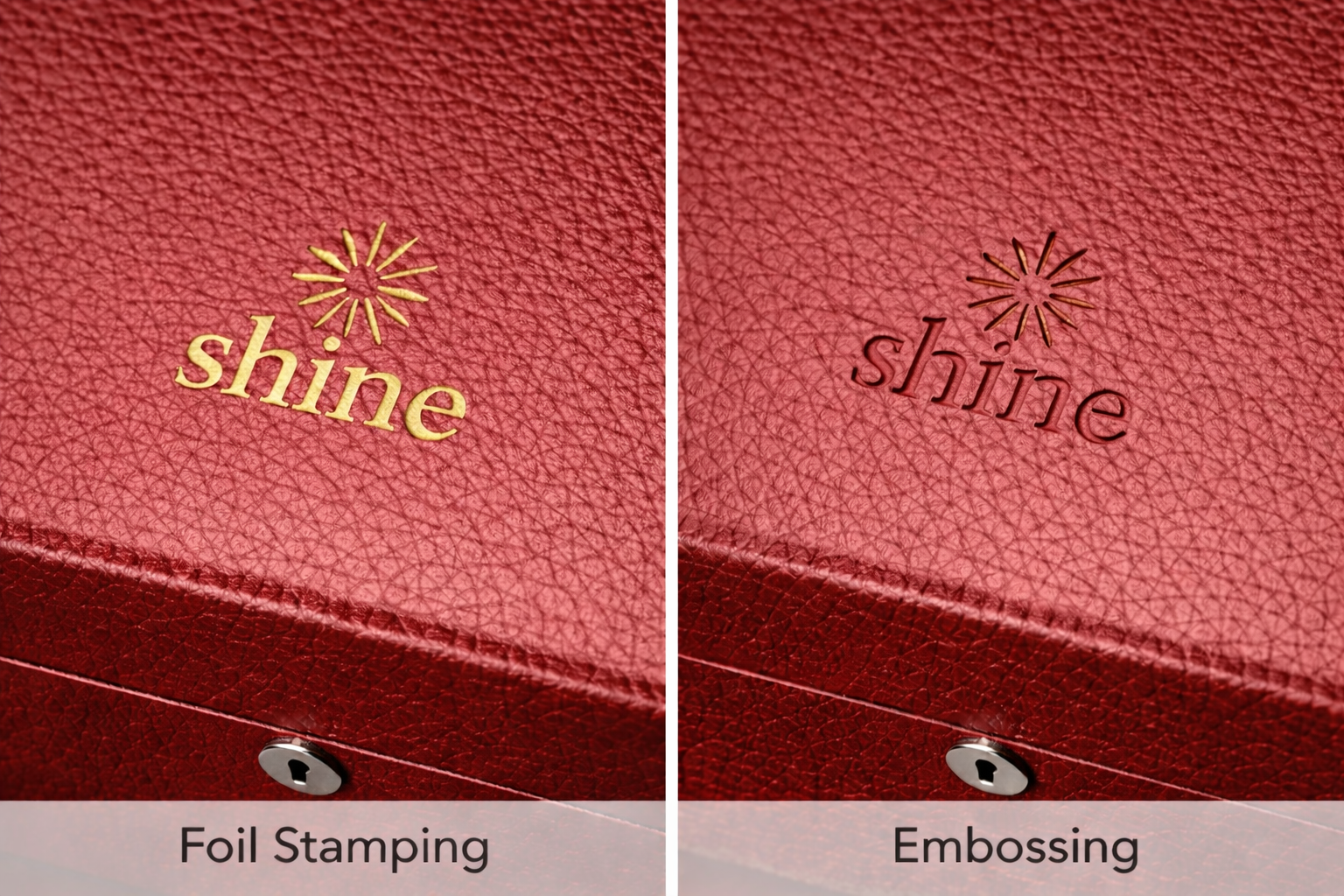
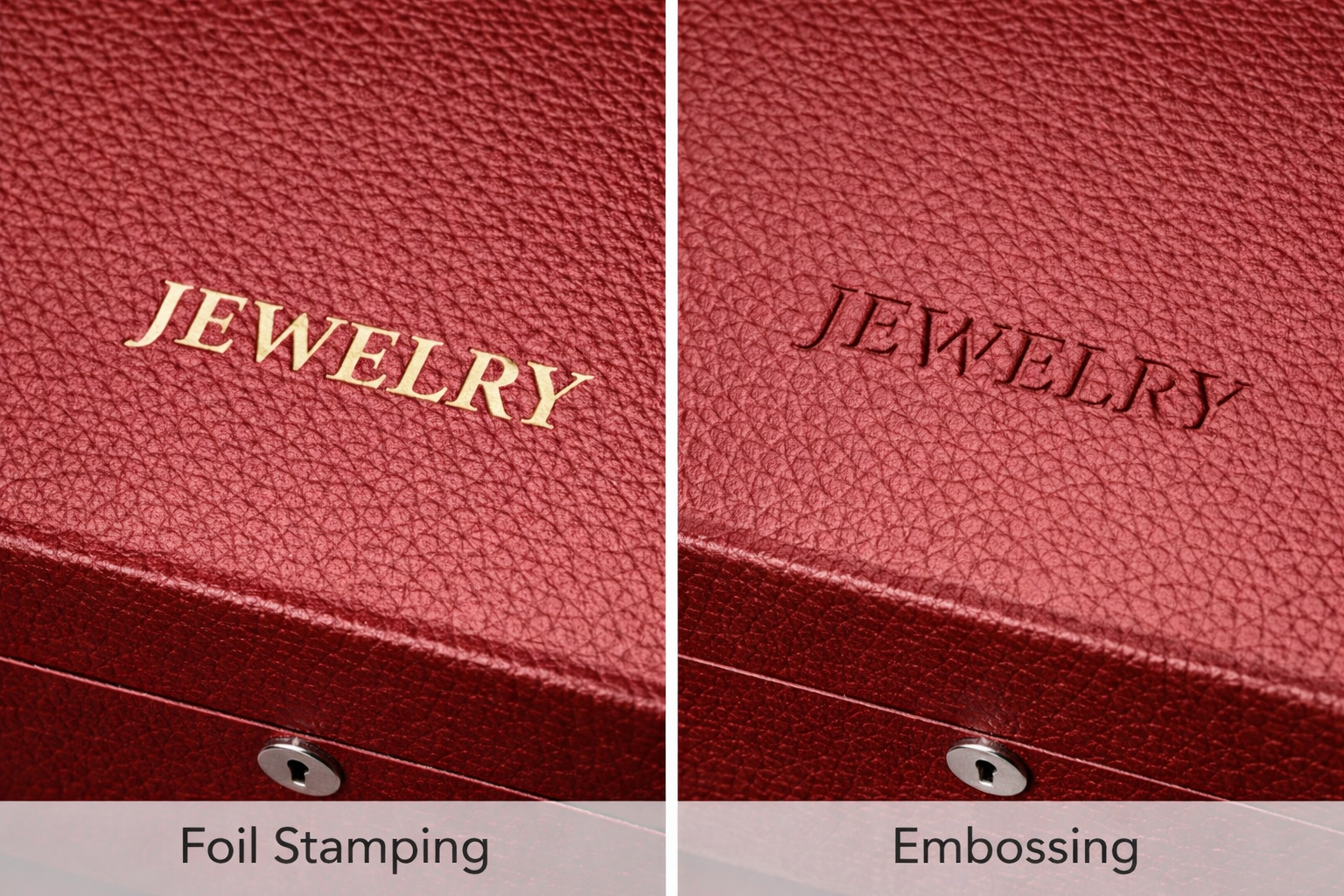
Foil stamping uses heat and pressure to transfer metallic or matte foil onto the box surface via a custom die. It reflects light, creates contrast, and is instantly recognizable as “luxury.”
- High visual impact (especially gold / champagne gold)
- Excellent visibility on dark or textured boxes
- Consistent appearance across bulk reorders (when specs stay locked)
What Is Embossing / Debossing?
Embossing raises the logo above the surface, while debossing presses it in. Instead of shine or color, embossing relies on depth and shadow.
- Subtle, minimalist “quiet luxury” feel
- No ink/foil layer to rub off
- Feels integrated into the box material
Foil vs Embossing: Quick Comparison
| Factor | Foil Stamping | Emboss / Deboss |
|---|---|---|
| Visual impact | High, reflective | Subtle, dimensional |
| Luxury style | Classic luxury | Quiet / minimalist |
| Color options | Gold, silver, matte foils | No color (shape only) |
| Best materials | Paper wrap, textured paper, some leatherette | Soft-touch paper, leatherette/PU (surface dependent) |
| Photography | Consistent and bold | Lighting-dependent |
How to Choose Between Foil and Embossing (B2B)
1) Brand Positioning
Brands that need immediate recognition on shelf or in photos often choose foil. Minimalist or design-led brands often prefer embossing for a quieter premium signal.
2) Durability & Handling
Emboss/deboss has no applied layer to wear off. Foil is durable when properly bonded and confirmed on the target material (especially around edges and folds).
Choose by Material (Compatibility Guide)
| Material | Foil Stamping | Emboss / Deboss | Notes |
|---|---|---|---|
| Paper wrap / textured paper | ✅ Strong (watch thin strokes on heavy texture) | ✅ Strong | Texture depth affects edge clarity; confirm on sample. |
| Soft-touch paper | ✅ Good (confirm adhesion) | ✅ Excellent | Quiet luxury pairing for deboss. |
| Leatherette / PU | ⚠️ Surface dependent | ✅ Excellent | Emboss often feels most “built-in”. |
| Velvet / fabric | ⚠️ Often not ideal | ⚠️ Surface dependent | Many brands use screen/plate/tag for velvet programs. |
FAQ
What is the difference between foil stamping and embossing on jewelry boxes?
Foil stamping applies metallic or matte foil onto the box surface using heat and pressure, creating a reflective and high-contrast logo. Embossing or debossing shapes the material itself to create a raised or recessed logo, resulting in a more subtle, dimensional premium effect.
Which logo finish looks more luxurious for jewelry packaging?
Both can look luxurious. Foil stamping is more visually striking and instantly recognizable, while embossing offers a refined “quiet luxury” aesthetic. The best choice depends on brand positioning and the box material.
Which logo finish is more durable for bulk and retail handling?
Embossing is inherently durable because there is no applied layer to wear off. Foil stamping is also durable when properly bonded and confirmed on the target material, making it suitable for bulk and retail environments.
Does foil stamping wear off over time?
High-quality foil stamping does not wear off easily when correct materials, pressure, and adhesive are used. Confirming adhesion on a sample helps reduce long-term durability risks.
Can foil stamping and embossing be combined on the same jewelry box?
Yes. Debossing combined with foil stamping is a popular premium option. It adds depth from debossing and visual impact from foil, often used for signature or gift-focused packaging.
Not Sure Which Finish Fits Your Brand?
Review our complete logo finishing guide covering materials, durability testing, and B2B decision factors.
Read the Complete Logo GuideRelated: Logo Durability Testing · Materials & Craft · Request a Quote