Custom Jewelry Box Design Guide for Brands
Custom jewelry packaging is not just about adding a logo. For brands, the real value comes from structure, materials, inserts, and overall presentation working together.
This guide helps you decide when custom jewelry boxes make sense and how to plan a design that supports brand positioning, retail presentation, and long-term scalability.
Is Custom Jewelry Packaging Right for Your Brand?
Not every brand needs fully custom packaging from day one. Customization makes sense when:
- You are building a long-term brand, not a one-off product
- Your jewelry price point requires premium presentation
- You want consistent packaging across retail and online channels
For early-stage brands, starting with stock sizes and light customization can be a practical first step.
Choosing the Right Jewelry Box Structure
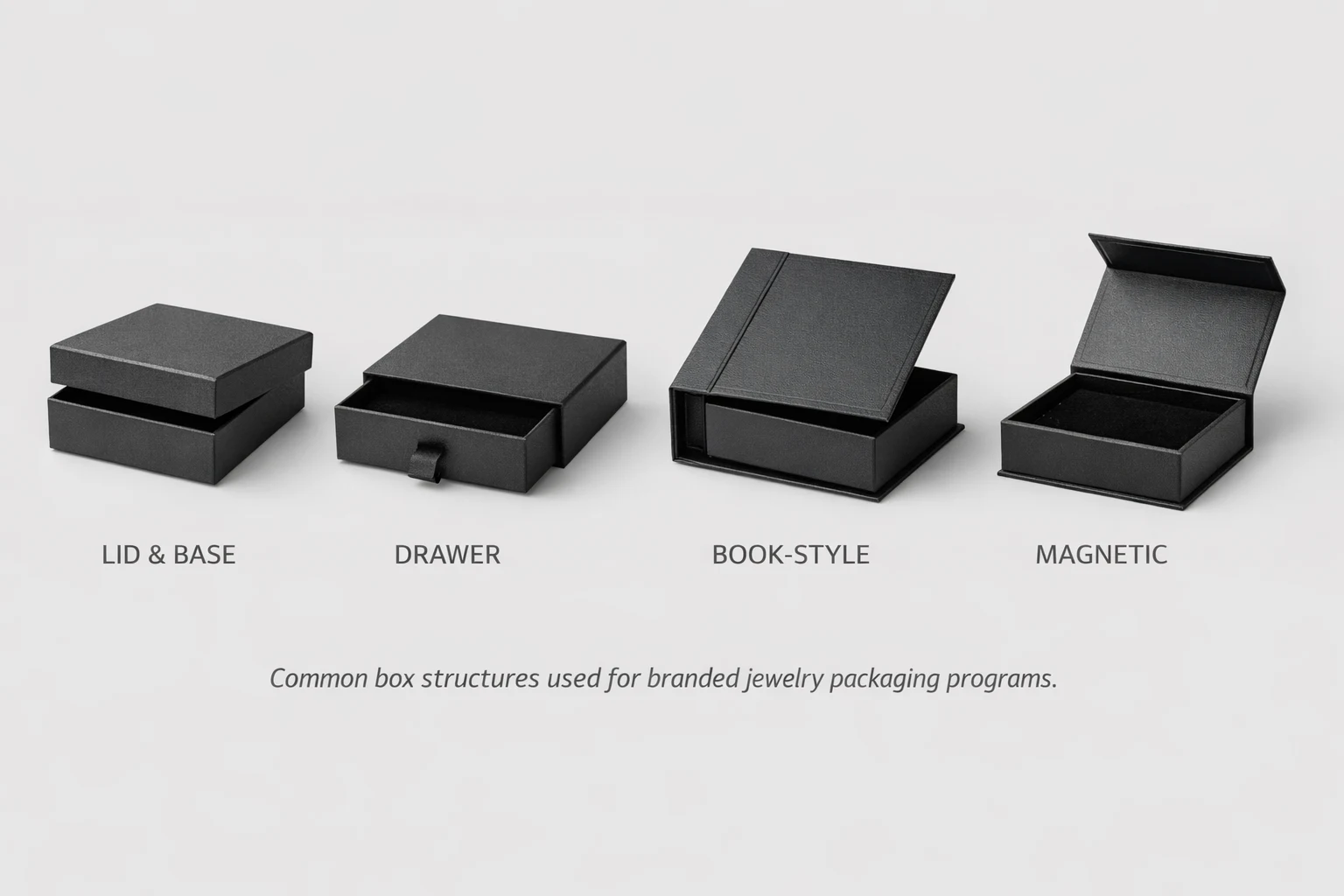
Box structure affects cost, protection, unboxing experience, and logistics. Choose the structure first—before logo and decoration.
- Lid & base: Classic, cost-effective, widely used
- Drawer style: Premium feel, strong unboxing experience
- Book-style: Elegant presentation, ideal for gifting
- Magnetic closure: Modern look with added perceived value
Material Selection: Look, Touch, and Durability
Material choice defines how customers perceive your brand before they see the jewelry. It also affects durability in retail handling and shipping.

- Paper wrap: Flexible, scalable, suitable for most brands
- Leatherette (PU): Smooth touch, modern luxury feel
- Fabric: Soft, elegant, often used for premium lines
- Wood: Strong gift value, higher cost and weight
Learn more about surface options in our Materials & Craft overview.
Insert Design: Protection vs Presentation
Inserts are often overlooked, but they directly affect product protection, product fit, and perceived quality in photos and retail display.
- Velvet or fabric inserts: Soft presentation, premium look
- EVA inserts: Strong protection for shipping
- Fixed inserts: Best for single-SKU consistency
- Universal inserts: Flexible for multiple jewelry types

Why Logo Comes Last in the Design Process
Many brands start with the logo—but this often forces compromises. A better workflow is:
- Define box structure
- Select material and insert
- Confirm size and protection
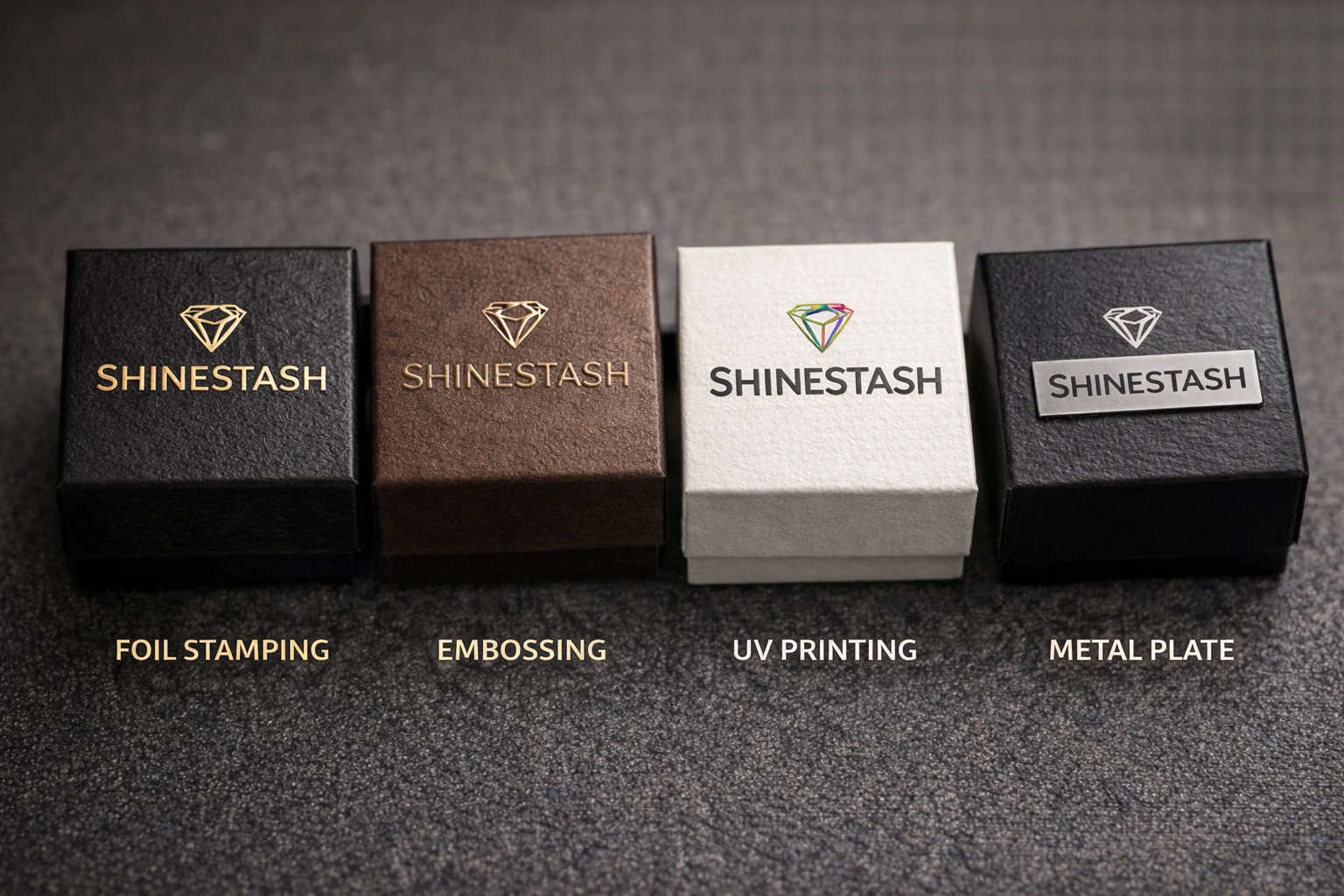
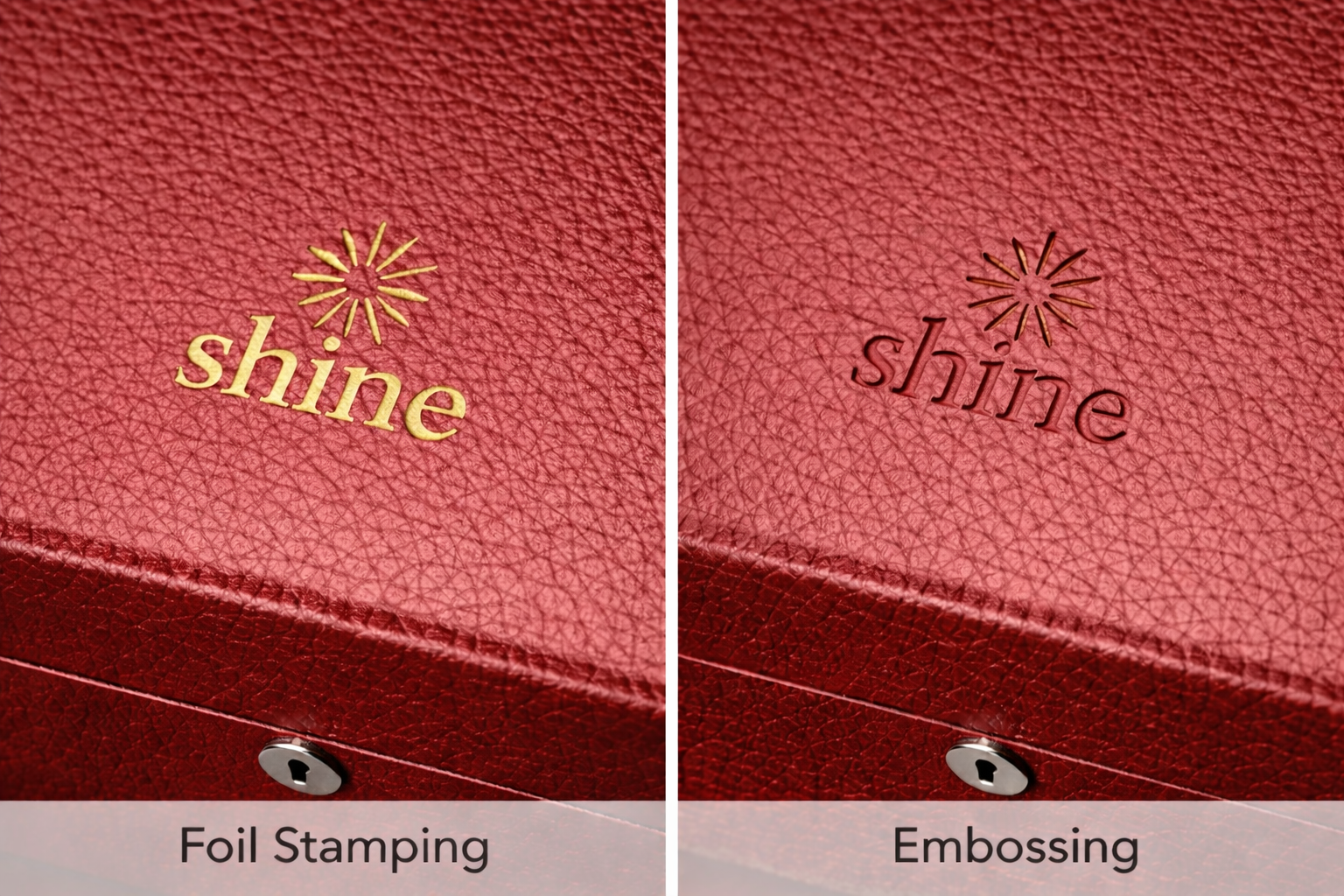
- Then choose logo method
See our detailed guide on choosing the right logo finish.
From Design to Production: A Practical Workflow
A structured process reduces risk and keeps production predictable:
- Design concept & specification confirmation
- Hand sample development
- PPS approval
- Mass production
For durability validation, review our logo durability testing guide.
Cost, MOQ, and Planning Ahead
Design choices directly affect cost and minimum order quantity. For pricing logic and timelines, see our cost, MOQ & lead time overview.
Plan a Brand-Ready Jewelry Box
Share your brand positioning, jewelry type, and target quantity. We’ll help you design a packaging solution that scales with your business.
Get a Packaging Proposal