

Foil Stamping vs Embossing for Jewelry Boxes: B2B Guide
Compare foil stamping vs embossing for jewelry boxes before sampling. See how logo visibility, material surface, MOQ, artwork, handmade sample timing and bulk QC affect a brand RFQ.
- For buyers comparing foil stamping vs embossing for jewelry boxes, logo visibility, material fit and bulk consistency.
- Use before RFQ: confirm artwork, box style, surface material, MOQ, sample approval and PPS reference.
- handmade sample in 7-10 days after details are confirmed.
- mass production in 20-30 days after PPS approval.
- Trade terms: EXW / FOB / CIF.
Fast Recommendation
Use foil stamping when the logo must be visible in product photos, retail shelves and gift sets. Use embossing or debossing when the brand wants quieter texture, less shine and a more understated premium signal.
For many B2B jewelry brands, the safest premium route is a controlled foil logo on paper wrap or a deboss plus foil mark on a stable long-term SKU. The final choice should be confirmed on the exact material before bulk production.
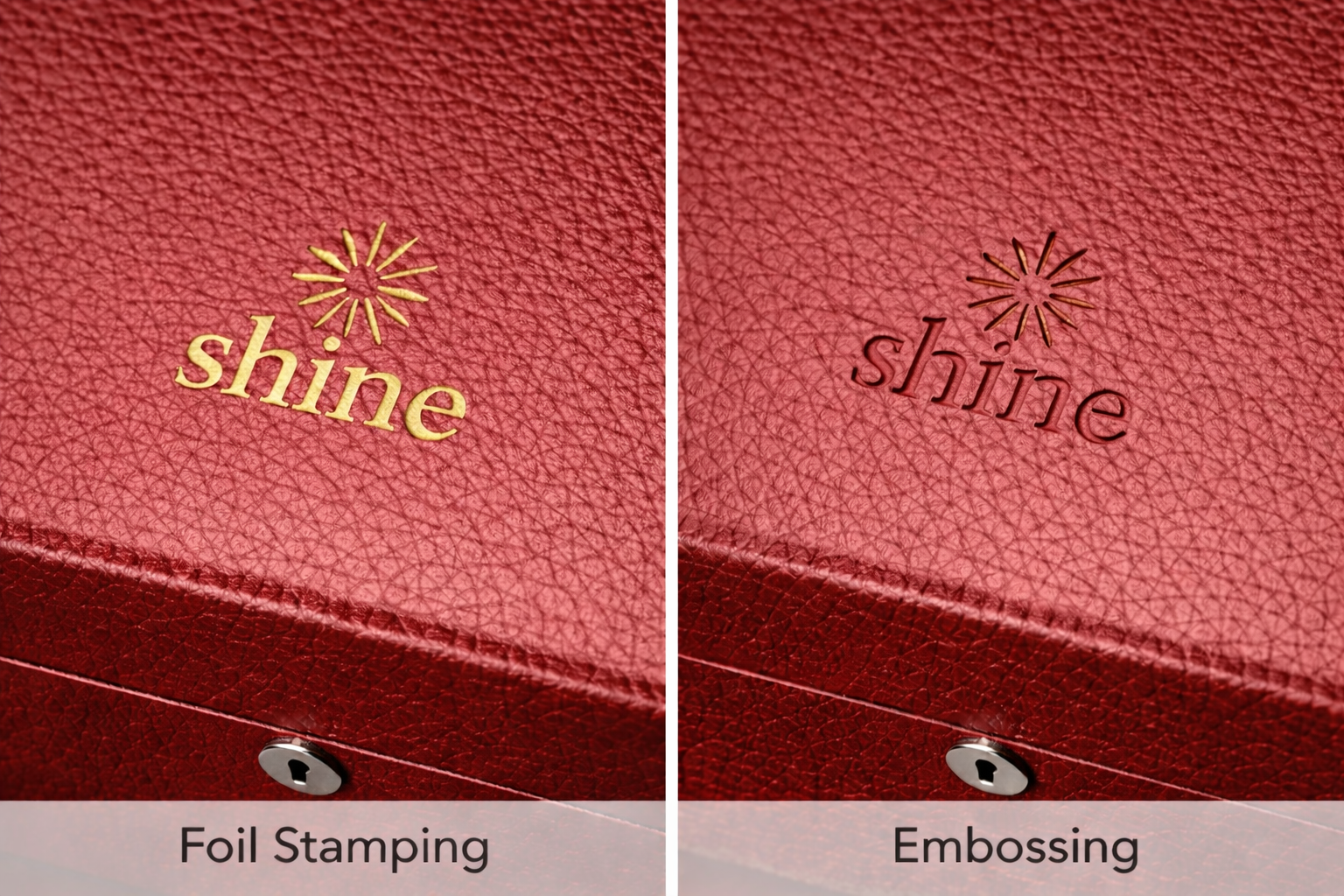
Foil Stamping vs Embossing: B2B Comparison
| Decision point | Foil stamping | Embossing / debossing | Buyer note |
|---|---|---|---|
| Visual impact | High contrast, reflective, easy to see in photos | Subtle depth, texture-led, less reflective | Choose based on brand tone and selling channel. |
| Best materials | Paper wrap, textured paper, selected leatherette | Soft-touch paper, paperboard, leatherette or PU | Velvet often needs alternative logo methods. |
| Retail handling | Good when adhesion is confirmed on sample | Strong because the logo is shaped into the surface | Test rub, edge clarity and logo placement. |
| Brand style | Classic luxury and strong shelf recognition | Quiet luxury and minimalist packaging | Both can be premium when proportion is controlled. |
Choose by Jewelry Packaging Type
Foil and Embossed Bracelet Packaging
Bracelet boxes often have a larger lid area, so foil stamping can create a visible logo without feeling crowded. Debossing is useful for premium leatherette or paper wrap where the brand wants a quieter surface.
Foil and Embossed Necklace Packaging
Necklace boxes need a balanced logo size because the box is longer and presentation depends on the insert. A small foil logo or shallow deboss near the lid center usually keeps the layout refined.
Foil and Embossed Earring Packaging
Earring boxes are smaller, so artwork must be simplified. Fine text, complex crests and ultra-thin lines can lose clarity. Use controlled logo sizing and confirm the result on a sample.
Material Compatibility Matters
A logo finish that works on smooth paper may not work the same way on velvet, rough texture or soft-touch coating. Before mass production, the sample should confirm pressure, temperature, foil adhesion, edge clarity and logo alignment.
For product-specific planning, connect this guide with velvet jewelry boxes, ring boxes, and custom jewelry boxes with logo.
RFQ Details to Send
- Jewelry type: bracelet, necklace, earring, ring or set.
- Box material and color direction.
- Logo artwork as vector file when available.
- Preferred finish: foil, emboss, deboss, print or plate.
- Target quantity, launch schedule and destination port or country.
FAQ
Is foil stamping or embossing better for bracelet packaging?
Foil stamping is usually better when bracelet packaging needs visible brand contrast in photos or retail display. Embossing or debossing works better for quiet luxury brands that want tactile depth without shine.
Can foil and embossing be used for necklace packaging?
Yes. Necklace packaging often uses foil stamping for clear logo visibility and debossing for a more refined surface. The best method depends on the box material, logo size, and target retail position.
Which logo finish works for earring packaging?
Small earring boxes usually need simple logo artwork and controlled placement. Foil stamping gives strong recognition, while debossing creates a softer premium effect on compatible paper or leatherette surfaces.
Apply Foil and Embossing by Jewelry Type
Bracelet, necklace and earring packaging each needs different logo scale, insert support and surface control before bulk production.
Match Foil and Embossing to Bracelet, Necklace and Earring Boxes
This page already earns exposure for foil and embossed jewelry packaging. Use the next step below to choose logo scale, surface material and insert fit by jewelry type.
Buyer questions
Logo Finish Questions Buyers Ask Before Sampling
Use these questions to turn foil and embossed jewelry packaging research into a quote-ready logo finish plan for bracelet, necklace, earring and ring boxes.
Should I use foil stamping or embossing for jewelry packaging?
Use foil stamping when the brand needs a reflective metallic logo on paper, leatherette or selected velvet surfaces. Use embossing or debossing when the buyer wants a quieter tactile logo and can approve depth, pressure and surface response on a handmade sample.
Can one logo finish work across bracelet, necklace, earring and ring boxes?
Yes, but the logo scale, placement and surface pressure should be adjusted by box size. A small ring box may need a compact logo, while a necklace or bracelet box can support a wider mark or inside-lid placement.
Which materials show foil or embossing most clearly?
Smooth paperboard and leatherette usually show sharper foil and debossing. Velvet can look premium, but logo visibility depends on pile direction, color contrast and whether foil, print or a metal plate is more practical.
What artwork should I prepare for logo sampling?
Prepare a vector logo file, preferred logo size, foil or emboss direction, Pantone or metal tone reference, target box material and placement area. This helps the supplier check feasibility before a handmade sample.
How do I check logo consistency before bulk production?
Approve a PPS reference for logo position, foil clarity, embossing depth, color contrast and surface cleanliness. Bulk QC should compare production units against that approved reference before packing.
What should I send for a logo finish quote?
Send jewelry type, box style, material direction, logo artwork, quantity, sample need, target timeline and preferred trade term: EXW, FOB or CIF.
Need a Logo Finish Recommendation?
Send the jewelry type, box reference, material direction, logo artwork and quantity. ShineStash can recommend a finish route before sampling.
Request a Packaging Quote