

Custom Jewelry Boxes With Logo: How to Choose the Right Finish
Foil vs Emboss vs UV vs Metal Plates — pick a finish that looks premium, stays consistent, and holds up in retail handling.
When buyers see your packaging for the first time, they decide “premium or average” in seconds. That’s why custom jewelry boxes with logo shouldn’t look like ink sitting on top of a lid. The right finishing method makes your logo feel built-in, improves brand consistency across reorders, and reduces durability complaints during shipping and retail handling.
This page gives you a practical decision path: choose the finish based on material compatibility, the exact visual style you want, and how the box will be handled (direct-to-consumer vs retail counters vs wholesale programs).
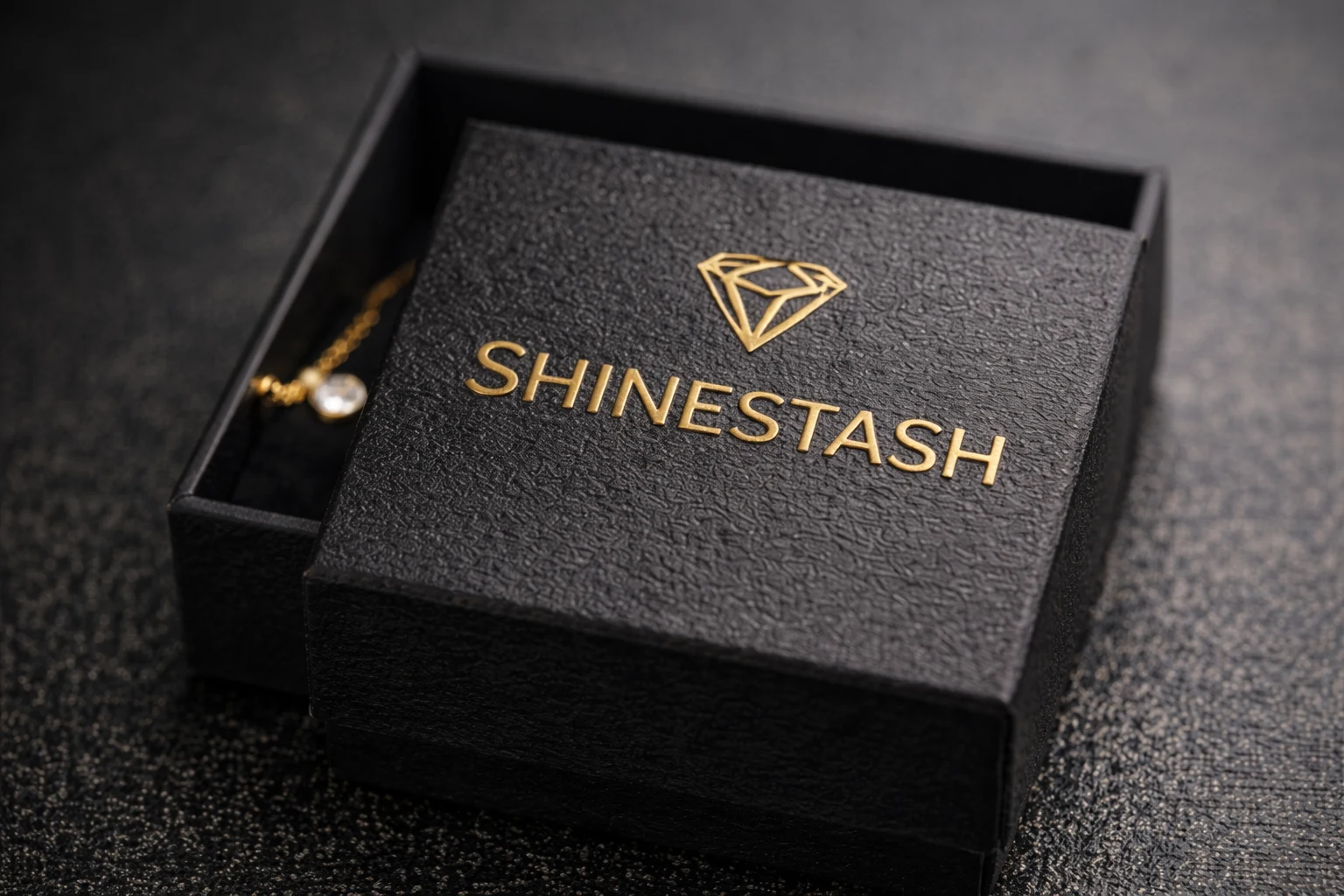
Why Logo Finishing Matters in Jewelry Packaging
A logo finish controls three outcomes that directly affect conversion and reorder stability:
- Perceived value: foil, emboss/deboss, and metal plates read more “luxury” than flat ink.
- Consistency in bulk: repeatable placement and look across long-term SKUs and reorders.
- Durability: preventing rub-off, cracking, peeling, or fading in real-world handling.
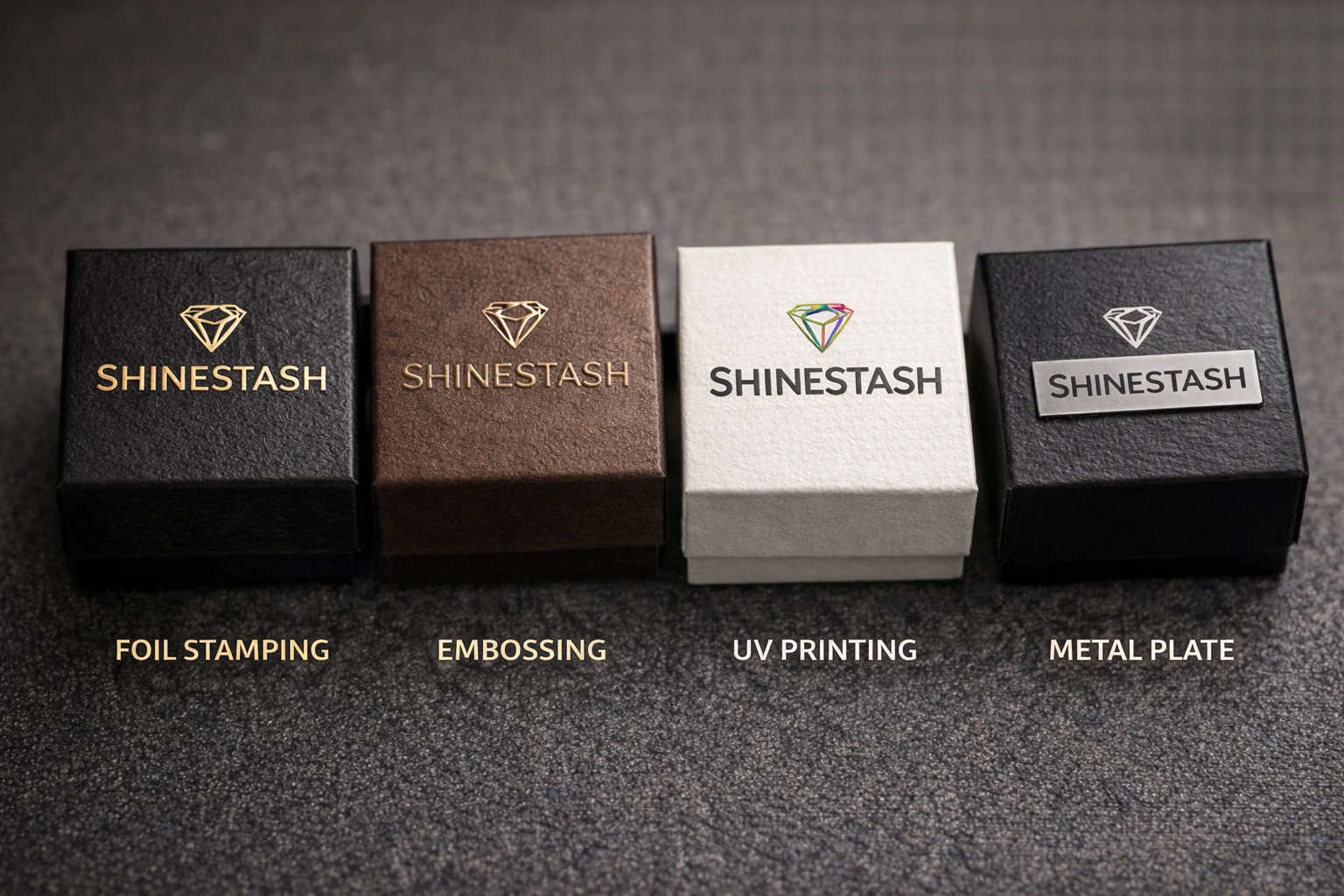
Fast Recommendations (TL;DR)
- Luxury + long-term SKUs: Foil or Deboss + Foil for stable premium reorders.
- Minimalist / “quiet luxury”: Emboss or Deboss (optional subtle foil highlight).
- Full color / gradients / tiny details: UV Printing (spot UV preferred for premium control).
- Wholesale cost control: Silk Screen + confirm rub resistance for retail handling.
- Ultra-premium gifting / limited editions: Metal Plate for “badge value”.
Finish Comparison Table (Foil vs Emboss vs UV vs Metal Plate)
| Finish | Look & Brand Signal | Best For | Durability (typical) | Notes / Watch-outs |
|---|---|---|---|---|
| Hot Foil Stamping | High-contrast, reflective luxury | Premium shelf presence, dark boxes, long-term SKUs | High (when adhesion is confirmed) | Thin strokes can break on heavy texture; confirm edges/folds. |
| Emboss / Deboss | Quiet luxury, “built-in” feel | Minimalist brands, monograms, leatherette/paper wrap | High | Best results with clean shapes; can combine with foil for depth. |
| UV Printing | Sharp detail, multi-color support | Gradients, small type, modern brand marks | Medium–High (depends on coating & handling) | Over-gloss can look “plastic”; spot UV often feels more premium. |
| Silk Screen Printing | Clean & practical for volume | Wholesale programs, solid 1–2 color marks | Medium (confirm rub resistance) | Less “luxury” than foil/emboss; great for fast-moving SKUs. |
| Metal Logo Plate | Highest perceived value “badge” | Gift programs, signature products, limited editions | High (depends on bonding/assembly) | More steps (tooling + assembly); use when SKU is stable. |
Choose the Right Logo Finish by Material (Most Common Buyer Mistake)
Material determines how well a finish bonds, how clean edges look, and how the logo survives handling. Use this section as your “compatibility filter” before picking a finish.
| Material | Best Match Finishes | Recommended Use | Watch-out |
|---|---|---|---|
| Paper wrap / textured paper | Foil, emboss/deboss, silk screen | Brand packaging, retail sets, premium gifting | Heavy texture can affect foil line sharpness; avoid hairline strokes. |
| Leatherette / PU | Emboss/deboss, foil (depending on surface), UV | Luxury positioning, watch/jewelry collections | UV gloss control matters; test on folds/edges. |
| Velvet / fabric | Silk screen, metal plate, label/tag (program-based) | Ring/earring presentation, soft touch experience | Foil is not always suitable on soft fabrics; consider plate or screen. |
| Wood / rigid structured boxes | Metal plate, emboss/deboss (surface dependent), print | Collector gifting, high-end programs | Assembly/bonding quality matters for plates; confirm pull strength. |
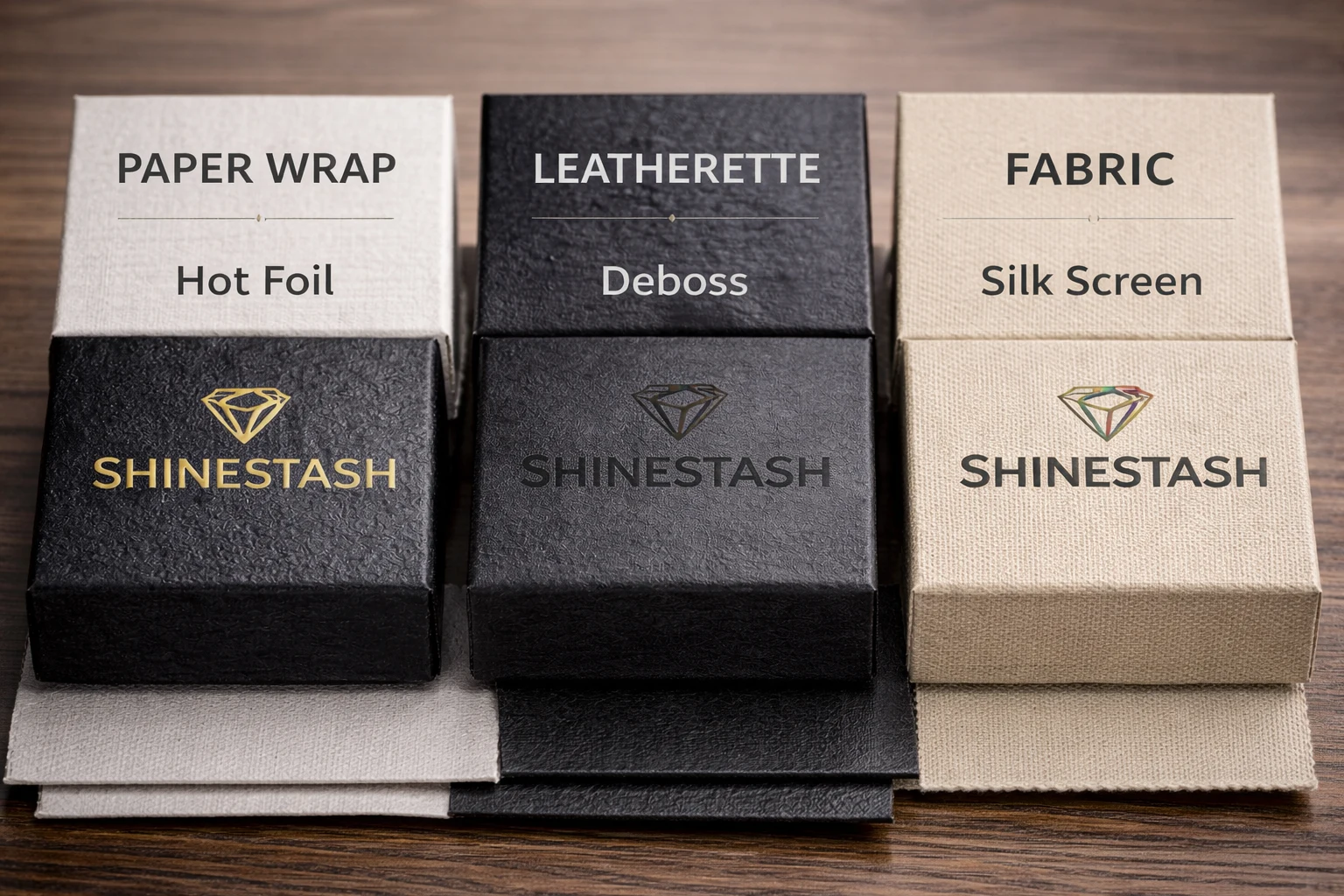
When Foil Wins
Choose foil when you need a universal premium signal that performs well in photos, especially on dark lids and textured paper wrap.
Good pairings: paper wrap, leatherette (surface dependent).
When Deboss + Foil Wins
If you want “quiet luxury” plus depth, deboss creates a premium impression and foil adds controlled visibility without looking loud.
Best for stable reorders and signature SKUs.
Production Workflow & QC Checklist (For Bulk Consistency)
Lock Specs
Confirm structure, size, material, insert, and the logo finish target. Stable specs = stable reorders.
Confirm Artwork
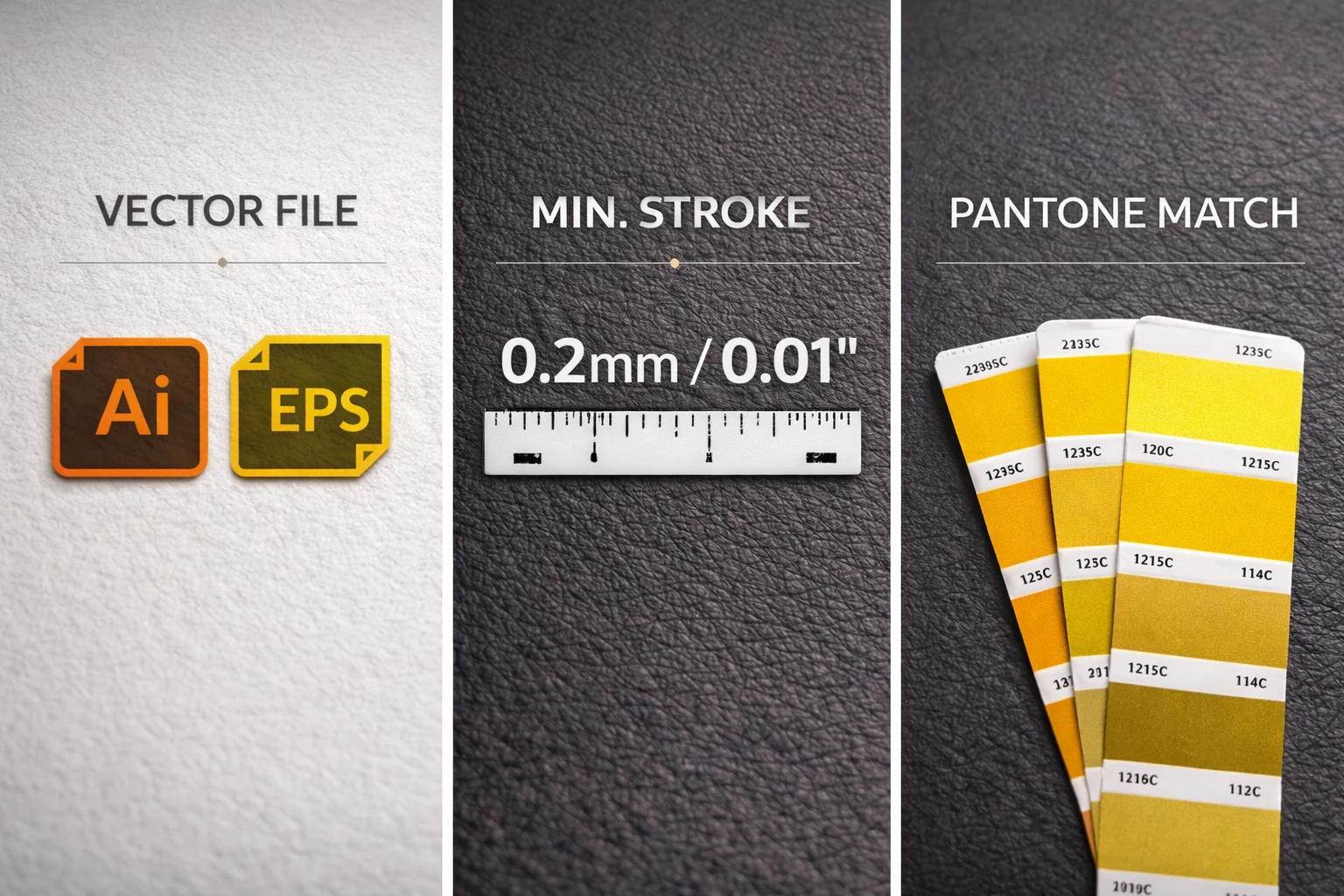
Vector file preferred (AI/EPS/PDF). Avoid hairline strokes if using foil or heavy textures.
Approve Samples
Hand sample is typically 7–10 days after specs confirmed. Mass production is typically 20–30 days after PPS approval.
Artwork Checklist (Avoid Failed Details)
- Vector file: AI / EPS / PDF (preferred)
- Text: outline fonts or include font files
- Stroke thickness: avoid hairline strokes on textured surfaces
- Color reference: provide Pantone if consistency matters
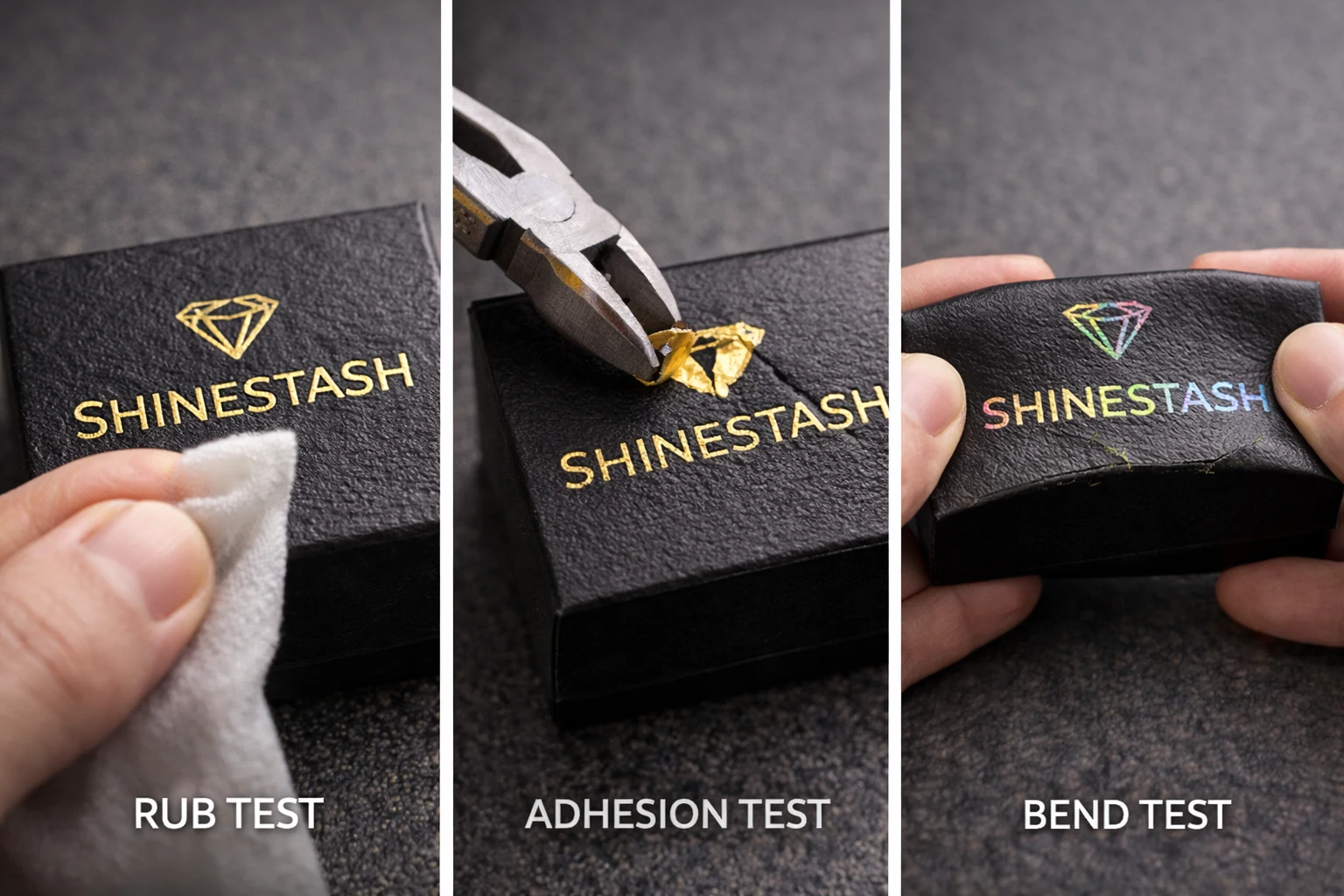
Durability & QC Checks (Recommended Before Mass Production)
- Rub resistance: especially important for silk screen and some UV finishes
- Foil adhesion: confirm on textured paper and along edges/folds
- UV cracking: verify on folds/edges (if applicable)
- Metal plate bonding: confirm bonding strength and alignment
FAQ
What is the best logo finish for luxury jewelry boxes?
For a classic luxury look, hot foil stamping is the most common choice. If you want a quieter premium effect, choose emboss/deboss (optionally paired with subtle foil). For signature gift programs, metal logo plates often deliver the strongest perceived value.
Can I use a full-color logo with gradients?
Yes—UV printing is typically best for multi-color marks, gradients, and small details. For a more premium feel, many brands use spot UV only on the logo area rather than a high-gloss full print.
Will the logo rub off during shipping or retail handling?
Durability depends on the finish and the material surface. Foil and emboss/deboss usually perform well when adhesion and edge handling are confirmed. For silk screen and some UV finishes, confirm rub resistance and approve a PPS sample before mass production.
What information should I send for an accurate logo finish recommendation?
Please share: box type (ring/earring/necklace), approximate size, target material (paper/velvet/leatherette/wood), order quantity, and your logo file (vector preferred). You can send these via Contact / RFQ.
Where can I learn more about durability testing?
See our testing overview: Logo Durability Testing for Custom Jewelry Boxes. It covers rub resistance, adhesion checks, and common failure points.
Get a Logo-Ready Packaging Proposal
Tell us your jewelry type, target box size, preferred material, and logo finish. We’ll propose a spec built for premium presentation and bulk consistency.
Request a QuoteContinue reading: Foil vs Emboss · Logo Cost, MOQ & Lead Time · Logo Options