
Custom Jewelry Display Sets for Retail Brands
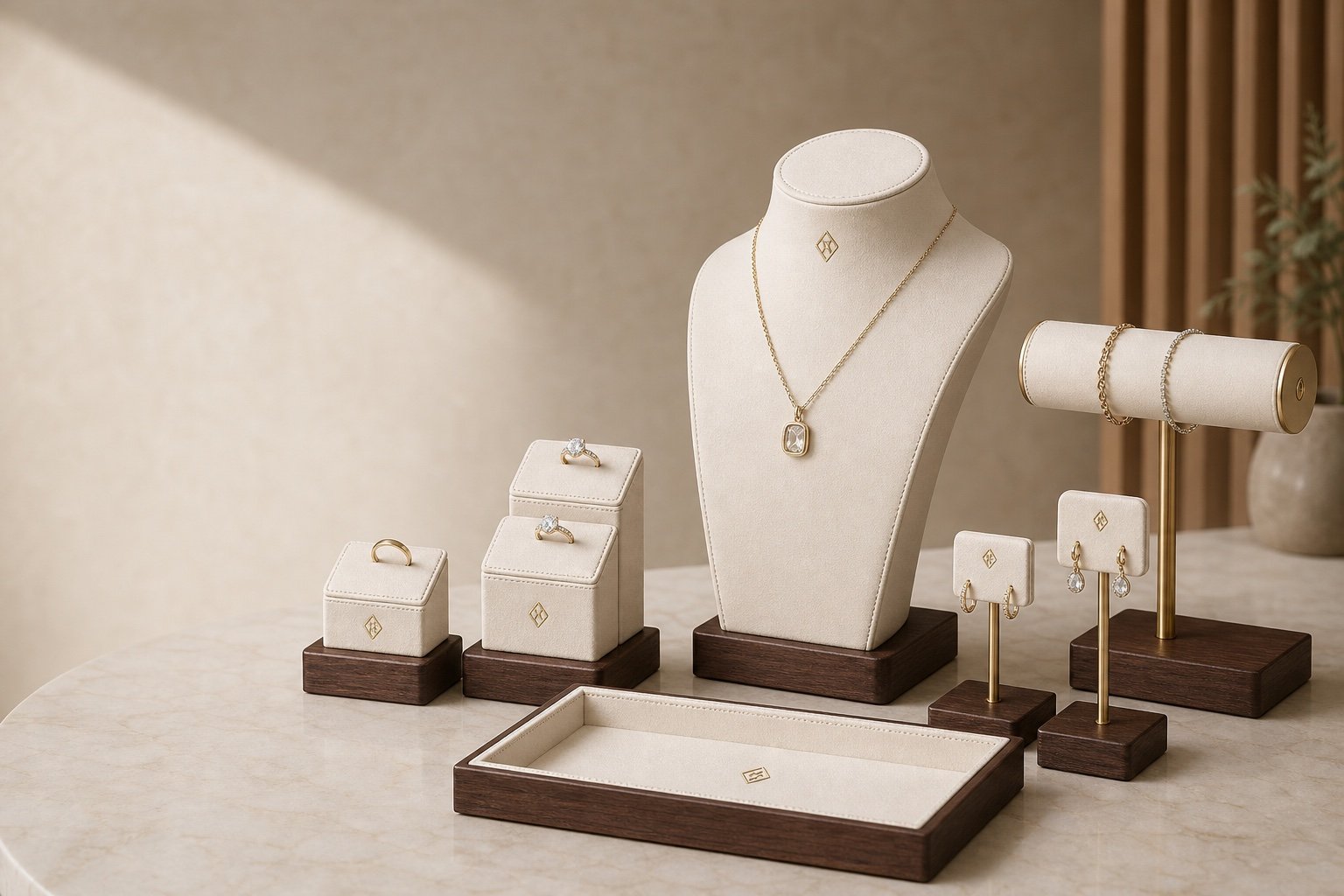
ShineStash develops custom jewelry display sets for boutiques, showrooms, trade fairs, launch events and product photography. Coordinate necklace busts, ring holders, earring stands, bracelet bars, trays and brand blocks through one material, color and logo system.
- Coordinated modules for rings, earrings, necklaces and bracelets
- Counter, showcase, pop-up and trade-fair applications
- Microfiber, velvet, leatherette, wood and acrylic directions
- Custom dimensions, colors and logo placements
- Replaceable or collection-specific modules
- PPS approval before mass production
Build a coordinated set from the viewing priorities
A strong display set creates hierarchy: hero pieces sit at the primary eye line, supporting items remain easy to compare, and negative space keeps the collection readable. Start with the showcase footprint and merchandise mix before selecting individual props.
Busts and pendant stands
Set height, shoulder width, chain length and viewing angle around the featured necklace range.
Ring blocks and rolls
Use individual blocks for hero rings or grouped rolls for efficient assortment presentation.
Earring stands and cards
Plan hole spacing, drop clearance and pair orientation for studs, hoops and long earrings.
Bars, pillows and trays
Match bar diameter, width and access space to chains, bangles, cuffs and watch-adjacent collections.
Plan presentation and daily handling together
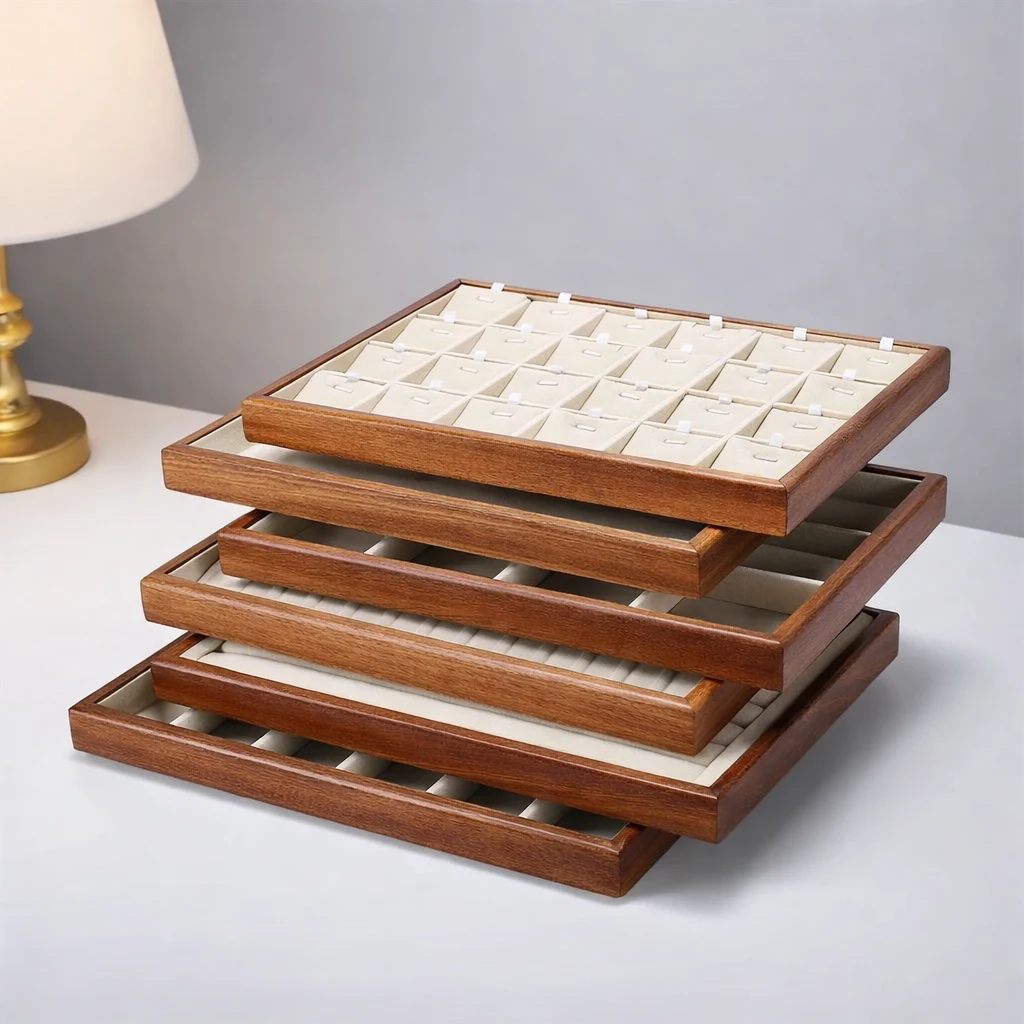
Display pieces are moved, cleaned, re-merchandised and stored repeatedly. A beautiful set can still fail if staff cannot lift jewelry safely, modules waste showcase depth, or colors change under store lighting. Define the daily workflow during the brief.
Display directions by retail environment
A fixed boutique showcase, a seasonal pop-up and a trade-fair case have different priorities. Use the environment to narrow materials, weight, modularity and packing.
| Environment | Recommended system | Key decisions | Material direction | RFQ inputs |
|---|---|---|---|---|
| Boutique showcase | Coordinated busts, risers, ring blocks and trays | Permanent hierarchy, lighting response, staff access | Microfiber, velvet, leatherette and wood | Case dimensions, collection mix, brand palette and store photos |
| Pop-up or launch | Compact modular set with brand block | Fast setup, transport, flexible product mix | Wrapped board, microfiber and lightweight wood | Table size, event duration, packing limits and module count |
| Trade fair | Portable trays, stands and stackable risers | Repeat setup, travel protection, high handling frequency | Durable wrapped surfaces with protective cases | Booth plan, shipment method, jewelry quantity and reset routine |
| Product photography | Neutral modular risers and low-profile holders | Camera angle, reflection, shadow and easy repositioning | Matte microfiber, paper and removable elements | Image style, product scale, backdrop color and shot list |
Coordinate every module without making the set repetitive
Consistency comes from controlled relationships: shared base geometry, repeated edge profiles, disciplined material use and a clear logo scale. Height and form can vary to create rhythm while the family still looks intentional.
Material and color
Compare microfiber, velvet, leatherette, wood and acrylic against lighting, wear, cleaning, reflection and the jewelry’s finish.
Logo and wayfinding
Use the logo selectively on a brand block, tray edge or focal piece so branding supports the jewelry instead of competing with it.
Modularity and expansion
Define base sizes and heights that let new collections add pieces later without rebuilding the complete display system.
Turn a showcase plan into a repeatable module list
Share case dimensions, a simple plan or photos, product categories, piece counts, preferred arrangement, brand colors, logo artwork, quantity per module and shipment destination. A module schedule prevents missing pieces and gives the PPS a clear approval standard.
Check function under real merchandising conditions
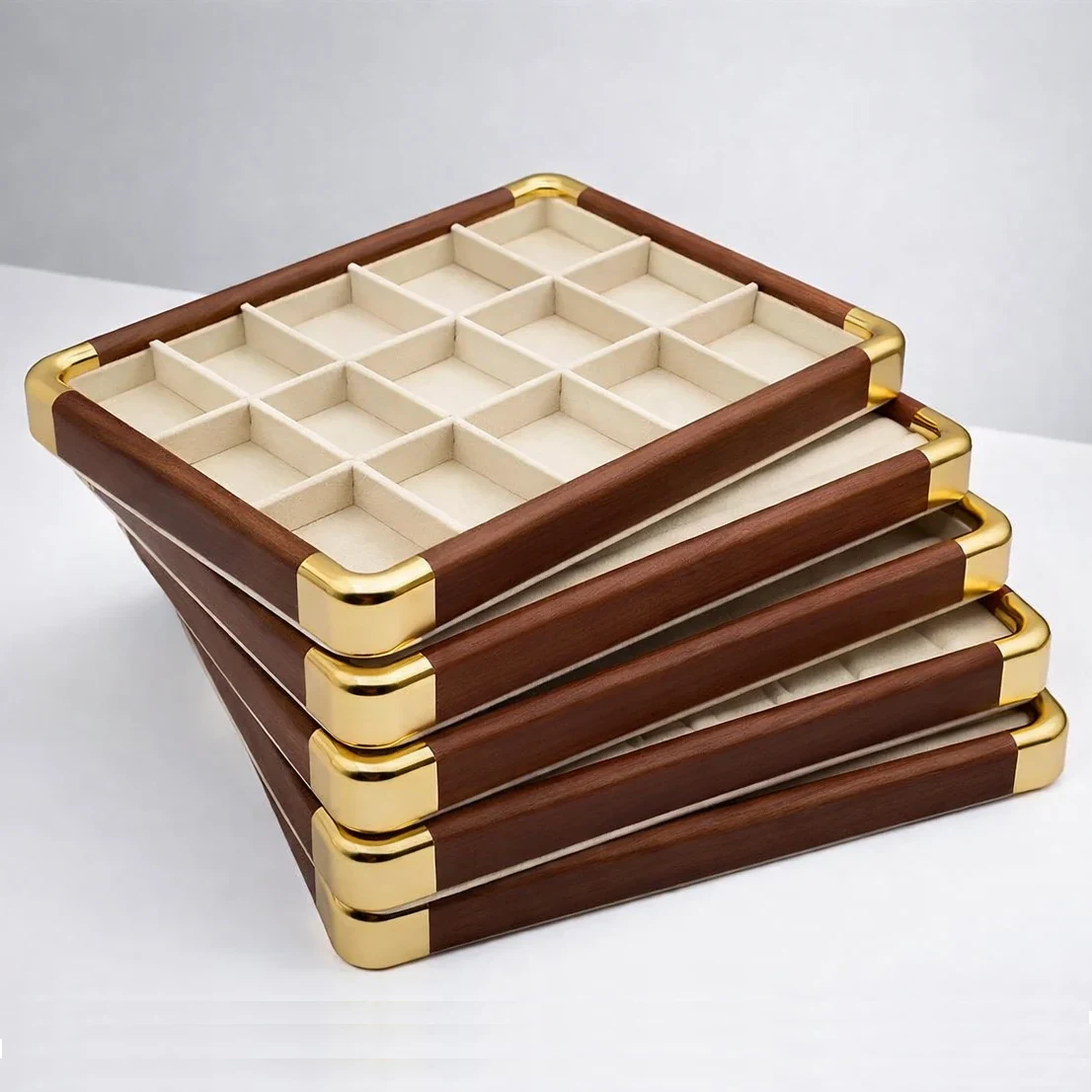
Approve the set with representative jewelry and under lighting close to the intended environment. The PPS should record the module list, dimensions, materials, logo positions and packing sequence.
Stability and access
Confirm that stands stay balanced, jewelry does not slide, edges remain safe and staff can lift pieces without disturbing adjacent modules.
Color and workmanship
Review fabric direction, seams, corners, adhesive marks, wood tone, metal finish, logo scale and consistency across different shapes.
Packing and terms
Number modules if needed, protect contact surfaces and confirm the master-carton plan. Available trade terms: EXW / FOB / CIF.
Related ShineStash pages
Custom jewelry display set questions
What information is needed to quote custom jewelry display sets?
Provide showcase or counter dimensions, jewelry categories and quantities, reference arrangement, brand colors, material preference, logo artwork, quantity per module, delivery country and target timing. Store photos or a simple plan help define sightlines and access.
Can different jewelry categories share one coordinated display system?
Yes. Necklace busts, ring blocks, earring stands, bracelet bars and trays can share base geometry, surface material, color, edge detail and branding while using different heights and forms.
Which materials are suitable for retail jewelry displays?
Common directions include microfiber, velvet, leatherette, wrapped board, wood, acrylic and mixed-material structures. The choice should consider lighting, wear, cleaning, reflection, transport and the jewelry finish.
How long do display samples and mass production take?
The standard wording is handmade sample in 7-10 days after details are confirmed, followed by mass production in 20-30 days after PPS approval. Large module sets or special structures should be reviewed during quotation.
What is the MOQ for custom jewelry display sets?
MOQ depends on the number of module types, materials, construction, logo method and whether pieces share tooling or dimensions. Send the quantity per module so ShineStash can evaluate a practical program.
How are jewelry display sets packed for export?
Packing is planned around module shape, surface protection, stackability and setup sequence. Individual wraps, separators, numbered cartons or dedicated protective cases can be considered according to the project and shipment route.
Send the showcase dimensions, jewelry mix and reference layout
Add your brand palette, logo artwork, quantity per module, delivery country and target shipment window. ShineStash will use the brief to organize the module schedule and identify the next decisions.