

Custom Jewelry Box Packaging Guide for B2B Brands
Choosing custom jewelry box packaging is not only about appearance. For B2B jewelry brands, retailers, gift companies, and private-label projects, the right packaging must protect the product, support brand positioning, control cost, and stay consistent in bulk production.
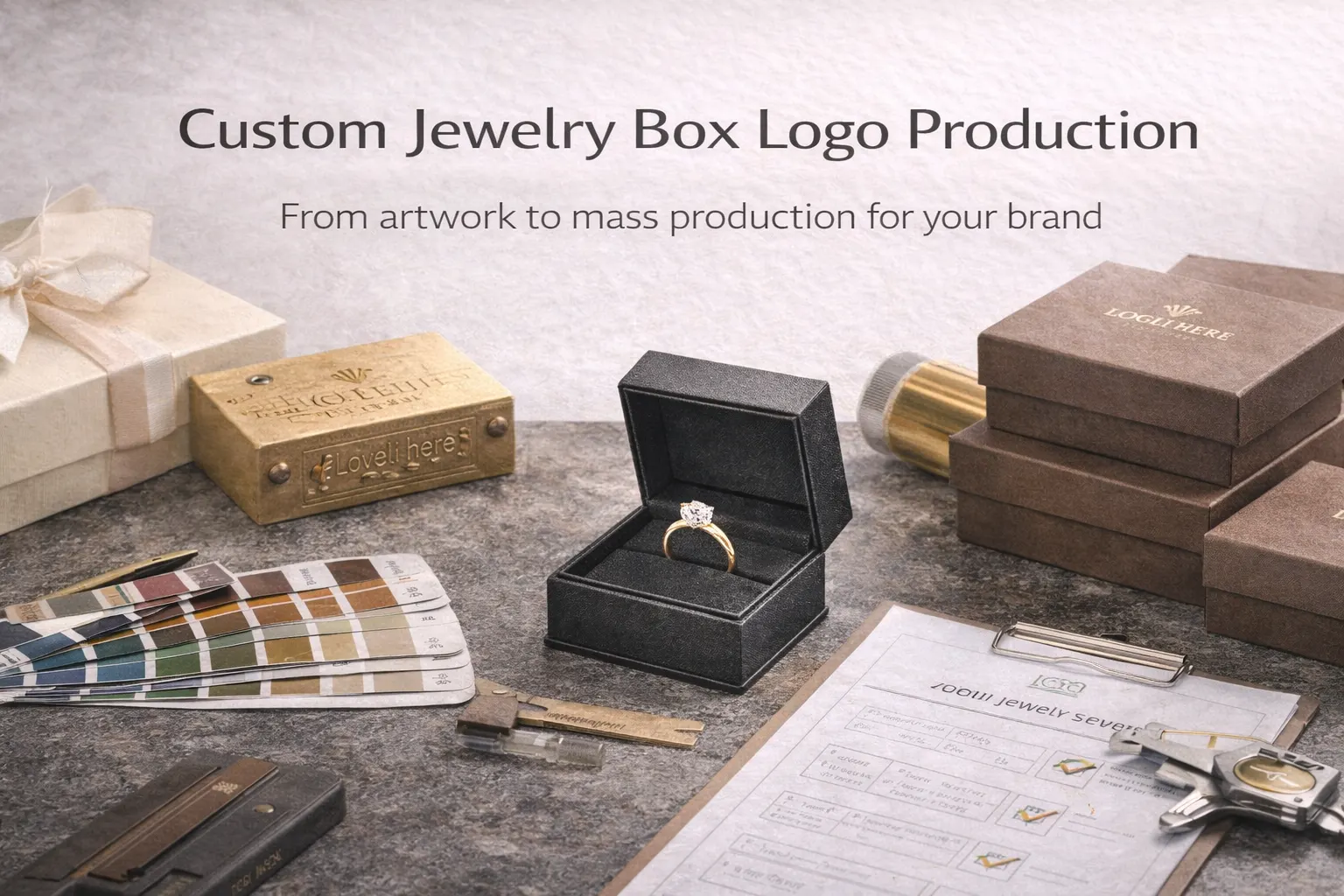
For many jewelry brands, packaging is the first physical contact between the customer and the product. A ring, necklace, bracelet, watch, or gift set can look more premium when the box structure, surface material, lining, insert, and logo finish are aligned with the brand. However, for B2B buyers, packaging also needs to be practical: it must be scalable, repeatable, cost-controlled, and suitable for shipping.
This guide explains how to plan custom jewelry box packaging from a buyer’s perspective. You will learn how to compare box types, materials, logo options, MOQ, sample approval, lead time, and supplier capabilities before starting a bulk order.
Table of Contents
1. What Is Custom Jewelry Box Packaging?
Custom jewelry box packaging refers to jewelry boxes designed around a brand’s specific product, market positioning, logo, material preference, color system, and presentation requirements. Compared with generic ready-made boxes, custom packaging allows B2B buyers to control the customer experience from the first impression to product storage.
A complete custom jewelry box project usually includes the outer box structure, surface material, inner lining, insert layout, logo position, logo finish, color matching, protective packing, and bulk production specifications. For example, a luxury ring brand may need a compact velvet box with a foil-stamped logo, while a fashion jewelry retailer may prefer lightweight paper boxes with microfiber inserts for larger wholesale quantities.
If you are building a product line instead of buying one-time packaging, start with your core product categories. Ring boxes, necklace boxes, bracelet boxes, earring boxes, watch boxes, and jewelry set boxes may require different internal structures. A good packaging plan should make these boxes look consistent as a collection while still fitting each product securely.
Planning a custom packaging project?
ShineStash supports B2B brands with material selection, logo customization, sample development, and bulk jewelry box production.
Contact ShineStash2. Why Packaging Matters for B2B Jewelry Brands
Jewelry is often purchased as a gift, a personal reward, or a symbolic product. This makes packaging more important than in many other product categories. The box does not simply hold the jewelry; it frames the perceived value of the product.
For B2B brands, packaging also affects repeat purchases, retail presentation, photography, influencer unboxing, customer reviews, and shipping performance. A well-made box can make a mid-range product feel more premium. A poorly made box can weaken even a high-value item.
Brand Value
Color, texture, logo finish, and box shape help customers understand whether your brand is luxury, minimalist, eco-conscious, classic, or fashion-driven.
Product Protection
Inserts, linings, and box structures reduce movement, scratches, compression damage, and poor presentation during international shipping.
Retail Consistency
Consistent packaging helps retailers and distributors present multiple SKUs as one coherent collection.
Wholesale Efficiency
Clear specifications make bulk ordering easier, reduce communication errors, and improve sample-to-mass-production consistency.
If your business sells across different channels, packaging should also support different selling situations. E-commerce orders need protective shipping performance. Retail counters need a premium hand-feel. Gift sets need a stronger visual display. Wholesale customers need consistency across batches.
3. Common Types of Custom Jewelry Boxes
Before choosing materials or logo finishes, B2B buyers should decide the box type. The box structure affects product fit, cost, production time, shipping volume, and perceived value.
| Box Type | Best For | Main Advantage | Buyer Note |
|---|---|---|---|
| Rigid Jewelry Boxes | Premium jewelry, gift sets, retail collections | Strong structure and luxury presentation | Usually higher cost but better perceived value |
| Velvet Jewelry Boxes | Rings, earrings, necklaces, proposal products | Soft, elegant, and classic luxury feel | Best when the brand wants a warm and premium look |
| Leatherette Jewelry Boxes | Modern jewelry brands, watch accessories, gift products | Clean surface, durable feel, easy logo placement | Works well for foil stamping and embossed logos |
| Drawer Jewelry Boxes | Gift sets, layered packaging, branded collections | Good unboxing experience | Requires accurate insert design to avoid loose fit |
| Paper Jewelry Boxes | Fashion jewelry, high-volume orders, eco packaging | Lightweight and cost-effective | Good choice for wholesale and seasonal collections |
| Display Jewelry Boxes | Retail counters, showcases, premium sets | Improves visual presentation | Need careful material and window protection planning |
For a broader product selection, you can review ShineStash custom jewelry boxes and compare the structure that best matches your jewelry line.
4. Popular Materials: Paper, Velvet, Leatherette, Wood, and Inserts
Material choice determines how the jewelry box looks, feels, protects the product, and supports logo customization. B2B buyers should avoid selecting materials based only on photos. The same box shape can communicate a completely different brand image when the surface material changes.
Paper and Rigid Board
Paper-based jewelry boxes are commonly used for fashion jewelry, seasonal collections, retail packaging, and cost-sensitive wholesale orders. They are lightweight, scalable, and suitable for a wide range of colors and printing methods. Rigid board structures can increase strength and create a more premium feel.
Velvet
Velvet is often used for ring boxes, proposal boxes, earrings, and classic jewelry collections. It gives a soft and elegant appearance, especially for high-emotion purchases. Velvet works well when the brand wants a warm, traditional, or luxury tone.
Leatherette
Leatherette gives jewelry boxes a clean, structured, and modern appearance. It is often easier to clean than velvet and can support clear logo effects. It is suitable for brands that want a premium look without using genuine leather.
Wood
Wooden jewelry boxes are often used for premium gift sets, watches, collectible items, and higher-value products. They can create a stronger gift impression, but buyers should pay close attention to weight, shipping volume, surface finish, and insert design.
Interior Linings and Inserts
The insert is one of the most important parts of custom jewelry packaging. It keeps the product centered, protects it from movement, and improves display quality. Common options include velvet lining, microfiber lining, foam inserts, ring slots, necklace hooks, earring cards, bracelet cushions, and custom molded layouts.
For more material and finishing options, visit the ShineStash Materials & Craft page.
5. Logo Customization Options for Jewelry Packaging
Logo customization is one of the main reasons brands choose custom jewelry box packaging. A clear and well-positioned logo improves brand recognition and makes the box more suitable for retail, gifting, and social media presentation.
| Logo Finish | Best For | Visual Effect | Important Consideration |
|---|---|---|---|
| Foil Stamping | Luxury jewelry boxes, gift boxes, premium lines | Metallic shine, strong brand visibility | Gold, silver, rose gold, and custom foil colors may look different on different materials |
| Embossing | Minimalist and premium packaging | Raised logo texture | Works best with suitable surface thickness and structure |
| Debossing | Leatherette and rigid boxes | Pressed-in logo effect | Subtle and elegant, but contrast may be low without foil |
| UV Printing | Modern designs and colored logos | Clean color detail | Artwork quality and surface compatibility are important |
| Metal Logo Plate | High-end collections and gift sets | Strong premium feel | Higher cost and longer development process |
If your main requirement is branded packaging, explore custom jewelry boxes with logo. You can also read the detailed custom jewelry box logo guide for logo placement, finish selection, and bulk consistency.
6. MOQ, Pricing, Sample, and Lead Time Explained
B2B buyers often ask one question first: “How much does a custom jewelry box cost?” The accurate answer depends on quantity, size, structure, material, lining, logo finish, insert complexity, packing method, and shipping requirements.
MOQ
MOQ depends on the box type and customization level. Standard structures with simple logo customization usually have lower MOQ. Fully customized structures, special materials, custom inserts, and special logo finishes may require higher MOQ because they involve more setup work and material preparation.
Pricing Factors
The biggest cost drivers usually include box size, material grade, rigid board thickness, insert design, logo process, order quantity, packaging method, and quality requirements. For example, a simple paper jewelry box for a high-volume fashion jewelry order will usually cost less than a velvet or wooden jewelry box with a metal logo plate.
Sample Approval
Sample approval is essential for custom jewelry box packaging. The sample helps confirm the structure, color, material texture, logo effect, insert fit, and overall presentation before mass production. For handmade or semi-custom jewelry packaging projects, buyers should plan enough time for sample making and adjustment.
Lead Time
Lead time depends on material availability, customization complexity, sample approval speed, and order quantity. For custom jewelry packaging projects, a practical planning range is usually 7–10 days for a handmade sample after specifications are confirmed, and around 20–30 days for mass production after PPS approval. Exact timing should be confirmed based on the final box type and quantity.
For wholesale projects, you can review ShineStash jewelry boxes wholesale options and prepare your size, logo artwork, material preference, target quantity, and delivery requirements before requesting a quote.
7. How to Choose a Reliable Jewelry Box Packaging Supplier
A reliable supplier should do more than provide a low unit price. For B2B buyers, the real value is the ability to turn a packaging idea into a repeatable production specification. This is especially important when you need multiple batches, multiple SKUs, or long-term brand consistency.
Check Product Experience
The supplier should understand jewelry box structures, insert fit, lining materials, logo placement, and retail presentation. A supplier that mainly produces unrelated packaging may not understand the detailed requirements of ring boxes, necklace boxes, earrings, bracelets, and jewelry sets.
Review Customization Capability
Ask whether the supplier can support material selection, structural adjustment, logo finishing, color matching, insert design, and bulk packing. For branded projects, the supplier should also be able to explain which logo process works best for each material.
Confirm Sample-to-Bulk Consistency
The approved sample should become the reference for mass production. Buyers should confirm key details such as color, surface texture, logo size, logo position, insert fit, glue marks, corner finishing, and box opening feel before bulk production starts.
Evaluate Quality Control
A practical QC process should check incoming materials, production workmanship, logo accuracy, insert assembly, surface cleanliness, box dimensions, packing strength, and final appearance. For international orders, protective export packing is also important.
Assess Communication
A good supplier should ask clear questions before quoting. If a supplier quotes immediately without confirming size, material, quantity, logo process, and packing requirements, the final price may not reflect the real project needs.
ShineStash provides a structured custom service process to help B2B buyers move from idea, specification, sample, and approval to bulk production.
8. Final Checklist Before Starting a Custom Jewelry Box Project
Before requesting a quote, prepare the key project information. This helps the supplier recommend the right structure and avoid repeated revisions.
| Checklist Item | What to Prepare | Why It Matters |
|---|---|---|
| Product Type | Ring, necklace, bracelet, earrings, watch, jewelry set | Determines box size and insert structure |
| Box Size | Approximate inner and outer dimensions | Affects material usage, fit, and shipping volume |
| Material Preference | Paper, velvet, leatherette, wood, microfiber, foam | Controls appearance, cost, and logo compatibility |
| Logo Artwork | AI, PDF, SVG, or high-resolution file | Improves logo accuracy and production efficiency |
| Logo Finish | Foil stamping, embossing, debossing, UV printing, metal plate | Affects brand image, cost, and production process |
| Target Quantity | Estimated order quantity and future reorder plan | Helps calculate MOQ, unit price, and material planning |
| Market Positioning | Luxury, fashion, eco-friendly, gift, retail, wholesale | Guides design direction and material selection |
Custom jewelry box packaging works best when design, cost, and production feasibility are considered together. A beautiful box that is too expensive, difficult to repeat, or unsafe for shipping may not be the right choice for a growing B2B brand. The right solution should look good, fit the product, protect the jewelry, and support repeatable bulk orders.
Ready to Start Your Custom Jewelry Box Packaging Project?
Share your box type, material preference, logo artwork, target quantity, and packaging goals. ShineStash can help recommend a suitable custom jewelry box solution for your brand, retail line, or wholesale project.
Request a QuoteRelated Custom Jewelry Packaging Resources
FAQ: Custom Jewelry Box Packaging
What is custom jewelry box packaging?
Custom jewelry box packaging refers to jewelry boxes designed with specific materials, sizes, colors, inserts, logo finishes, and brand presentation details. It helps jewelry brands create packaging that fits their products and supports retail or wholesale sales.
What is the best material for custom jewelry boxes?
The best material depends on the brand positioning and product type. Paper and rigid board are suitable for scalable wholesale packaging, velvet is ideal for a soft luxury feel, leatherette gives a clean premium look, and wood is often used for higher-value gift packaging.
Can I add my logo to jewelry boxes?
Yes. Common logo options include foil stamping, embossing, debossing, UV printing, screen printing, and metal logo plates. The best option depends on the surface material, logo design, budget, and desired brand effect.
What is the MOQ for custom jewelry box packaging?
MOQ depends on box structure, material, logo process, and customization level. Standard custom logo boxes usually have a lower MOQ than fully customized structures, special materials, or complex insert designs.
How long does it take to make custom jewelry boxes?
Lead time depends on the final specification and order quantity. A practical planning range is usually 7–10 days for a handmade sample after specifications are confirmed, and around 20–30 days for mass production after PPS approval.
What is the difference between sample and bulk production?
A sample is used to confirm structure, material, color, logo effect, insert fit, and overall presentation before mass production. Bulk production follows the approved sample and should be checked for consistency across the full order.
How do I choose a reliable jewelry box packaging supplier?
Choose a supplier with experience in jewelry packaging, clear customization capability, sample development support, quality control procedures, and strong communication before quoting and production.